
Google AdSense Approval: Complete Website Requirements & Checklist
Getting Google AdSense approval is not about one secret trick. Google reviews whether your website has useful original content, follows publisher policies, can be properly accessed and owned by you, and gives visitors a clear and trustworthy experience.
This Google AdSense approval checklist explains the main website requirements in simple English so you can review your site before applying.
What Does Google Require for AdSense?
Google’s official AdSense eligibility requirements say publishers should have their own unique and interesting content, comply with AdSense policies, be able to access the site’s HTML source, and meet the age requirement for the account.
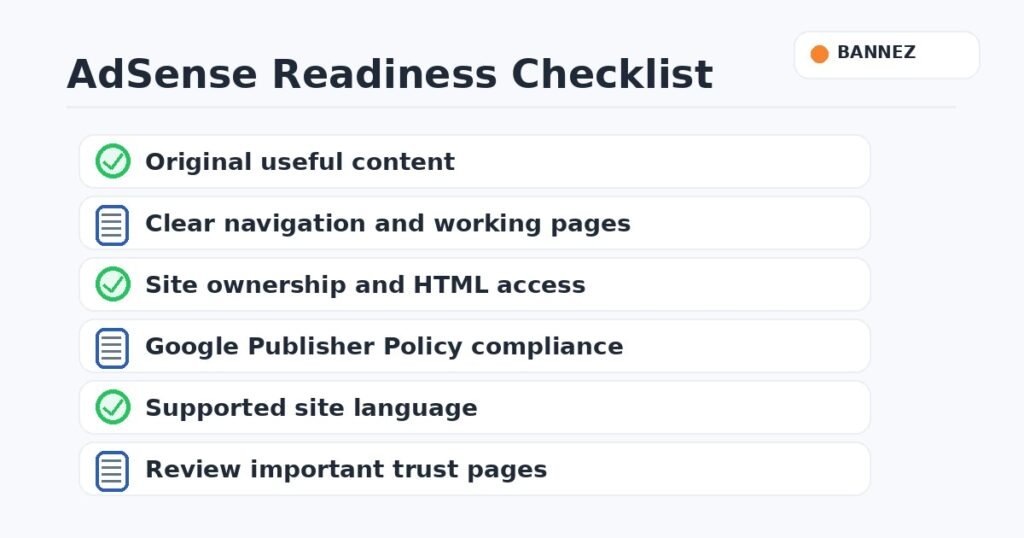
Complete AdSense Website Requirements Checklist
1. Publish Original and Useful Content
Your website should provide real value. Avoid copied articles, pages created only to show ads, and content that adds little information. Every important page should have a clear purpose for visitors.
- Write original articles or useful service information.
- Answer the topic properly instead of publishing very thin pages.
- Review spelling, formatting, and readability.
- Remove placeholder or unfinished content.
- Do not copy content from other websites.
2. Make Navigation Easy to Understand
Visitors should be able to move around your website without confusion. Use a clear menu, working links, readable categories, and a logical site structure.
3. Show That the Website Is Real and Trustworthy
There is no universal Google rule saying every site must use the same exact page list. However, professional websites normally make it easy for visitors to understand who runs the site, how to contact the business, and how privacy is handled.
- About page
- Contact information
- Privacy policy
- Terms or other legal information when relevant
- Clear business or publisher identity
4. Follow Google Publisher Policies
Google requires publishers using its ad code to follow the Google Publisher Policies. These policies cover content, behavior, privacy-related requirements, and other standards.
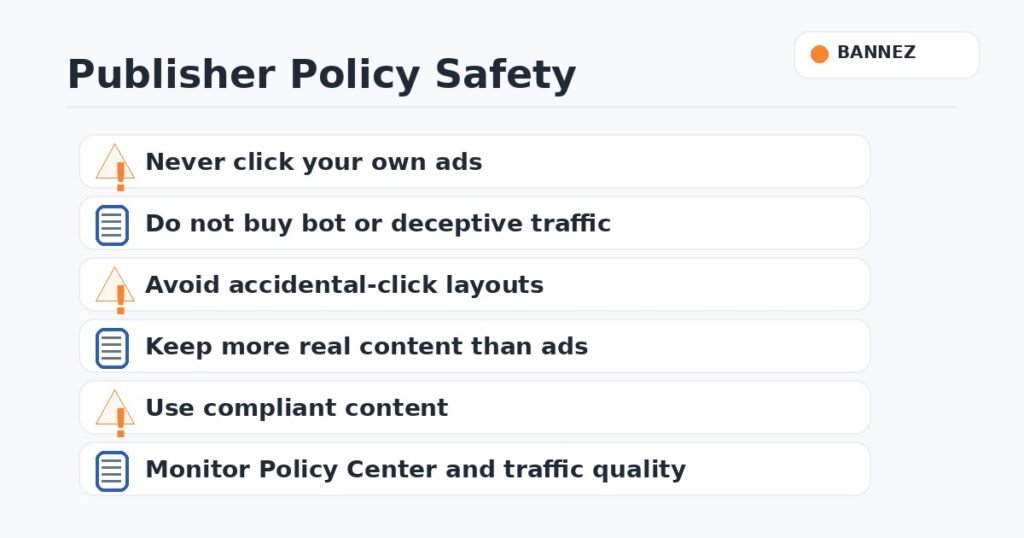
- Do not encourage invalid clicks.
- Do not place ads in misleading ways.
- Do not monetize prohibited content.
- Do not use deceptive navigation.
- Review privacy and consent requirements for your audience.
5. Make Sure You Own or Control the Site
You need enough access to connect the website with AdSense. Google specifically notes that you should be able to access the HTML source of the submitted site.
6. Use a Supported and Working Website
Before applying, test your pages on desktop and mobile. Fix broken links, server errors, missing images, empty categories, unfinished menus, and pages that do not load correctly.
7. Review Traffic Quality
Ad monetization works best with real visitors who choose to visit your content. Avoid bot traffic, click-exchange activity, misleading traffic sources, or any service that creates invalid ad activity.
8. Keep the Site Mobile Friendly
Your content, menus, forms, and future ad positions should remain usable on smaller screens. A mobile visitor should not need to zoom or fight with overlapping elements.
9. Check Page Speed and User Experience
Slow loading does not automatically mean AdSense rejection, but a poor website experience can hurt users. Compress large images, avoid unnecessary scripts, and keep layouts stable.
10. Apply Only When the Website Feels Complete
Do not treat the AdSense application as a test for an unfinished website. Review the whole site first and apply when visitors can use it normally.
Is There a Minimum Number of Articles for AdSense?
Google does not publish one universal minimum article count in its AdSense eligibility page. A small number of strong, useful pages can be better than many weak pages. Focus on content quality, completeness, and usefulness rather than trying to reach an invented number.
Does AdSense Require a Minimum Traffic Level?
Google’s public AdSense eligibility requirements do not list one general minimum traffic number for a standard website application. However, genuine traffic is still important for building a useful site and earning meaningful ad revenue after approval.
Final AdSense Pre-Application Checklist
- Original and useful content is published.
- Main pages are complete and easy to navigate.
- About, Contact, and privacy information are clear.
- There are no obvious broken links or unfinished pages.
- The site works well on mobile.
- Traffic sources are genuine and safe.
- Your content follows Google Publisher Policies.
- You can access and verify the website.
- You have reviewed the site as a normal visitor.
Want a Free AdSense Readiness Review?
If you are not sure whether your site is ready, Bannez provides a 100% Free Website Analysis & Recommendations for Google AdSense Approval. Our team reviews common website, content, structure, and monetization-readiness issues and gives you clear recommendations before you apply.
Frequently Asked Questions
Can a new website get AdSense approval?
Yes, a newer site can apply when it meets the eligibility and policy requirements. Website age alone is not the only factor.
Does adding more articles guarantee approval?
No. More content does not guarantee approval. Quality, originality, policy compliance, and the overall website experience matter.
Should I copy another approved site’s layout?
No. Build a clear website for your own audience. Another site’s approval does not mean copying its design or content will work for you.
Conclusion
The best way to prepare for Google AdSense approval is to build a real website for real visitors first. Publish original content, keep navigation clear, follow Google Publisher Policies, use safe traffic sources, and fix unfinished or broken areas before applying.
A checklist cannot guarantee approval because Google makes the final decision, but a complete and policy-ready website gives you a much stronger foundation.
