
Ads.txt vs Sellers.json: What Is the Difference?
Ads.txt vs Sellers.json: What Is the Difference?
If you monetize a website with display advertising, you may see both ads.txt and sellers.json mentioned by ad networks, Google Ad Manager partners, SSPs, and other programmatic advertising platforms. The two standards are closely connected, but they solve different parts of the transparency problem.
In simple terms, ads.txt tells buyers which advertising systems are authorized to sell a publisher’s inventory, while sellers.json helps buyers identify the businesses or intermediaries represented by seller IDs inside an advertising system.
This guide explains ads.txt vs sellers.json in simple language, shows how the two standards work together, and gives website publishers a practical checklist for avoiding common configuration mistakes.
What Is Ads.txt?
Ads.txt stands for Authorized Digital Sellers. It is an IAB Tech Lab standard that allows website publishers to publicly declare which advertising systems are authorized to sell their digital ad inventory.
The file normally lives at the root of a website, for example:
https://example.com/ads.txtA basic ads.txt record can include an advertising system domain, the publisher account ID used in that system, the relationship type such as DIRECT or RESELLER, and an optional certification authority ID.
The official IAB Tech Lab ads.txt project documentation explains that the goal is to increase transparency and make counterfeit inventory harder to sell.
What ads.txt tells buyers
- Which ad platforms are authorized for a publisher domain.
- Which seller account ID should be expected for that platform.
- Whether the relationship is direct or through a reseller.
- Whether a bid path matches a publisher-declared authorized seller.
If you want a deeper introduction, see our existing guide: What Is Ads.txt and Why Is It Important for Website Monetization?
What Is Sellers.json?
Sellers.json is another IAB Tech Lab transparency standard, but it is generally published by advertising systems such as exchanges, SSPs, or other programmatic platforms. Its purpose is to help buyers identify the entities behind seller account IDs.
According to the official IAB Tech Lab sellers.json documentation, the standard lets buyers verify entities that are direct sellers or intermediaries in a digital advertising opportunity.
This matters because an ads.txt file may show that a particular seller ID is authorized, but the buyer also needs a way to understand who that seller ID represents. Sellers.json adds that identity layer.
Typical information in sellers.json
A sellers.json entry can contain details such as:
- Seller ID.
- Seller type, such as publisher, intermediary, or both.
- Seller name when it is not marked confidential.
- Seller domain where applicable.
The exact file is controlled by the advertising system that owns the seller accounts. This is an important difference: a normal website publisher usually manages its own ads.txt file, but does not normally manage an SSP’s sellers.json file.
Ads.txt vs Sellers.json: Key Differences
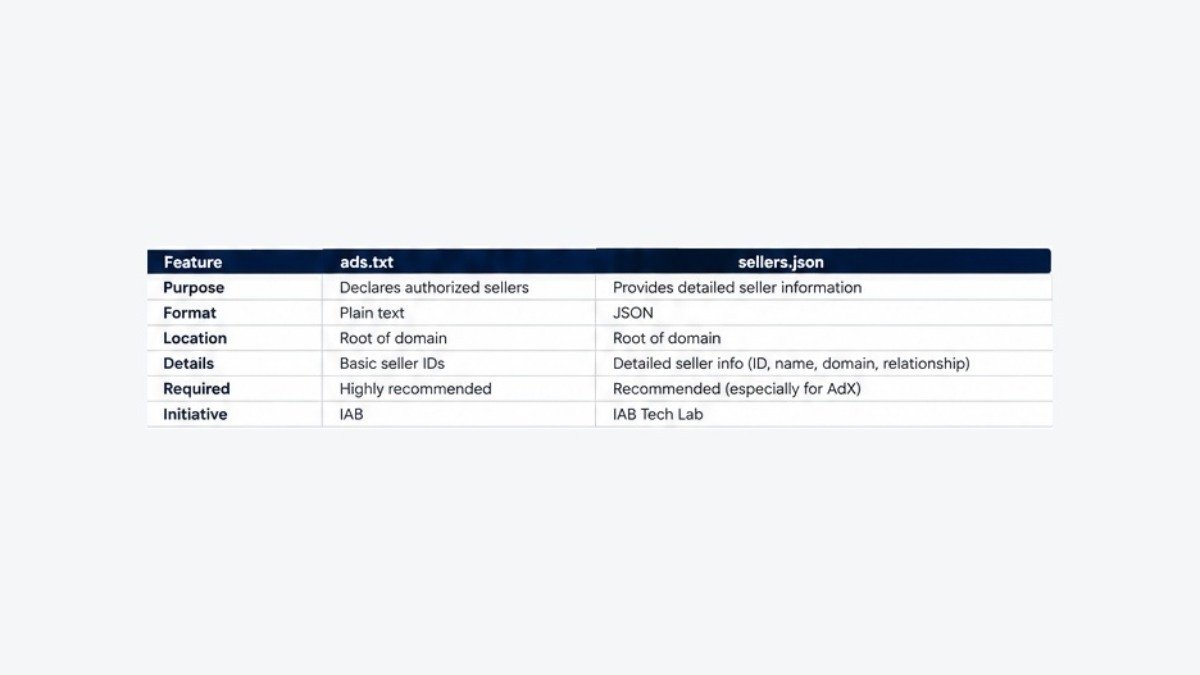
| Area | Ads.txt | Sellers.json |
|---|---|---|
| Main purpose | Declares authorized sellers for a publisher’s inventory | Identifies sellers and intermediaries inside an advertising system |
| Usually published by | Website publisher or domain owner | SSP, exchange, or advertising system |
| Typical location | Publisher domain /ads.txt | Advertising system domain /sellers.json |
| Key identifier | Publisher/seller account ID for an ad system | Seller ID and seller identity information |
| Primary benefit | Authorization transparency | Identity and supply-chain transparency |
| Who mainly uses it | Publishers, buyers, exchanges, validation systems | Buyers, DSPs, exchanges, supply-chain validation systems |
How Ads.txt and Sellers.json Work Together
The easiest way to understand the relationship is to imagine two questions a programmatic buyer may want answered:
- Is this advertising system authorized to sell inventory for this website? Ads.txt helps answer this.
- Who is the seller or intermediary represented by this seller account? Sellers.json helps answer this.
The two standards therefore complement each other rather than compete with each other. IAB Tech Lab also connects ads.txt and sellers.json with broader supply-chain transparency efforts, including the OpenRTB SupplyChain object.
For publishers, the practical lesson is simple: your ads.txt records should be accurate, current, and consistent with the seller information maintained by your advertising partners.
DIRECT vs RESELLER: Why the Relationship Still Matters
One of the most common ads.txt questions is the difference between DIRECT and RESELLER.
- DIRECT generally means the publisher directly controls the account represented by the seller ID in that advertising system.
- RESELLER indicates another entity is authorized to sell the inventory through that advertising system.
These relationship values should not be changed simply because one looks more desirable than the other. Publishers should use the entries provided by their legitimate monetization partners and verify that each line belongs in the file.
Common Ads.txt and Sellers.json Problems
1. Incorrect seller account ID
A small account-ID error can make a legitimate ads.txt line fail validation. Always copy the publisher ID exactly as provided by the platform.
2. Old partners remain in ads.txt
Publishers often change ad networks but forget to review old records. Periodic ads.txt cleanup helps keep the file understandable and relevant.
3. DIRECT and RESELLER are used incorrectly
Do not guess the relationship type. Follow the instructions supplied by the advertising partner.
4. The file is inaccessible
If your ads.txt URL redirects incorrectly, returns an error, or is blocked by security rules, crawlers and buyers may not be able to validate it.
5. Seller identity does not match expectations
If information in an advertising system’s sellers.json file does not align with the supply relationship buyers expect, the path can look less transparent. Publishers should raise such issues with the relevant ad platform rather than attempting to edit the platform’s sellers.json themselves.
Publisher Checklist
- Open your domain’s
/ads.txtURL and confirm it loads publicly. - Remove records you can confirm are no longer required.
- Verify seller account IDs carefully.
- Use DIRECT or RESELLER exactly as instructed by the partner.
- Keep only legitimate advertising partners.
- Check ad-network dashboards for ads.txt warnings.
- When a seller identity looks wrong, ask the advertising system to verify its sellers.json record.
- Recheck the file after changing monetization partners.
Do Publishers Need to Create Sellers.json?
Most ordinary website publishers do not need to create a sellers.json file just because they use ads.txt. Sellers.json is designed for advertising systems that expose information about the sellers using their platform.
A publisher’s responsibility is usually to maintain an accurate ads.txt file and provide correct business/account information to the ad platforms that represent the publisher in their own sellers.json data.
Need Help With Ads.txt or Website Ad Setup?
If your website has missing, incorrect, or conflicting ads.txt entries, you can explore our Fix Ads.txt Errors & Website Ad Setup Issues service. Our team can review the website-side configuration and help correct relevant setup issues.
If you need help placing ad code or connecting a supported ad network to your website, you can also explore our Website Ad Placement & Ad Network Integration service.
FAQs
Is sellers.json a replacement for ads.txt?
No. They address different transparency questions and are designed to work alongside each other.
Who creates the ads.txt file?
The website publisher or domain owner normally publishes ads.txt on the website domain.
Who publishes sellers.json?
Advertising systems such as SSPs and exchanges generally publish sellers.json for the sellers represented on their platforms.
Can an ads.txt error reduce monetization opportunities?
Incorrect or missing authorization information can cause buyers or platforms to treat a supply path as unauthorized. The practical impact depends on the advertising partners and buying systems involved.
How often should ads.txt be reviewed?
Review it whenever you add or remove a monetization partner and periodically as part of normal publisher maintenance.
Conclusion
The difference between ads.txt and sellers.json becomes simple once you separate authorization from identity. Ads.txt lets a publisher declare who may sell its inventory, while sellers.json lets an advertising system disclose who its seller IDs represent.
For website publishers, the most useful action is to keep ads.txt accurate, remove outdated records, verify account IDs, and work with legitimate monetization partners that maintain transparent supply-chain information. Used together, these standards make programmatic advertising easier for buyers to verify and harder for counterfeit inventory to hide.
