
What Is Topical Authority in SEO and How Do You Build It?
What Is Topical Authority in SEO and How Do You Build It?
Topical authority is a practical way to describe how clearly and deeply a website demonstrates knowledge about a subject. A site that publishes one isolated article about a topic may be useful, but a site that consistently answers the main questions, supporting questions, comparisons, problems, and next-step needs around that topic gives both users and search engines much more context.
Topical authority is not a single Google ranking factor or a score you can turn on. It is better understood as the result of focused, useful, trustworthy coverage. Google’s guidance on helpful, reliable, people-first content emphasizes depth, originality, expertise, trust, and satisfying the user’s goal rather than producing content only to attract search traffic.
This guide explains topical authority in simple terms and shows how to build it without creating hundreds of repetitive pages.
What Does Topical Authority Mean in SEO?
In SEO, topical authority usually refers to a website’s demonstrated depth and consistency around a subject. For example, a website that wants to be useful for WordPress business owners may cover theme installation, customization, performance, backups, responsive design, plugin decisions, security, migration, and troubleshooting instead of publishing one generic WordPress article.
The key idea is not simply “more pages.” The goal is to build a connected body of content that helps a real audience understand a subject from multiple angles.
Topical authority is not the same as domain authority
Third-party SEO tools may calculate domain-level authority scores, but topical authority is different. A small website can still become highly useful within a narrow subject if its content is accurate, well structured, internally connected, and genuinely helpful.
Why Topic Clusters Matter
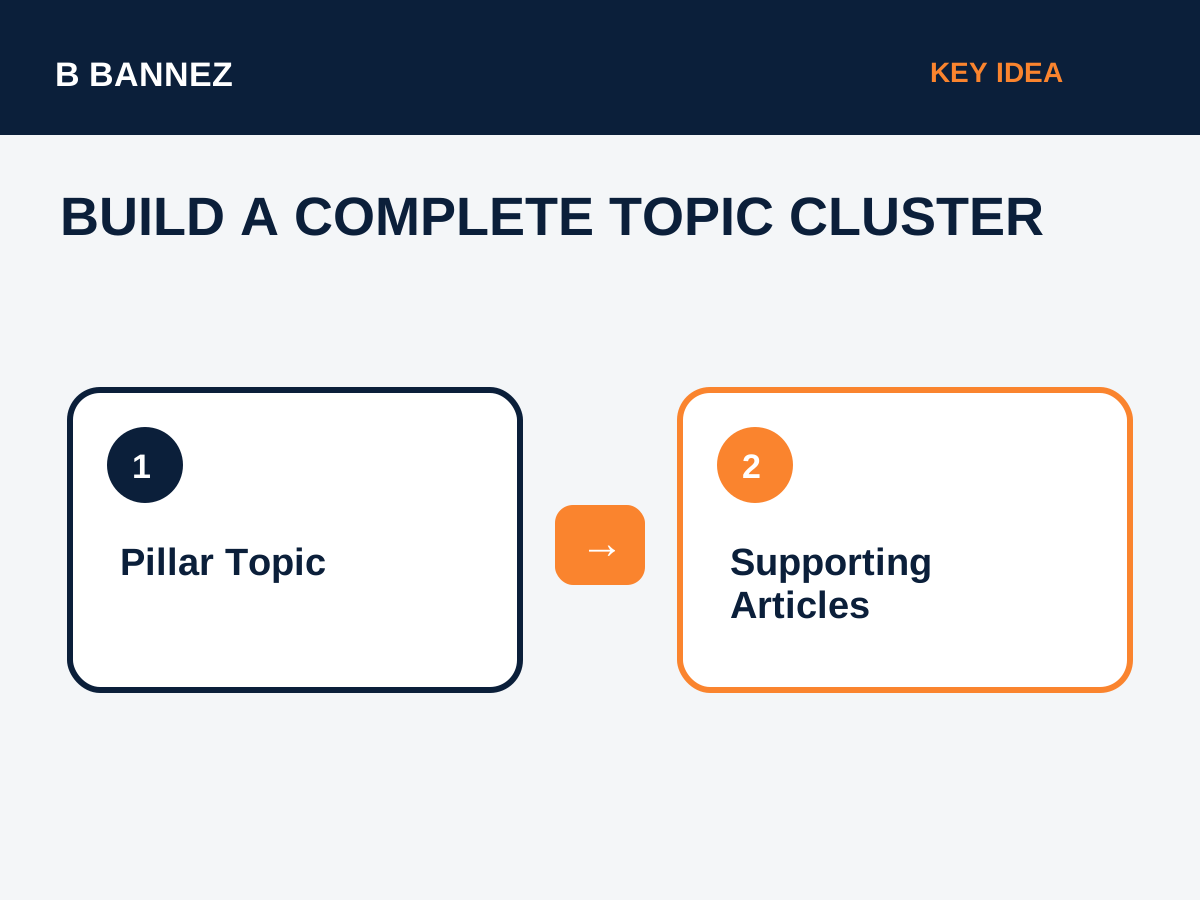
A topic cluster organizes related pages around a central theme. A pillar page covers the broad subject, while supporting articles answer narrower questions and search intents.
For example, a website monetization cluster could include:
- A broad guide to website monetization.
- AdSense approval requirements.
- Ads.txt troubleshooting.
- AdX vs AdSense comparisons.
- Ad placement and viewability guidance.
- Revenue metrics such as RPM and fill rate.
This structure helps users move naturally from a broad question to a specific one. It also gives search engines clearer context about how your pages relate to each other.
On Bannez, you can see this approach in our existing guides such as How to Monetize a New Website and Website Monetization Checklist.
How to Build Topical Authority Step by Step
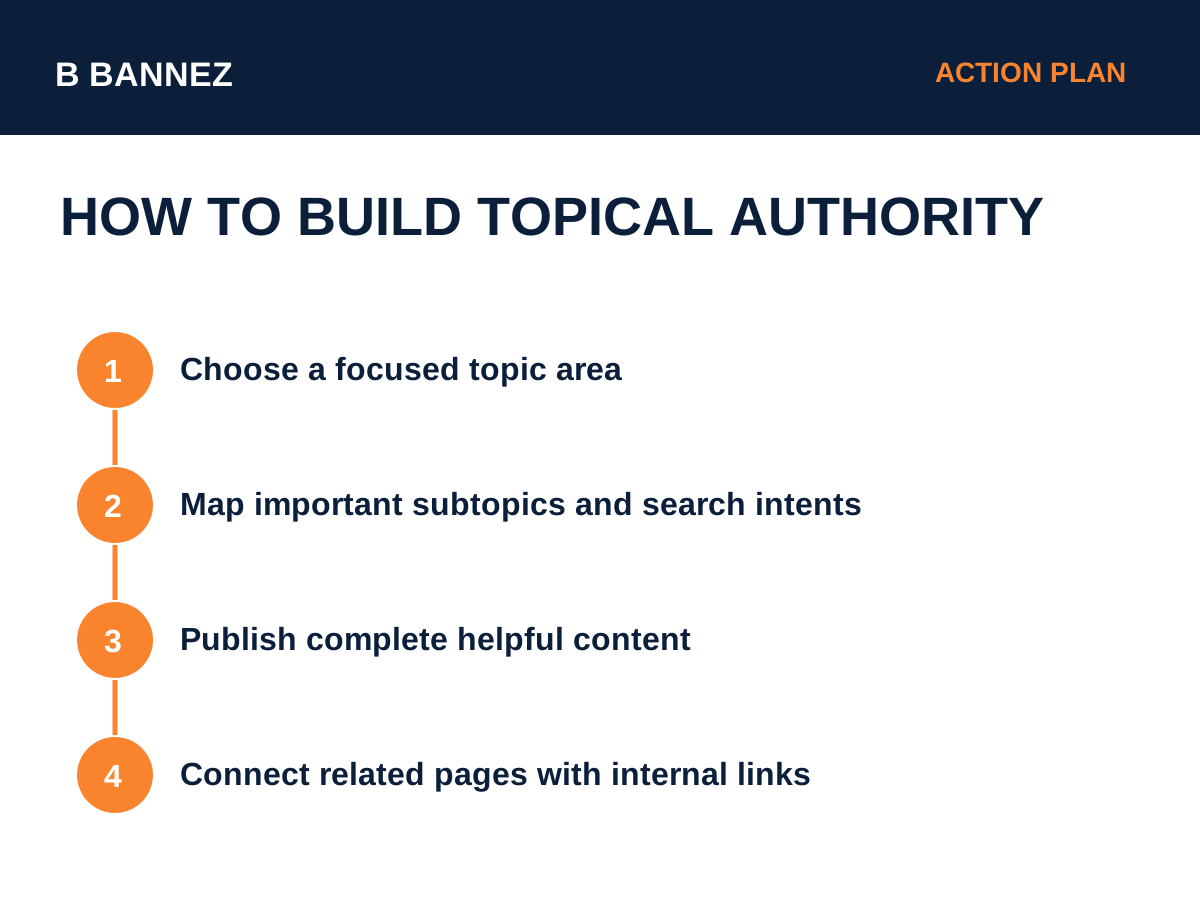
1. Choose a focused subject
Start with a subject that matches your business, audience, products, or services. Avoid choosing a topic only because it appears to have search volume. Your website should have a real reason to publish about the subject.
2. Map the main user questions
List beginner questions, comparison questions, troubleshooting questions, decision-making questions, and advanced questions. This becomes your topic map.
3. Group related search intents
Do not create a separate article for every slightly different keyword. If several keywords represent the same user need, one strong page is usually better than multiple near-duplicates.
4. Build pillar and supporting pages
Create a broad page for the main subject and supporting pages for important subtopics. Each page should have a distinct purpose.
5. Add useful internal links
Internal links help readers discover related information. They also give search engines context about the relationship between pages. Use descriptive anchor text rather than generic phrases like “click here.”
6. Improve existing content
Topical authority is not only about new articles. Update old pages when information changes, combine weak duplicates, expand incomplete sections, and improve internal links.
How to Find Content Gaps
A content gap is a meaningful question your target audience has that your site does not answer well yet. You can find gaps by reviewing Search Console queries, customer questions, support emails, competitor topic coverage, forum discussions, and the questions that naturally appear while writing related articles.
Before publishing a new post, search your own site. If you already have a page that answers the intent, update it instead of creating another competing article.
Topical Authority and Keyword Cannibalization
Building a cluster badly can create keyword cannibalization. If several pages target the same query and serve the same purpose, they may compete with each other. The solution is not to stop building clusters; it is to make each page’s role clear.
Our next guide, Keyword Cannibalization: What It Is and How to Fix It, covers this issue in detail.
Content Quality Signals to Focus On
- Original value: add explanations, examples, comparisons, or experience rather than rewriting existing pages.
- Clear scope: each page should solve one main problem or intent.
- Accurate sourcing: link to primary sources when facts, standards, or platform rules matter.
- Useful structure: use headings, tables, checklists, screenshots, and visuals where they improve understanding.
- Maintenance: revisit important pages when products, policies, or best practices change.
What Not to Do
Do not publish dozens of thin articles simply to cover keyword variations. Google’s people-first content guidance specifically warns against producing large amounts of content mainly to attract search visits. Focus on usefulness and completeness.
How Internal Linking Strengthens a Topic Cluster
Internal links should follow the user journey. A broad guide can link to deeper supporting pages, while supporting pages can link back to the pillar and to other closely related articles. This creates a logical network instead of isolated pages.
If you are writing SEO content for a business site and need a professionally structured article with relevant images and authority links, you can explore our SEO Content Writing with Images & Authority Links service.
Topical Authority Checklist
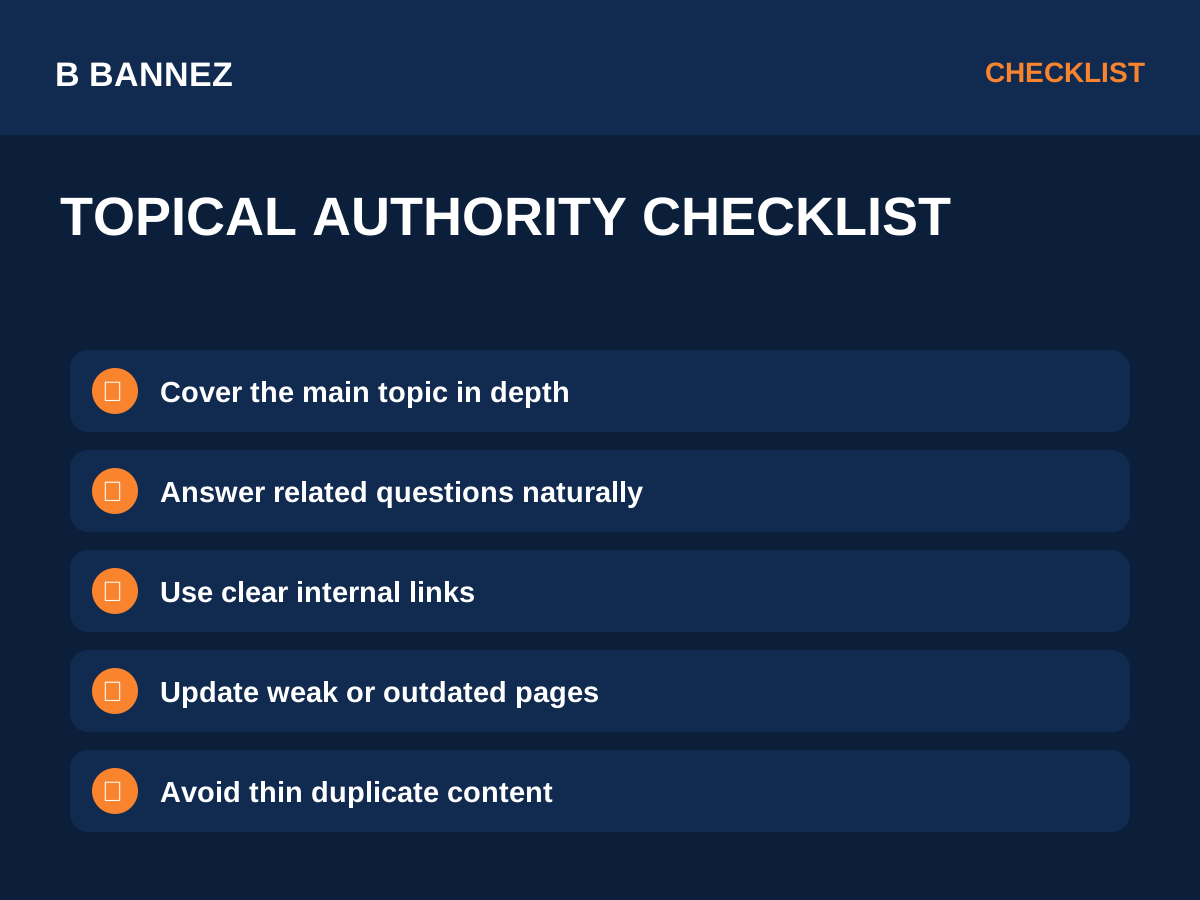
- Choose a subject that matches your site’s purpose.
- Create a topic map before publishing randomly.
- Separate broad and narrow search intents.
- Make every page useful on its own.
- Link related pages naturally.
- Check for duplicate or competing pages.
- Update old content instead of always creating new URLs.
- Use primary sources when factual accuracy matters.
- Track performance and refine weak areas.
FAQs
How many articles do I need for topical authority?
There is no fixed number. A narrow topic may need a small set of excellent pages, while a broad subject may require many more. Coverage quality matters more than an arbitrary count.
Does topical authority guarantee rankings?
No. Search visibility depends on many factors. Strong topical coverage can improve usefulness and context, but it does not guarantee a specific ranking.
Can a new website build topical authority?
Yes. Start narrow, publish useful content consistently, and connect the pages logically.
Conclusion
Topical authority is built by becoming genuinely useful around a subject. Choose a focused area, map the questions your audience asks, create distinct pillar and supporting pages, use strong internal links, remove duplication, and keep important content current.
The best next action is simple: pick one core service or subject on your site, list every important question around it, mark which questions you already answer, and build the missing pages in a logical order.
