
How Much Does It Cost to Build a Shopify Store?
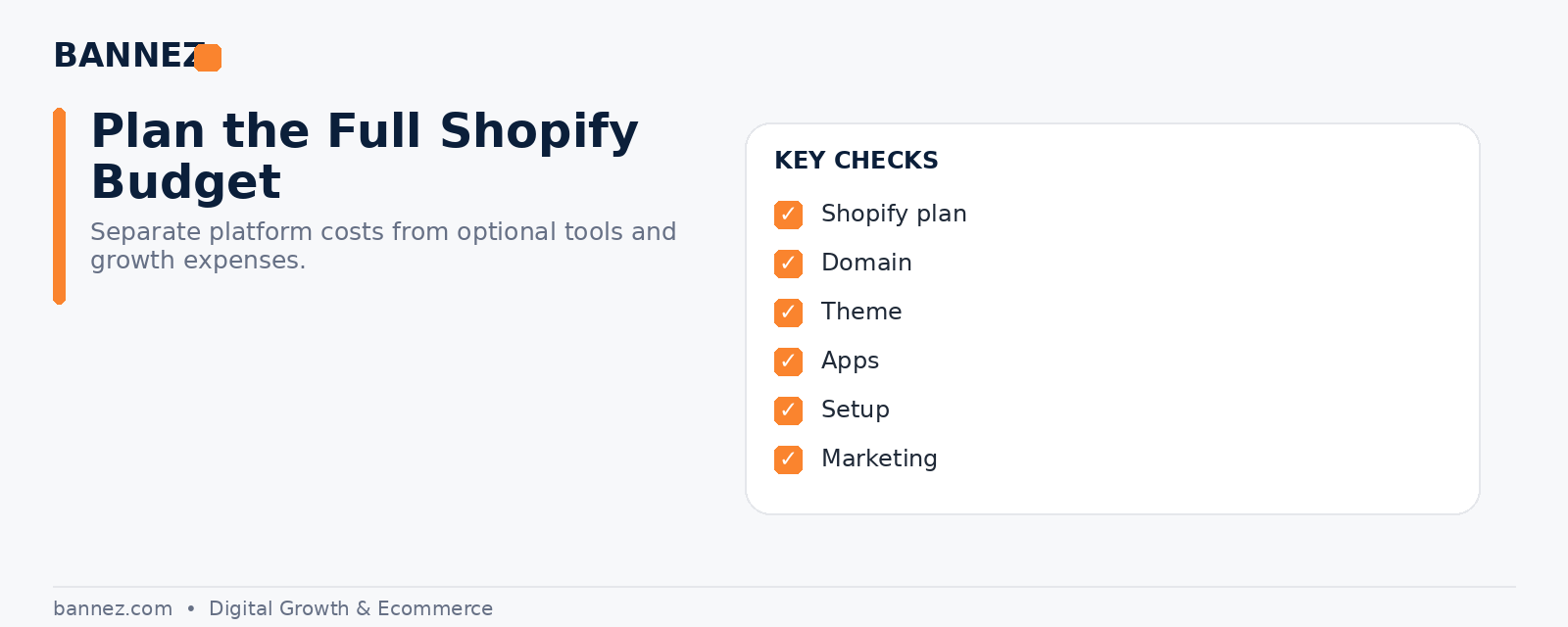
The cost to build a Shopify store depends on much more than the monthly Shopify subscription. A basic store can be started with a small budget, while a more customized ecommerce business may also pay for a domain, paid theme, apps, professional setup, product content, branding, and ongoing marketing.
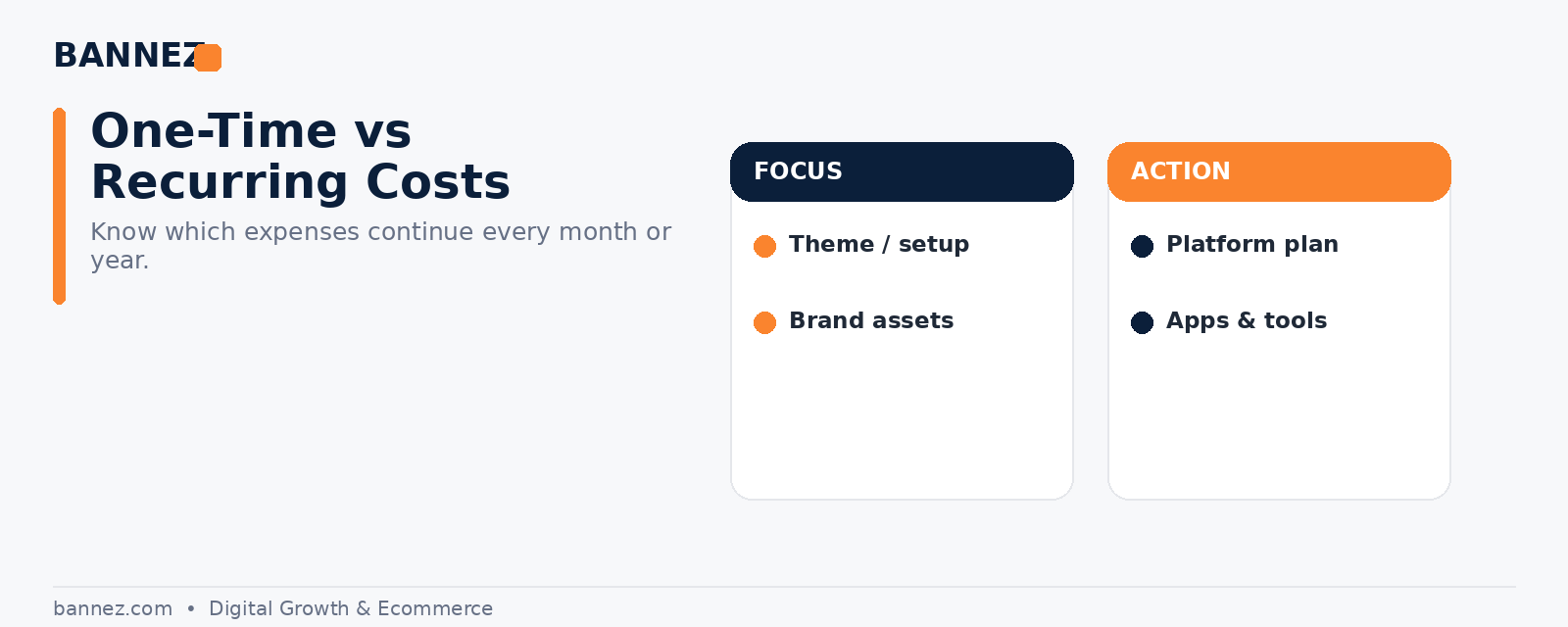
The best way to estimate Shopify store cost is to separate one-time setup costs from recurring operating costs. This guide explains the main expenses so you can build a realistic budget.
1. Shopify Subscription Cost
Shopify offers different plans for different business sizes and requirements. Prices and promotions can change by country and over time, so always check the current official Shopify pricing page for the latest plan information available in your region.
When comparing plans, look beyond the monthly fee. Consider staff accounts, reporting, shipping features, payment rates, international selling tools, and any features your business actually needs.
2. Domain Name Cost
A custom domain gives the store a professional web address. Domain cost depends on the extension, registrar, renewal price, and whether the name is already registered. Remember to budget for yearly renewal, not only the first-year offer.
3. Shopify Theme Cost
Free themes
Many stores can start with a free Shopify theme. A free theme can still look professional if it is configured carefully and the product content is strong.
Paid themes
A paid theme may be useful when it already includes layouts or features that fit your store. Before buying, confirm what is included and what support is available. Shopify’s official theme selection guide explains how to compare themes by features and industry.
4. Apps and Integrations
Apps can become one of the largest recurring costs if they are added without a plan. Common app categories include dropshipping integration, reviews, email marketing, bundles, subscriptions, tracking, customer support, analytics, and upsells.
Before installing an app, ask:
- Does Shopify or the theme already provide this function?
- Is the feature important at launch?
- Is the app fee monthly, usage-based, or transaction-based?
- Will the app add scripts that affect store performance?
- Can one app replace several smaller apps?
5. Professional Shopify Store Setup
If you build the store yourself, you can reduce direct setup cost but will spend your own time on design, navigation, product setup, pages, apps, policies, and testing. Hiring a professional team adds a service cost but can reduce the amount of technical and design work you need to handle personally.
If you need this service, you can explore our Shopify Dropshipping Store Development & Setup service here.
6. Product Content and Images
Good ecommerce content has a cost, whether you produce it yourself or outsource it. Budget may include product photography, image editing, product descriptions, collection copy, sizing guides, video, or graphics.
For dropshipping stores, supplier images and descriptions may be available, but using them without review can make the store look generic. Improve content where it helps customers understand the product.
7. Payment Processing and Transaction Costs
Payment costs depend on the payment provider, Shopify plan, customer location, and transaction type. Shopify explains supported options in its official payments documentation. Check current rates for the providers you plan to use rather than assuming a fixed percentage.
8. Shipping and Fulfillment Costs
Dropshipping removes the need to hold inventory yourself, but shipping is still a real business cost. Supplier shipping fees, faster delivery options, tracking, packaging, replacements, and returns can all affect margins.
Build these costs into your product pricing before you start paid promotion.
9. Taxes, Duties, and Compliance Costs
Taxes and legal requirements vary by country and customer location. Some businesses may need registrations, accounting support, tax tools, legal review, or other compliance work. Shopify’s official tax information is a useful platform reference, but professional advice may be needed for your own situation.
10. Marketing and Customer Acquisition
Building the store and attracting customers are separate costs. A launch budget may include paid advertising, influencer partnerships, content creation, email tools, SEO work, or social media production.
Do not spend the entire budget on design and leave nothing for customer acquisition or testing.
Example Shopify Store Budget Categories
| Cost area | Typical type | Required? |
|---|---|---|
| Shopify plan | Recurring | Yes for an active online store |
| Domain | Yearly | Strongly recommended |
| Theme | Free or one-time | Theme required; paid theme optional |
| Apps | Free or recurring | Depends on features |
| Professional setup | One-time/project | Optional |
| Product content | One-time/ongoing | Yes, source may vary |
| Payments | Per transaction | Usually |
| Marketing | Ongoing | Depends on growth plan |
How to Keep Shopify Store Costs Under Control
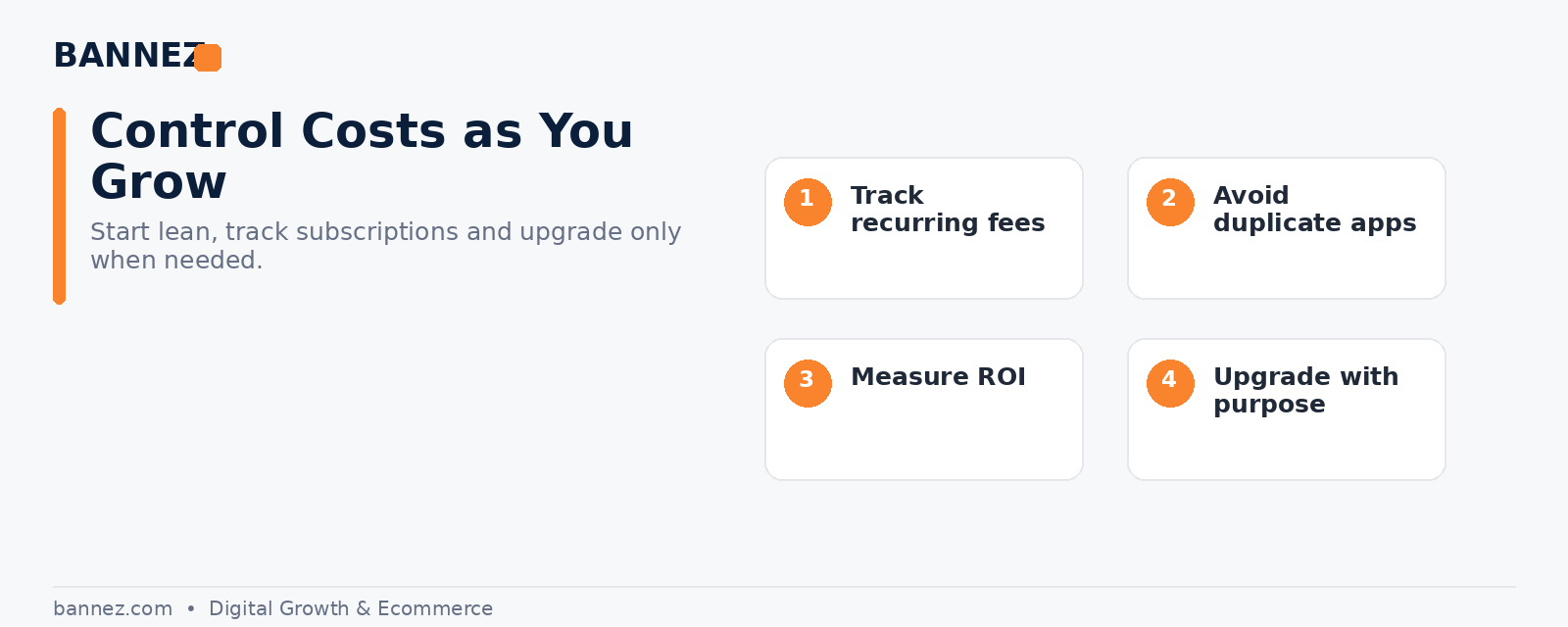
- Start with the plan you actually need.
- Use a free theme if it meets your requirements.
- Install fewer apps at launch.
- Track every recurring subscription.
- Test products before scaling marketing spend.
- Use clear product margins that include shipping and fees.
- Upgrade design or tools when there is a business reason.
Frequently Asked Questions
Can I build a Shopify store with a small budget?
Yes. A focused store can begin with a standard plan, custom domain, free theme, and only essential apps. Your total cost increases as you add paid tools, custom design, and marketing.
Is a paid Shopify theme necessary?
No. A free theme can be enough if it supports the layout and features you need.
What is the most commonly forgotten Shopify cost?
Recurring app subscriptions, payment costs, marketing, and product returns are often overlooked when people focus only on the platform fee.
Conclusion
There is no single fixed cost to build a Shopify store. Start with the platform, domain, theme, apps, setup, product content, payment fees, shipping, and marketing. Separate essential costs from optional upgrades, and review recurring expenses every month. A controlled budget is more useful than an expensive store filled with features you do not need.
