
How to Monetize a New Website: A Step-by-Step Publisher Guide
Monetizing a new website is not only about adding ad code. A strong monetization plan starts with useful content, genuine visitors, policy compliance, and a website that people can trust and use easily.
This guide explains how to monetize a new website step by step so you can build a safer and more sustainable publisher setup.
Step 1: Build a Useful Website Before Adding Ads
Choose a clear topic and publish useful original content. Visitors should understand what your website offers and why they should return.
- Use a clear homepage.
- Create logical categories.
- Publish original articles or resources.
- Remove demo and unfinished pages.
- Make navigation simple.
Step 2: Add Trust, Contact, and Privacy Information
Create the pages your website and audience need, such as About, Contact, Privacy Policy, Terms, disclosures, or other legal information. Advertising often involves third-party technology, so privacy information matters.
Step 3: Build Genuine Traffic
Focus on visitors who choose to visit your content. Search, direct visits, social media, referrals, newsletters, and legitimate promotion can all be useful. Avoid bots, forced traffic, click exchanges, and any source designed to manipulate ad activity.
Step 4: Choose a Monetization Method
Display Advertising
AdSense, AdX, and third-party ad networks can monetize page views through advertising demand.
Affiliate Marketing
You can earn commissions by recommending products or services when this fits your content. Use clear disclosures and follow the rules of the affiliate program and applicable law.
Direct Sponsorships
Established sites may sell sponsorships or direct ad placements to relevant businesses.
Products or Services
A website can also monetize through digital products, subscriptions, consulting, services, memberships, or e-commerce.

Step 5: Research Ad Network Requirements
Do not assume every network accepts every website. Check current traffic requirements, supported countries, content rules, payment terms, ad formats, and technical requirements.
If you are considering Google AdSense, review Google’s official eligibility and publisher policy pages before applying.
Step 6: Prepare the Website for Review
- Improve thin content.
- Fix broken links.
- Test mobile navigation.
- Remove copied or risky content.
- Review traffic quality.
- Check privacy and consent.
- Make sure important pages work without login.
Step 7: Apply to the Right Network
Choose a network that matches your current website rather than applying to every platform at once. Read all commercial terms before accepting an account or partner relationship.
Step 8: Set Up Ads Carefully
After approval, add ad code using the method supported by your platform. Keep ads away from navigation and buttons, test mobile layouts, and avoid excessive ad density.
Step 9: Configure Ads.txt When Required
Some advertising setups use ads.txt to identify authorized sellers. Use the exact seller records supplied by your ad network or partner and verify the public root file.
Step 10: Track Performance
- Revenue
- RPM
- Ad impressions
- Viewability
- Page speed
- Country performance
- Device performance
- Top pages
- Session depth
- Policy or account warnings
Step 11: Improve the Website Before Adding More Ads
If revenue is low, first improve content, page speed, viewability, navigation, session depth, and technical setup. Adding more ads is not always the best solution.
Step 12: Diversify Monetization Over Time
As the website grows, consider adding more than one suitable revenue source so the business does not depend entirely on one ad network.
Get a Free Website Monetization Readiness Review
If you are preparing a new website for an ad network, Bannez offers a 100% Free Website Analysis & Recommendations for Any Ad Network. For AdSense specifically, use our free AdSense website analysis.
Once your network is approved, Bannez can also help with Website Ad Placement & Ad Network Integration or ads.txt and website ad setup issues, depending on what your site needs.
Frequently Asked Questions
Can a brand-new website make money from ads?
Yes, if it qualifies for a suitable network, but meaningful revenue usually requires useful content, real traffic, and time.
Should I monetize before I get traffic?
You can prepare early, but advertising is more useful after the website has real content and genuine visitors.
Is display advertising the only way to monetize?
No. Affiliate marketing, sponsorships, products, memberships, and services are other common models.
Conclusion
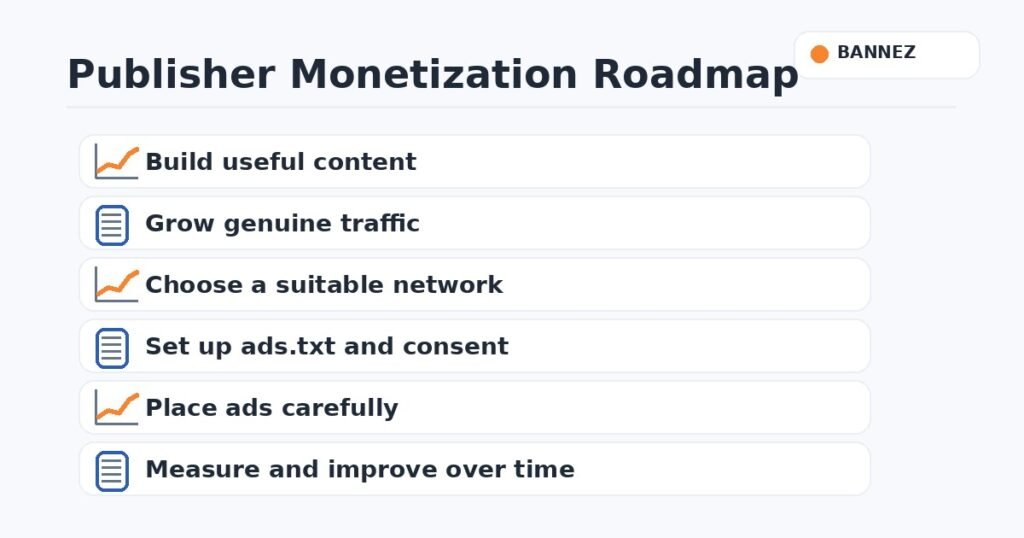
To monetize a new website successfully, build the website first and the advertising second. Create useful content, grow genuine traffic, understand policies, choose the right network, implement ads carefully, and track performance. A strong publisher foundation gives you more options as the website grows.
