
How to Improve Website Ad Revenue Without Increasing Traffic
More traffic can increase ad revenue, but it is not the only way to earn more. A website can sometimes improve revenue from the same audience by fixing weak ad placements, improving viewability, reducing technical problems, and understanding which pages and visitors create the most value.
This guide explains how to improve website ad revenue without increasing traffic while keeping user experience and publisher policies in mind.
Start With the Right Revenue Metrics
Do not judge performance only by total earnings. Review RPM, impressions, fill rate, viewability, clicks where relevant, page views, sessions, device type, country, and individual page performance. Google defines RPM as estimated earnings divided by the number of page views or impressions and multiplied by 1,000.

Ways to Improve Ad Revenue With the Same Traffic
1. Improve Ad Viewability
An ad that loads where users never see it has less value to advertisers. Google Active View measures whether impressions are viewable. Place ads where users naturally spend time instead of hiding units at the bottom of pages that few visitors reach.
2. Improve Placement Without Creating Accidental Clicks
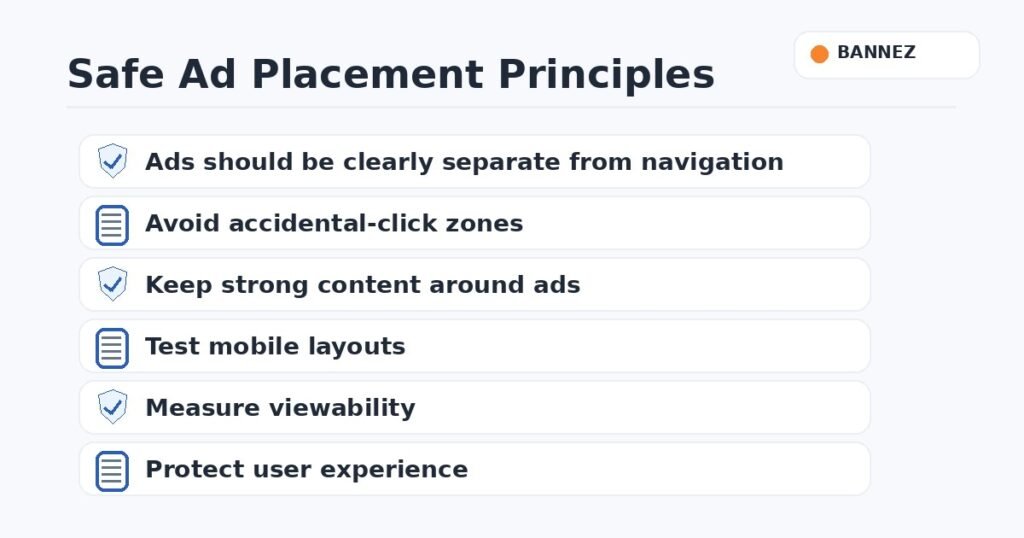
High-performing placements should still be clearly separated from menus, buttons, download links, and other controls. Good monetization does not require tricking users.
3. Review Mobile and Desktop Separately
A placement that performs well on desktop may be poor on mobile. Compare device-level performance and make sure ads do not cover content or make pages difficult to use.
4. Reduce Page-Speed Problems
Slow pages can reduce engagement and session depth. Compress images, reduce unnecessary scripts, use caching where appropriate, and check Core Web Vitals. Faster pages can help more users reach content and ad positions.
5. Increase Session Depth Naturally
If visitors read more useful pages per session, the site can create more legitimate ad opportunities without buying more traffic.
- Add useful internal links.
- Recommend related articles.
- Use clear category navigation.
- Improve article structure so users keep reading.
6. Compare Revenue by Country
Advertiser demand differs by market. Two sites with the same traffic count can earn very different amounts because visitor geography is different. Use reports to understand which regions create higher or lower RPM.
7. Compare Revenue by Content Type
Some pages may have strong advertiser demand while others do not. Find pages with high RPM and understand why they perform well, but do not rewrite your entire site only for advertising value.
8. Remove Broken or Empty Ad Units
Check ad tags, inventory, responsive behavior, consent, ads.txt, and blocked demand. A technical setup problem can reduce fill or stop ads from serving.
9. Review Ad Density
Adding more ads does not always increase total revenue. Too many ads can reduce page speed, user trust, and session depth. Test a balanced layout.
10. Improve Demand Competition
Advanced publishers may improve competition through better ad-manager configuration, direct campaigns, or additional approved demand relationships. Any change should follow the rules of the platforms you use.
Revenue Optimization Checklist
- Track page RPM and impression RPM.
- Check viewability.
- Review mobile separately.
- Test page speed.
- Measure session depth.
- Compare countries and pages.
- Fix ads.txt and tag errors.
- Keep ads clearly separated from navigation.
- Reduce unnecessary ad density.
- Monitor policy and invalid-traffic warnings.
Need Help Improving Your Website Ad Setup?
If your ads are already approved but the implementation needs improvement, Bannez offers Website Ad Placement & Ad Network Integration. Our team can help place approved ad code on suitable website pages and improve the technical setup within the service scope.
Frequently Asked Questions
Can RPM increase without more traffic?
Yes. RPM can change because of demand, geography, viewability, ad formats, page mix, seasonality, and setup quality.
Should I add more ads to earn more?
Not automatically. More units can hurt speed and user experience. Test quality placements instead of simply increasing quantity.
Does better viewability guarantee higher revenue?
No. It can help inventory quality, but revenue still depends on advertiser demand and many other factors.
Conclusion
Improving ad revenue without more traffic is mainly an optimization problem. Measure the right metrics, improve viewability, protect user experience, fix technical issues, and understand which pages and audiences create the strongest results.
