
How to Prepare Your Website for Ad Network Approval Before Applying
Applying to an ad network before your website is ready can waste time and make the review process harder. A better approach is to prepare the website first, check the most common problems, and only then submit your application.
This guide explains how to prepare your website for ad network approval in simple English. The exact rules can be different for every network, but the same basic areas matter again and again: useful content, clear navigation, genuine traffic, trust, privacy, technical quality, and policy compliance.
Why Website Preparation Matters Before Applying
An ad network is not only checking whether your website can display an ad. It may also review whether the site is useful to real visitors, whether the traffic is legitimate, whether the content is allowed, and whether the site is technically ready for advertising.
For example, Google’s official AdSense eligibility guidance focuses on unique content, policy compliance, site access, and account eligibility. Google also requires publishers using its advertising products to follow the Google Publisher Policies.

Website Approval Checklist Before You Apply
1. Make Your Website Topic Clear
A visitor should understand the main purpose of the website quickly. A site that mixes many unrelated topics without a clear structure can feel unfinished or low quality.
- Use clear categories.
- Keep the main navigation simple.
- Make the homepage explain what the site offers.
- Remove empty or test sections.
2. Publish Useful and Original Content
Do not apply with a website full of copied, very short, unfinished, or repetitive pages. Your strongest content should solve real user problems and provide information that is worth reading.
- Write original content.
- Improve thin pages.
- Remove placeholder text.
- Check facts before publishing.
- Make headings and paragraphs easy to scan.
3. Add Clear Trust and Contact Information
Professional websites normally make it easy for users to understand who runs the site and how to contact the publisher. Depending on your website and audience, this may include an About page, Contact page, Privacy Policy, Terms, refund information, or other relevant legal pages.
4. Check Every Important Navigation Link
Broken menu links, empty categories, missing pages, and confusing navigation can make a website look unfinished. Test the site as a normal visitor instead of only checking it while logged in to WordPress.
5. Review Publisher Policies Before the Application
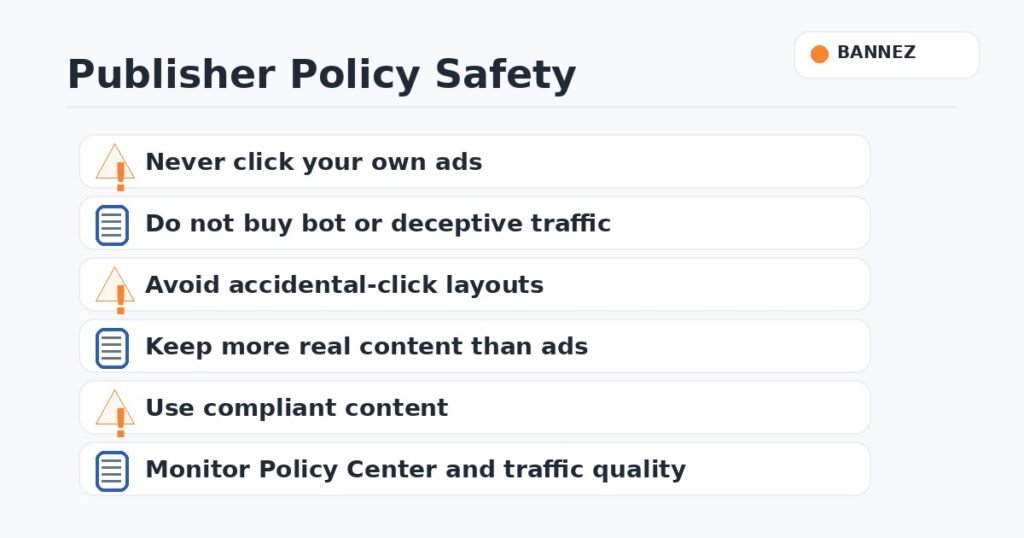
Every network has its own policies. Read them before you apply, not after a rejection. Pay attention to prohibited content, misleading pages, invalid traffic, privacy rules, ad placement restrictions, and copyrighted material.
6. Check Traffic Quality
Traffic numbers alone do not make a website ready for monetization. Networks may care about where visitors come from and whether the activity looks genuine.
- Avoid bots and automated traffic.
- Avoid click-exchange systems.
- Do not ask users to click future ads.
- Avoid deceptive redirects and forced visits.
- Use analytics to understand your real traffic sources.
7. Make the Website Mobile Friendly
A large part of website traffic can come from phones. Check the menu, fonts, images, forms, buttons, tables, cookie banner, and future ad spaces on a smaller screen.
8. Fix Slow or Broken Pages
Ad networks do not all use the same speed requirement, but a slow or unstable site gives users a poor experience. Compress large images, remove unnecessary scripts, fix server errors, and check that important pages load reliably.
9. Prepare Privacy and Consent
Advertising can involve cookies, device information, personalized advertising, and third-party technology. Your responsibilities depend on the countries you serve and the network you use. Review the network’s privacy and consent requirements before adding ad code.
10. Remove Demo, Duplicate, and Low-Value Pages
WordPress websites often collect old demo pages, test categories, tag archives, sample posts, or duplicate content. Clean these areas so the website presents a clear and finished structure.
Do You Need a Minimum Amount of Traffic?
There is no single traffic rule for every ad network. Some networks have published traffic requirements, while others review websites using different eligibility rules. Check the current official requirements for the exact network you want to join.
Should You Apply to Several Networks at the Same Time?
You can research several options, but do not accept multiple integrations without understanding how they work together. Some networks may require exclusive arrangements, specific ad placements, or changes to your ad stack.
Final Pre-Application Checklist
- Website purpose is clear.
- Important pages contain useful original content.
- Navigation works on desktop and mobile.
- Contact and privacy information are available.
- No obvious demo or unfinished pages remain.
- Traffic sources are genuine.
- Policies for the target ad network have been reviewed.
- Pages load correctly.
- Consent and privacy requirements are understood.
- You know exactly which ad network you are applying to and why.
Get a Free Website Analysis Before Applying
If you want an extra review before submitting your website, Bannez provides a 100% Free Website Analysis & Recommendations for Any Ad Network. Tell our team which network you are planning to apply for, and we will review common content, structure, navigation, and monetization-readiness issues.
Frequently Asked Questions
Can a new website get approved by an ad network?
Yes, depending on the network. Some networks accept smaller or newer sites, while others have traffic or quality requirements. Check the current official rules.
Does a professional design guarantee approval?
No. Good design helps usability, but networks can also review content, policies, traffic, privacy, and account eligibility.
Should I apply again immediately after rejection?
Usually it is better to identify and fix the real problem first. Reapplying with no meaningful changes rarely improves your website.
Conclusion
Preparing a website for ad network approval is mostly about building a strong website before adding advertising. Focus on useful content, real visitors, policy compliance, clear navigation, mobile usability, trust, privacy, and technical quality. When these areas are in good shape, you can apply with a much stronger foundation.
