
Why Your Website Gets Traffic but Makes Little Ad Revenue
Getting website traffic does not automatically mean strong advertising revenue. Two websites with the same number of visitors can earn very different amounts because revenue depends on many factors beyond traffic volume.
This guide explains why your website gets traffic but makes little ad revenue and what you can check before assuming the only answer is more visitors.
Traffic Is Only One Part of Ad Revenue
Advertising revenue can be affected by RPM, advertiser demand, visitor country, device type, ad viewability, page topic, seasonality, ad placement, session depth, consent, page speed, invalid traffic, and technical setup.

10 Reasons Your Website Traffic May Earn Little Ad Revenue
1. Your RPM Is Low
RPM shows estimated earnings for every 1,000 page views or impressions, depending on the report. A site can have many page views but still earn little if RPM is low.
2. Most Visitors Come From Lower-Demand Markets
Advertiser competition varies by country. Traffic from one market may be worth much more or less than the same number of visits from another market.
3. Ads Have Poor Viewability
If ads load below content users rarely reach, advertisers may see less value in those impressions. Check viewability reports where your ad platform provides them.
4. Your Visitors Leave After One Page
Short sessions create fewer legitimate ad opportunities. Improve internal linking, content quality, navigation, and related-content recommendations so users can naturally discover more useful pages.
5. Your Page Topic Has Lower Advertiser Demand
Some topics attract more advertiser competition than others. This does not mean you should abandon your audience, but it explains why traffic alone cannot predict earnings.
6. Ad Placement Is Weak
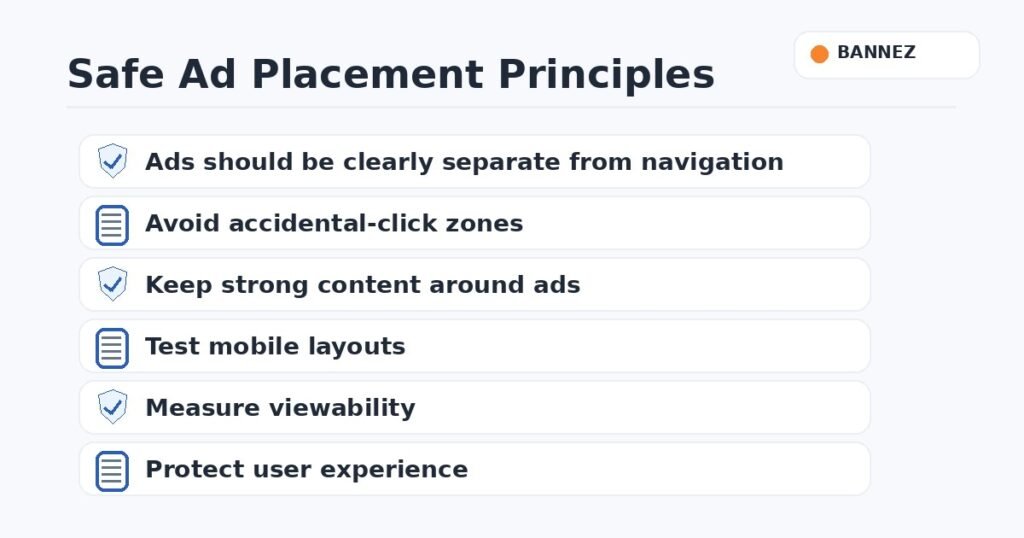
Ads may be placed where users do not see them, or the page may have too many units that reduce speed and engagement. Test fewer, stronger placements instead of simply adding more.
7. Technical Errors Are Reducing Fill
Broken tags, consent issues, ads.txt errors, blocked scripts, incorrect inventory, or account configuration problems can reduce demand or stop ads from serving.
8. Pages Are Too Slow
If users leave before the page and ad positions load, the site loses opportunities. Improve images, scripts, caching, hosting, and layout stability.
9. Traffic Quality Is Poor
Bot traffic, forced visits, low-intent traffic, or suspicious acquisition may create page views without meaningful advertiser value and can also create policy risk.
10. Seasonality Has Reduced Demand
Advertising demand changes during the year. A strong month and a weak month can have different RPM even with similar traffic.
How to Diagnose Low Ad Revenue
- Compare RPM month by month.
- Break reports down by country.
- Compare mobile and desktop.
- Review viewability.
- Check page-level performance.
- Measure pages per session.
- Test site speed.
- Review ads.txt and ad tags.
- Check Policy Center or account warnings.
- Review traffic-source quality.
Need Help With Website Ad Setup?
If low revenue may be connected to poor placement or implementation, Bannez offers Website Ad Placement & Ad Network Integration. If you are seeing ads.txt or setup warnings, our Fix Ads.txt Errors & Website Ad Setup Issues service may be more suitable.
Frequently Asked Questions
Why is my RPM suddenly lower?
RPM can change because of demand, geography, device mix, seasonality, page mix, viewability, and technical issues.
Will doubling traffic double ad revenue?
Not necessarily. If the new traffic has different quality, geography, behavior, or advertiser demand, revenue may not increase at the same rate.
Can bad ad placement reduce earnings?
Yes. Poor viewability, accidental-click risk, slow loading, and weak user experience can all hurt monetization quality.
Conclusion
If your website gets traffic but earns little from ads, do not look at visitor count alone. Review RPM, geography, viewability, page speed, traffic quality, session depth, advertiser demand, and technical setup. Better diagnosis usually leads to better decisions than simply buying more traffic.
