
10 Ways to Increase Website Traffic
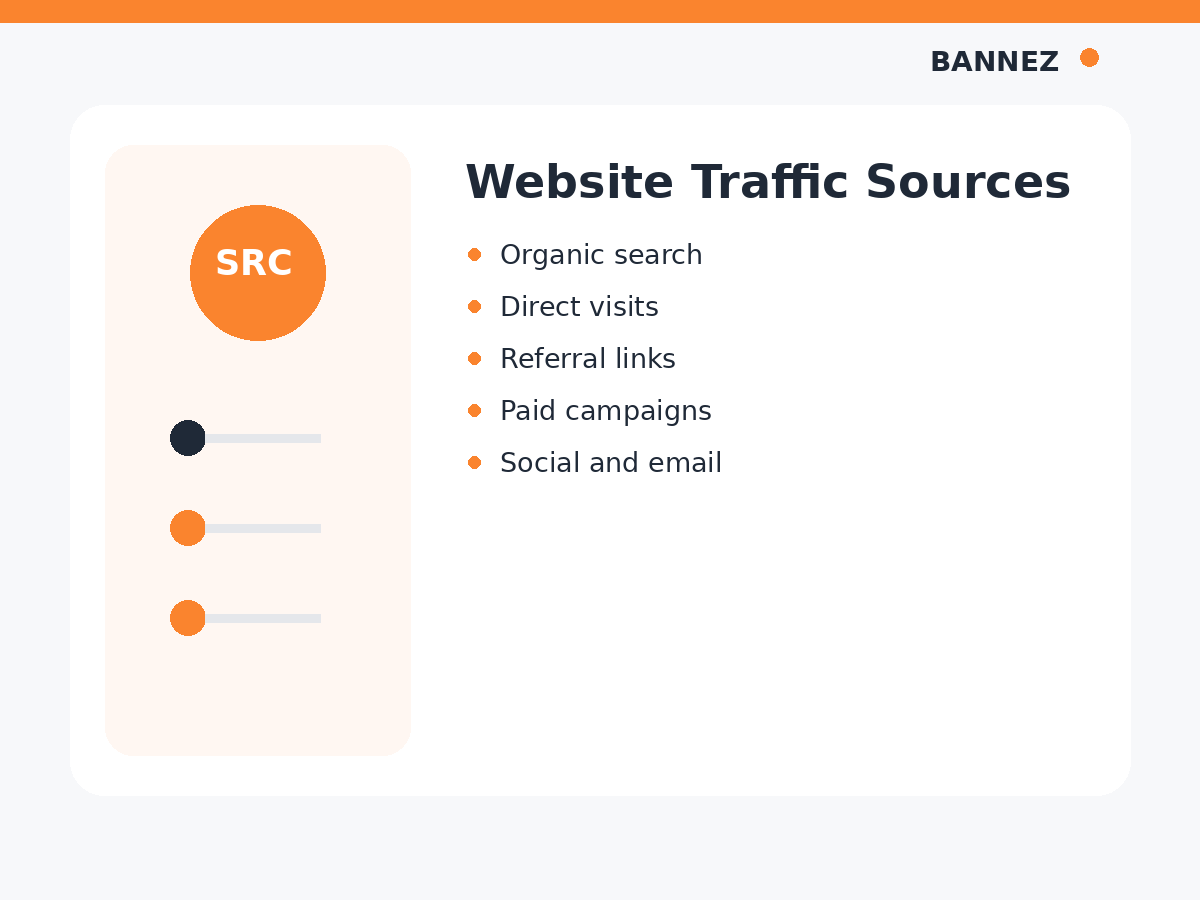
Increasing website traffic is not about finding one trick that suddenly sends thousands of visitors. Sustainable growth usually comes from several channels working together: useful content, search visibility, internal links, referrals, social promotion, email, partnerships, and paid campaigns when they fit the goal.
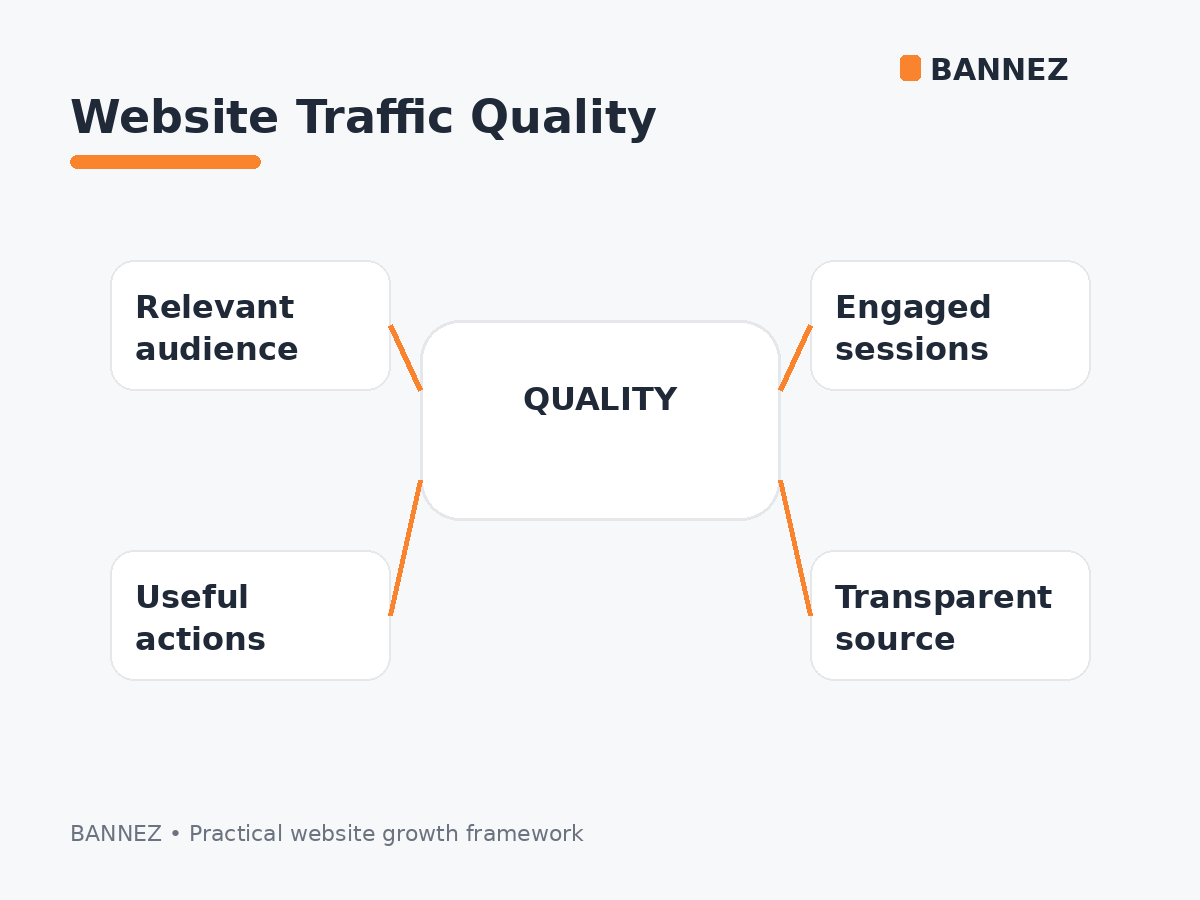
The most important rule is simple: focus on relevant traffic, not just higher numbers. A smaller audience that actually needs your content, product, or service can be more valuable than a much larger random audience.
1. Improve Your SEO Basics
Search engine optimization helps search engines understand your pages and helps people discover them through search results. Google recommends creating helpful pages, using descriptive titles, organizing content clearly, and making important pages easy to crawl and understand.
Start with Google’s current SEO Starter Guide.
Practical SEO actions
- Use clear page titles and headings
- Match content to real search intent
- Keep important pages crawlable
- Use descriptive internal links
- Update outdated information
- Make pages work well on mobile
2. Publish Useful Search-Focused Content
Blog posts, guides, comparisons, tutorials, checklists, and FAQs can attract visitors when they answer questions people are actively searching for.
Do not publish content only to hit a word count. Google states that there is no magical word count for ranking. Focus on usefulness, clarity, accuracy, and completeness for the topic.
If content production is the bottleneck, you can explore our SEO Content Writing service for professionally structured website content.
3. Build Strong Internal Links
Internal links help visitors discover related pages and help search engines understand how content on your site connects.
Good internal-link opportunities include
- Related blog posts
- Relevant service pages
- Supporting tutorials
- Category or pillar pages
- Frequently referenced resources
For example, readers learning about traffic can continue with our Website Traffic: A Complete Beginner’s Guide.
4. Update Old Content
An older page may lose usefulness when statistics, screenshots, links, examples, or recommendations become outdated. Updating strong existing content can sometimes be more efficient than publishing another similar page.
Review our guide on How to Update Old Blog Posts for Better SEO.
5. Promote Content on Relevant Social Platforms
Social media can help distribute content to people who already follow your brand or are interested in the topic. The best platform depends on your audience.
Examples
- LinkedIn for B2B and professional topics
- Facebook for communities and broad consumer audiences
- X for timely discussions and industry updates
- YouTube for tutorials and demonstrations
- Visual platforms when imagery strongly supports the topic
6. Build an Email Audience
Email can bring returning visitors back to new articles, offers, product updates, or useful resources. Unlike social reach, an email list gives you a direct communication channel with people who chose to hear from you.
Good email traffic practices
- Send useful content, not only promotions
- Use clear subject lines
- Link to one primary destination when possible
- Track campaign links correctly
- Respect consent and unsubscribe requirements
7. Earn Referral Traffic Through Partnerships
Referral traffic comes from links on other websites. Useful referral opportunities can come from partnerships, directories, interviews, guest contributions, industry resources, communities, and genuine mentions.
A strong referral is valuable because the visitor already has context before reaching your site.
8. Improve Page Experience and Conversion Paths
Traffic growth is less useful when visitors immediately leave because pages are slow, confusing, or difficult to use. Improve navigation, mobile usability, calls to action, forms, and landing-page clarity.
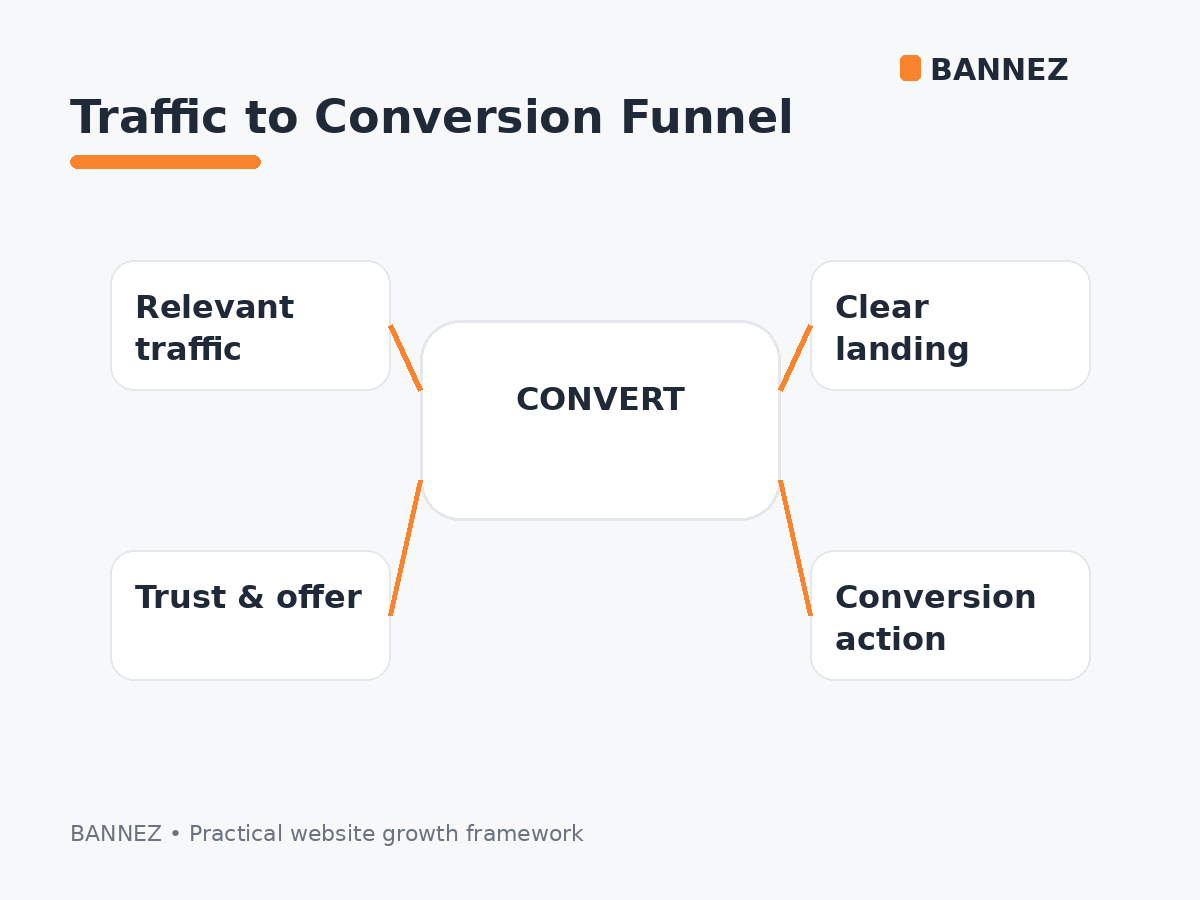
If you already receive visits but few useful actions, read Why Your Website Gets Traffic but No Conversions.
9. Use Paid Traffic When It Fits the Goal
Paid campaigns can generate visits faster than organic channels, but they require budget, targeting, and measurement. Google Ads lets advertisers choose objectives such as Website traffic, Leads, or Sales so campaign setup can match the intended result.
See Google’s campaign objectives documentation.
If broad paid visits fit an appropriate campaign objective, you can explore our Worldwide Website Traffic service. It should be treated as paid traffic and measured separately from organic search traffic.
10. Measure Which Channels Actually Work
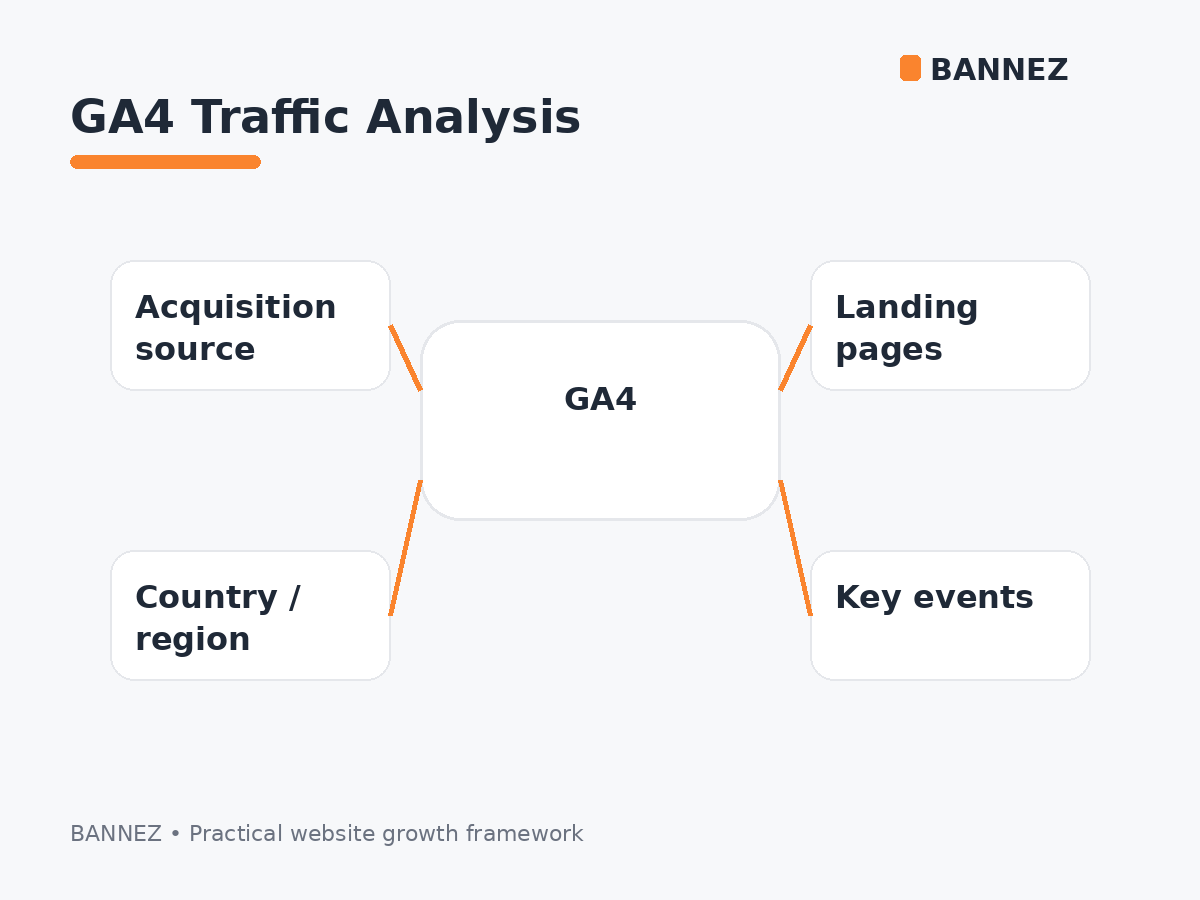
Do not keep increasing traffic from a channel simply because the session count is high. Use GA4 to compare acquisition sources with engagement, landing pages, countries, and key events.
Google’s Traffic acquisition report helps analyze session-level traffic sources.
Which Traffic Methods Work Fastest?
| Method | Typical speed | Main strength |
|---|---|---|
| SEO | Usually slower | Long-term search discovery |
| Content publishing | Slow to medium | Builds searchable assets |
| Social promotion | Fast when audience exists | Immediate distribution |
| Fast when list exists | Returning visitors | |
| Referral partnerships | Medium | Contextual audiences |
| Paid campaigns | Fast | Controlled acquisition |
Website Traffic Growth Checklist
- SEO basics are implemented
- Useful content is published consistently
- Old content is reviewed
- Internal links connect related pages
- Social channels match the audience
- Email subscribers receive useful updates
- Referral opportunities are developed
- Landing pages work well on mobile
- Paid traffic has a clear objective
- GA4 measures source, engagement, and key events
Frequently Asked Questions
What is the best way to increase website traffic?
There is no single best channel for every website. SEO, content, email, referrals, social, and paid acquisition can all work depending on the audience and goal.
How long does SEO take to increase traffic?
There is no fixed timeline. Google notes that some search-related changes can take hours while others can take weeks or months to show an effect.
Can paid traffic increase organic Google rankings?
Paid visits and organic rankings are separate. Google does not sell organic ranking positions, and paying for traffic does not automatically improve organic rankings.
Should I focus on traffic volume or quality?
Use both, but relevance and outcomes matter more than raw visitor totals.
Conclusion
The strongest website traffic strategy combines multiple acquisition channels instead of depending on one source. Build useful search content, strengthen internal links, promote through relevant channels, improve the website experience, and use paid acquisition only when it fits a clear objective.
Then measure what happens after visitors arrive. Sustainable growth comes from increasing the right traffic and learning which channels consistently produce engagement and useful actions.
