
Why Your Website Gets Traffic but No Conversions
Getting website traffic without conversions is frustrating, but it usually means the problem is somewhere between who is arriving and what happens after they land. More visitors will not automatically fix a weak offer, wrong audience, confusing landing page, broken form, or poor tracking setup.
The best approach is to diagnose the conversion path in order: traffic source, audience fit, landing page, trust, offer, call to action, technical experience, and measurement.
1. Your Traffic May Be the Wrong Audience
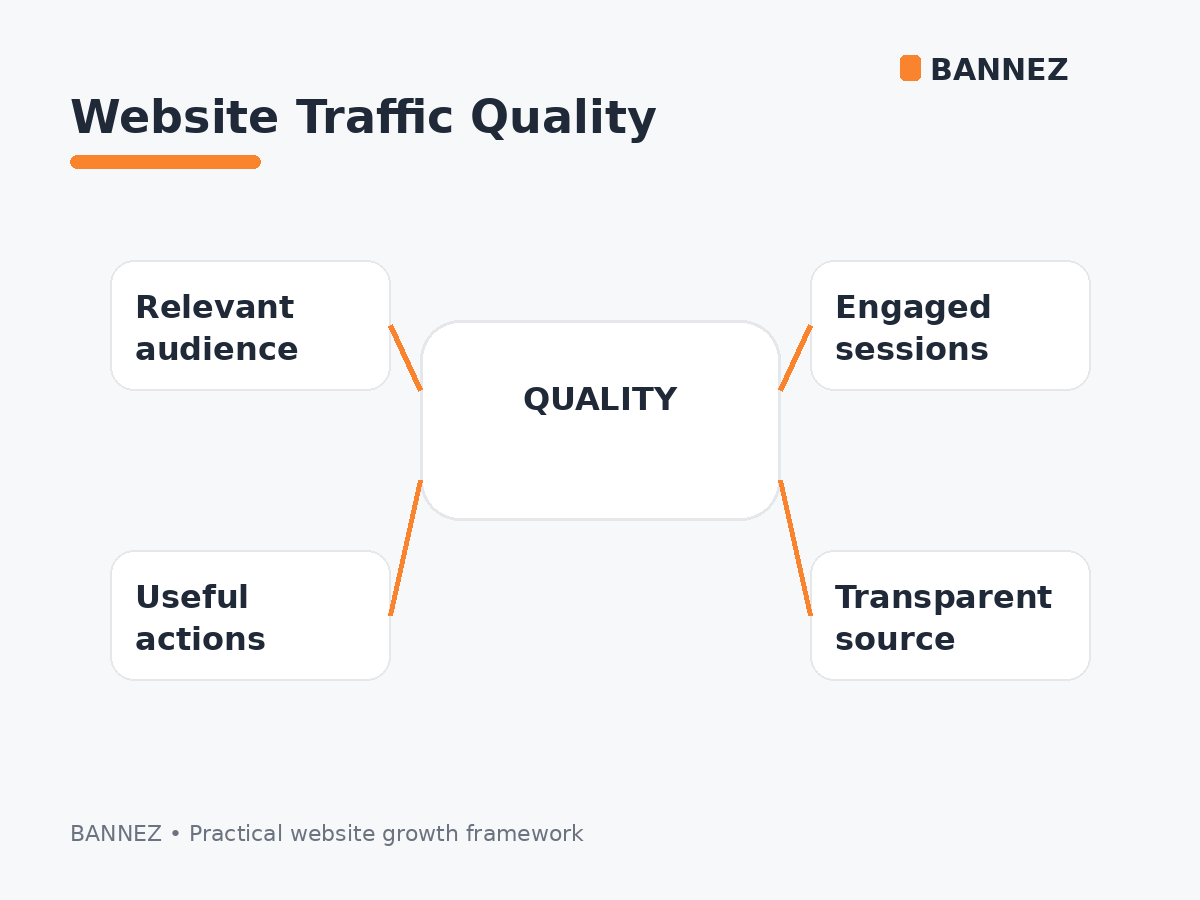
A website can receive thousands of visits from people who are unlikely to need the product or service. Traffic volume alone does not prove relevance.
Check whether visitors match
- Your target customer
- Your product or service category
- Your supported countries
- Your language
- Your price range
- The stage of the customer journey
Read High-Quality Website Traffic: What Does It Actually Mean? for a quality framework.
2. Visitor Location May Not Match Your Market
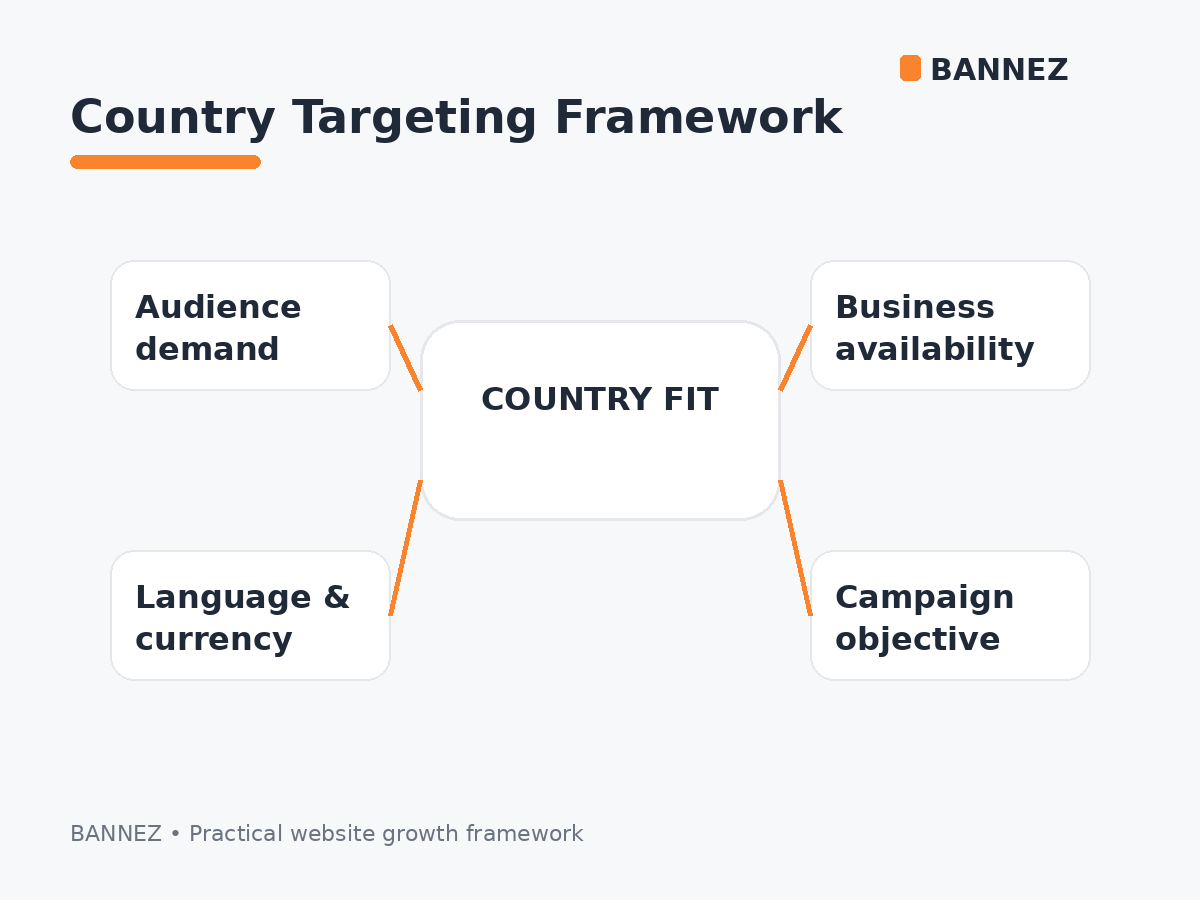
If you sell only in one country but most traffic comes from unsupported locations, conversions can remain low even when visitor numbers look strong.
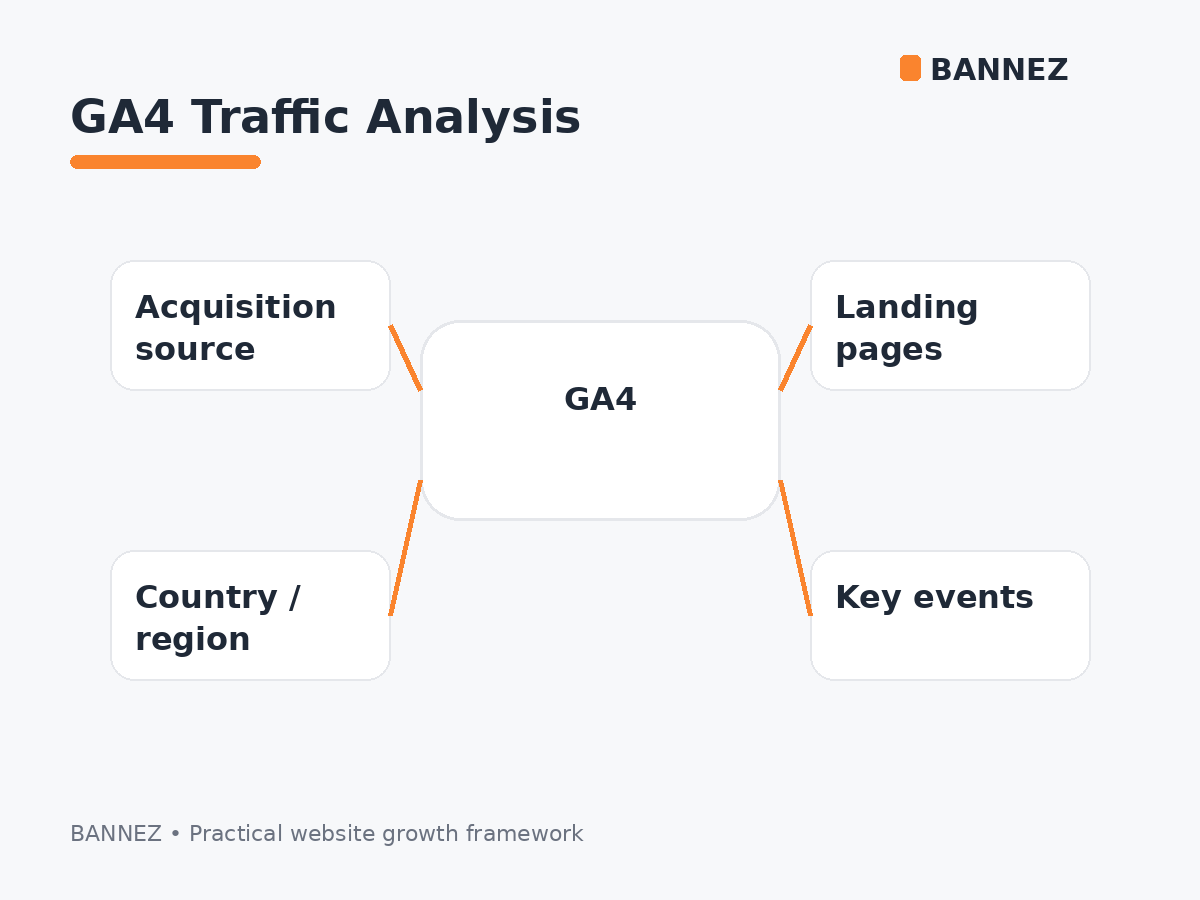
Use GA4 Country and Region dimensions to compare location with engagement and key events. Google explains that geography dimensions are approximated from IP information in its GA4 user dimensions documentation.
Also read Why Visitor Location Matters for Your Website.
3. The Landing Page May Not Match Visitor Intent
A visitor clicking a tutorial-style search result may not be ready to buy immediately. A paid campaign promising one thing should not send users to a generic homepage that makes them search for the offer again.
A strong landing page should quickly answer
- What is this page about?
- Who is it for?
- What value does it provide?
- Why should the visitor trust it?
- What should the visitor do next?
4. Your Offer May Be Unclear or Weak
Traffic cannot compensate for an offer that visitors do not understand or want. Review pricing, scope, benefits, limitations, and whether the page clearly explains what the customer receives.
5. The Call to Action May Be Hard to Find
A page may have good content but no clear next step. Calls to action should be visible and descriptive without overwhelming the page.
Examples of clear actions
- Request a quote
- Book a consultation
- Start checkout
- Create an account
- Download the guide
6. Visitors May Not Trust the Website
Missing contact details, unclear policies, inconsistent branding, weak product information, poor design, or unrealistic claims can reduce trust.
Trust signals can include
- Clear business identity
- Accurate service or product descriptions
- Contact and support information
- Transparent policies
- Secure checkout where relevant
- Realistic claims and pricing
7. Forms or Checkout May Be Broken
Never assume a form works because it looks correct. Test it manually on desktop and mobile. Confirm required fields, validation, confirmation messages, payment steps, and email notifications.
8. The Website May Be Difficult to Use on Mobile
Small buttons, slow pages, overlapping elements, difficult forms, or horizontal scrolling can interrupt the conversion path. Test the exact pages visitors use, not only the homepage.
9. Traffic Source and Page May Be Mismatched
Different sources bring different expectations. Organic search, paid search, referrals, social, email, and direct traffic may need different landing-page experiences.
Google’s Traffic acquisition report can help compare sessions by channel, source, and medium.
10. You May Be Measuring the Wrong Conversion
A conversion should represent a useful business action. If your tracking counts low-value interactions but misses actual enquiries, purchases, or signups, the report may not reflect reality.
Google Ads recommends selecting conversion goals that match the campaign objective. See the official conversion goal guidance.
11. Conversion Tracking May Be Broken
It is possible that customers are converting but the event is not being recorded correctly. Test key events yourself and compare Analytics with CRM, form, ecommerce, or payment records.
12. Visitors May Need More Time
Not every website is designed for immediate conversion. Expensive services, B2B products, and complex purchases may require multiple visits before someone takes action.
Traffic but No Conversions: Diagnostic Table
| Symptom | Possible issue |
|---|---|
| Lots of visits, very low engagement | Wrong audience or weak landing page |
| Good engagement, no leads | Offer, CTA, trust, or form problem |
| Conversions in CRM but not GA4 | Tracking problem |
| One country dominates but cannot buy | Geographic mismatch |
| Mobile performs much worse | Mobile usability or speed issue |
Step-by-Step Fix
- Confirm conversion tracking works.
- Segment traffic by source and medium.
- Review visitor countries.
- Identify top landing pages.
- Compare engagement.
- Test forms and checkout manually.
- Review offer clarity and trust.
- Improve the call to action.
- Measure changes over a meaningful period.
Should You Buy More Traffic When Conversions Are Low?
Usually, diagnose the conversion problem first. Sending more paid visits to a broken funnel can increase cost without solving the underlying issue.
If you later need broad paid traffic for an appropriate campaign or test, you can explore our Worldwide Website Traffic service. Measure paid visits separately and do not treat them as guaranteed conversions or organic SEO.
Conversion Diagnosis Checklist
- Target audience is defined
- Visitor countries match the market
- Landing page matches traffic intent
- Offer is clear
- CTA is visible
- Trust information is present
- Forms and checkout are tested
- Mobile experience is checked
- Key events are configured correctly
- Traffic sources are compared separately
Frequently Asked Questions
Why do I get visitors but no sales?
The traffic may be irrelevant, the offer or landing page may be weak, the conversion process may be difficult, or tracking may be incomplete.
Does more traffic increase conversions?
More relevant traffic creates more opportunities, but it does not guarantee conversions. The website and offer must still convert visitors effectively.
What conversion rate should my website have?
There is no universal rate that fits every website. Industry, price, audience, traffic source, and conversion definition all affect the number.
Should I optimize traffic or the website first?
If the conversion path is clearly broken, fix the website first. Then improve traffic quality and targeting.
Conclusion
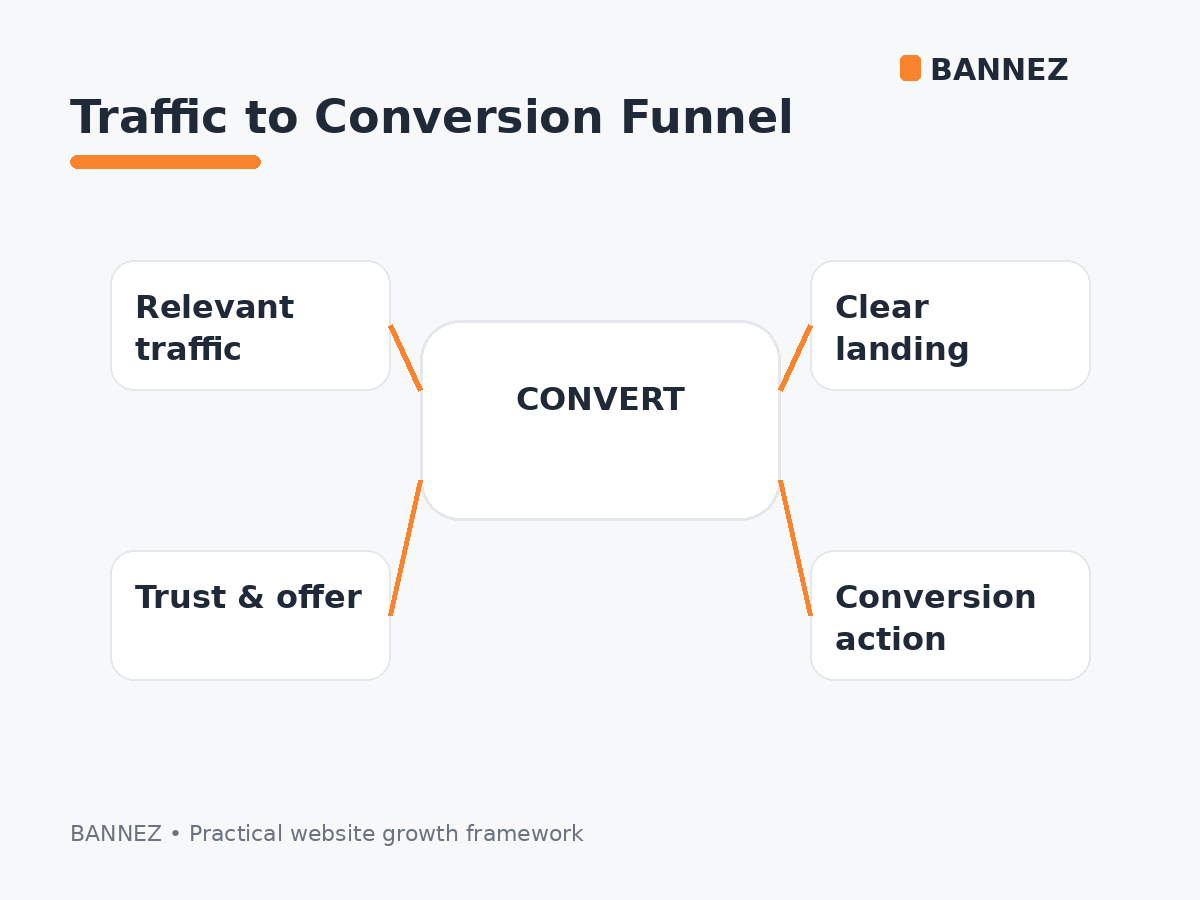
Traffic without conversions is usually a signal to diagnose the whole journey rather than chase more visits. Start with audience relevance, geography, landing-page intent, trust, offer clarity, forms, mobile usability, and measurement.
Fix the weakest stage first, then compare results by source and landing page. Better conversions usually come from improving both traffic quality and the website experience together.
