
Different Types of Website Traffic Explained
Website traffic does not come from one place. Visitors can arrive through search engines, direct navigation, links on other websites, advertising, social media, email and other channels. Understanding these traffic types helps you measure marketing more accurately and avoid judging every visitor as if they arrived the same way.
How Analytics Groups Website Traffic
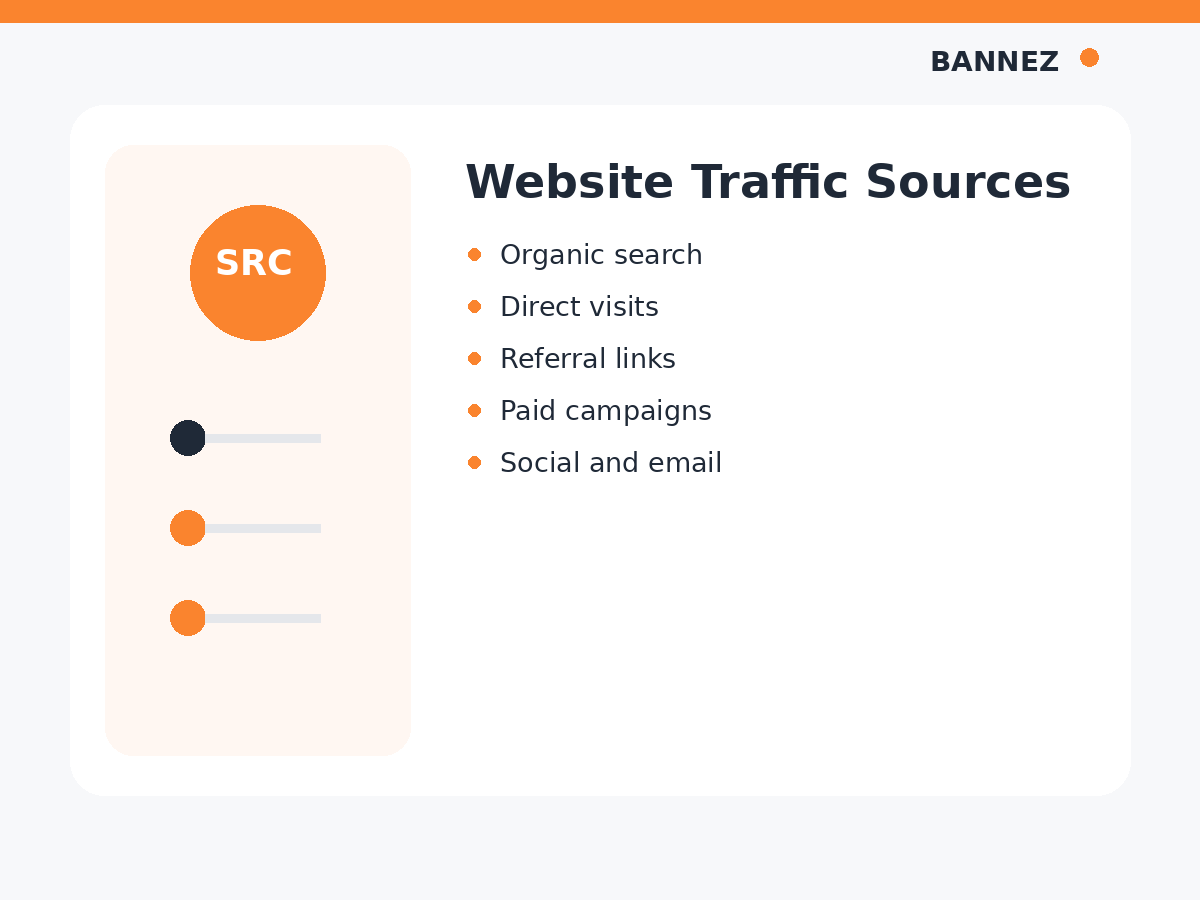
Google Analytics uses channel groups to classify traffic sources. Its current GA4 default channel group documentation includes channels such as Organic Search, Direct, Referral, Paid Search, Organic Social, Paid Social, Email, Display and others.
1. Organic Search Traffic
Organic Search includes visits from non-ad links in search results. This traffic can come from search engines when your pages appear for relevant queries.
2. Direct Traffic
Direct traffic commonly includes visits where Analytics identifies the user as arriving through a saved link or by entering the URL. Direct can also become larger when source information is missing or tagging is not configured correctly.
3. Referral Traffic
Referral traffic comes through non-ad links on other websites or apps. A mention in a blog post, directory, news story, partner site or resource page can generate referral visits.
4. Paid Search Traffic
Paid Search includes traffic from ads on search-engine sites when Analytics can classify the campaign correctly.
5. Organic Social Traffic
Organic Social includes non-ad visits from social platforms.
6. Paid Social Traffic
Paid Social comes from advertising on social networks when source and campaign information meets the relevant channel rules.
7. Email Traffic
Email traffic comes from links in email campaigns when links are tracked and classified correctly.
8. Display Traffic
Display traffic includes visits from display advertising channels.
9. Other and Custom Channels
GA4 includes additional default channels and also supports custom channel groups for specific measurement needs. The exact reporting depends on your tracking setup.
Website Traffic Types Compared
| Traffic type | Typical source | Paid? |
|---|---|---|
| Organic Search | Non-ad search results | No |
| Direct | Typed/saved URL or unidentified source | Not necessarily |
| Referral | Links on other sites/apps | Usually no |
| Paid Search | Search ads | Yes |
| Organic Social | Non-ad social links | No |
| Paid Social | Social ads | Yes |
| Email links | Depends on campaign cost |
Why Traffic Classification Matters
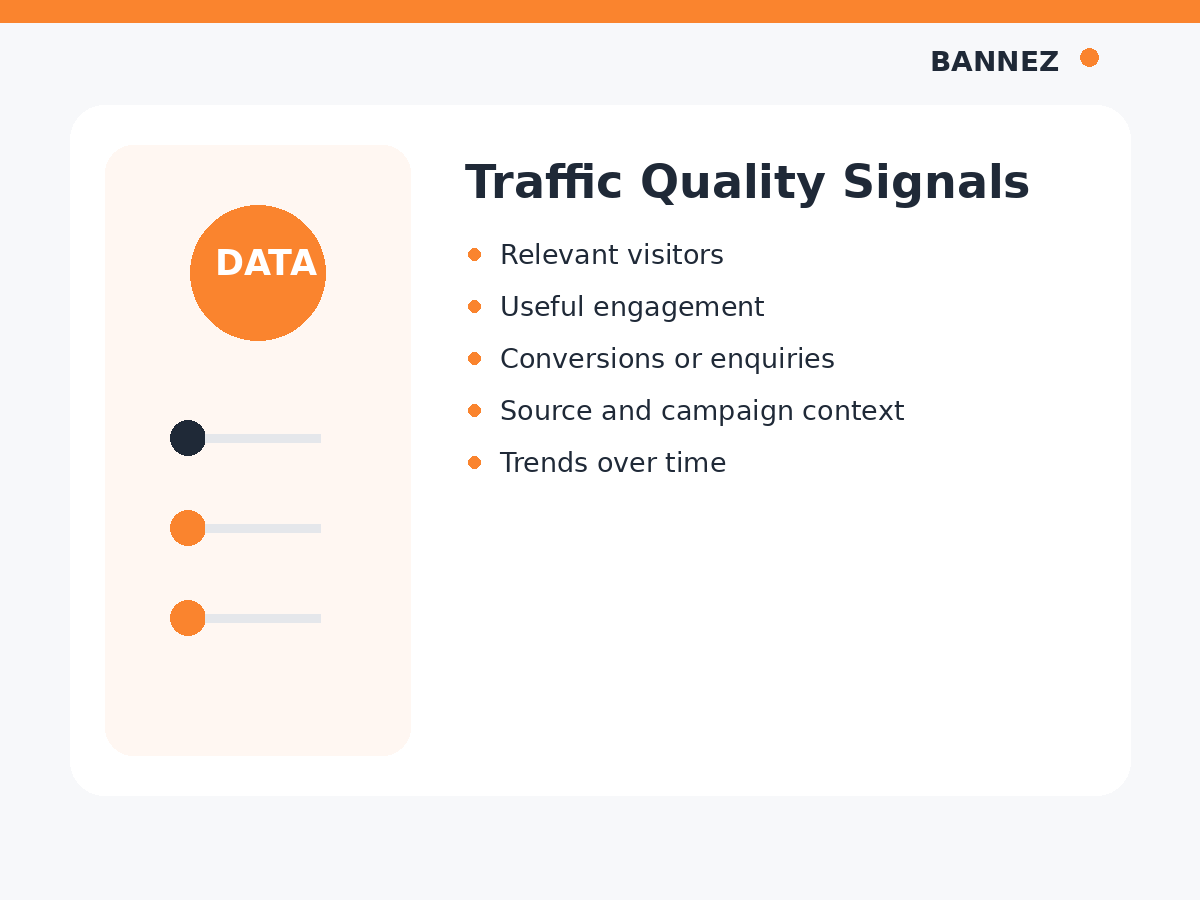
If you know where visits come from, you can compare engagement, key events, leads or revenue by source. GA4’s Traffic acquisition report is designed for session-level acquisition analysis.
Traffic Source vs Medium vs Channel
Source identifies where traffic originated, medium describes the method, and channel group places the visit into a broader rule-based category. Google’s traffic-source dimensions guide explains these fields.
Why Direct Traffic Can Be Misleading
An unusually high Direct share can sometimes indicate missing campaign information or tracking problems. Google provides tagging best practices to help avoid unexpected direct or unassigned traffic.
Traffic Type Does Not Equal Traffic Quality

No channel is automatically high quality. Evaluate whether visitors match your audience and complete useful actions.
How to Choose Traffic Channels
- Use SEO for relevant organic search opportunities
- Build referrals through legitimate mentions and partnerships
- Use social where your audience is active
- Use email for audiences who chose to hear from you
- Use paid campaigns when the objective and tracking are clear
For the basics first, read what website traffic is and why it matters.
Where Bannez Traffic Services Fit
If you need paid website traffic for an appropriate campaign objective, you can explore our Worldwide Website Traffic service. Paid traffic should be measured separately from organic SEO and used according to relevant platform and monetization policies.
Traffic Source Checklist
- Analytics is collecting data
- Campaign links are tagged correctly
- Source and medium are reviewed
- Channel groups are understood
- Engagement and key events are compared
- Direct traffic is investigated when unexpectedly high
- Paid and organic channels are reported separately
Frequently Asked Questions
What are the main types of website traffic?
Common categories include Organic Search, Direct, Referral, Paid Search, Social, Email and Display, with additional channels depending on the analytics system.
Is referral traffic organic traffic?
Referral and Organic Search are normally separate channel categories in GA4.
Which traffic type is best?
The best mix depends on your audience, business model and goals. Compare quality and outcomes instead of choosing only by visitor count.
Conclusion
Understanding traffic types helps you see how people reach your website and which channels support meaningful results. Use clear analytics tracking, compare sources fairly, and evaluate quality alongside volume.
