
What Is Website Traffic and Why Is It Important?
Website traffic refers to people and sessions reaching a website from different sources. Those visits can come from search engines, direct navigation, other websites, ads, social platforms, email and other channels.
Traffic is important because your website cannot generate awareness, leads, sales or other useful actions unless people reach it. However, the quality and source of those visits matter as much as the total number.
What Is Website Traffic?
Website traffic is commonly measured through analytics tools using metrics such as users, sessions, acquisition sources, engagement and key events.
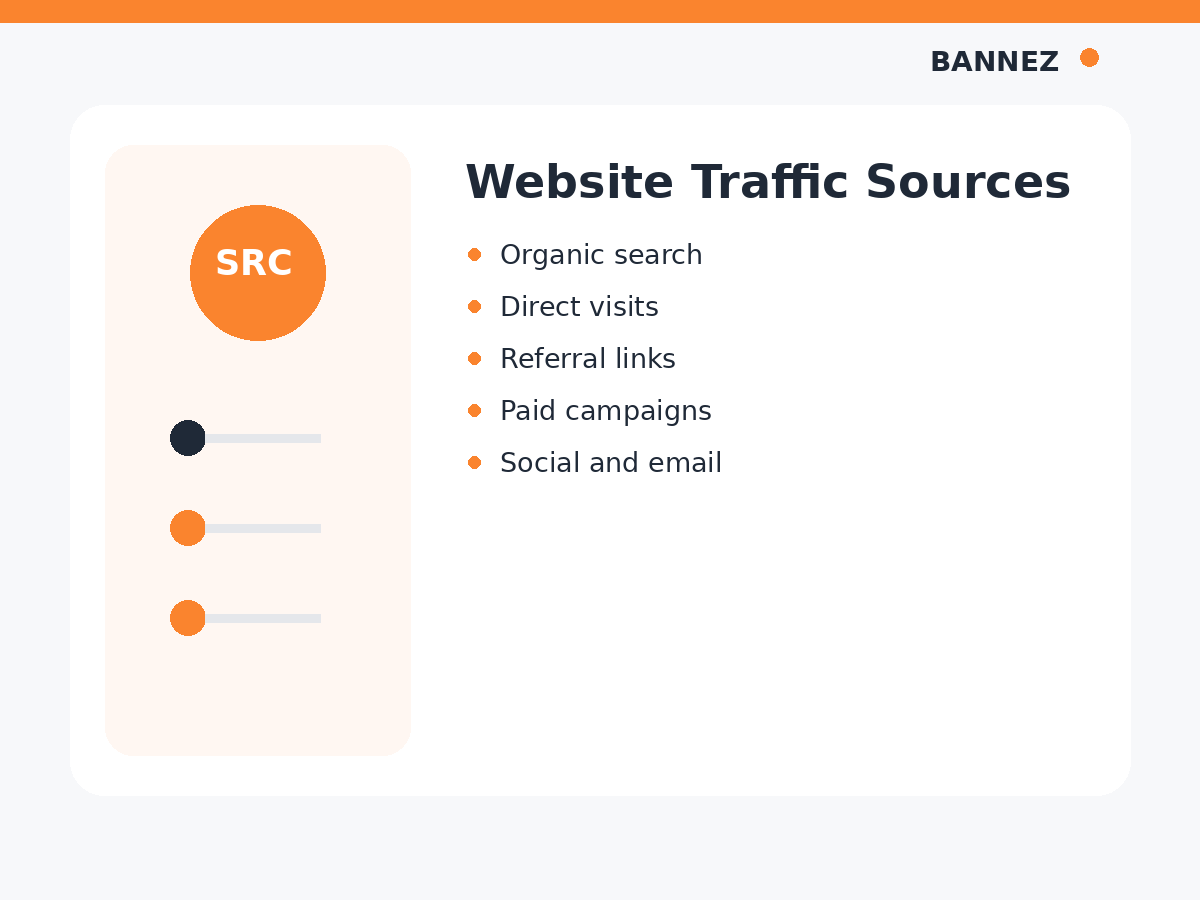
Google Analytics uses rule-based channel groups to classify sources such as Organic Search, Direct, Referral, Paid Search and Organic Social. See the official GA4 channel-group definitions.
Why Is Website Traffic Important?
Traffic creates opportunities
Visitors can read content, learn about a business, contact a team, subscribe, make a purchase or complete another goal.
Traffic shows which channels work
Acquisition data can reveal whether visitors are arriving from search, referrals, ads, social media or other sources.
Traffic helps improve marketing decisions
Comparing channels can help you decide where to invest time and budget.
Traffic Volume vs Traffic Quality

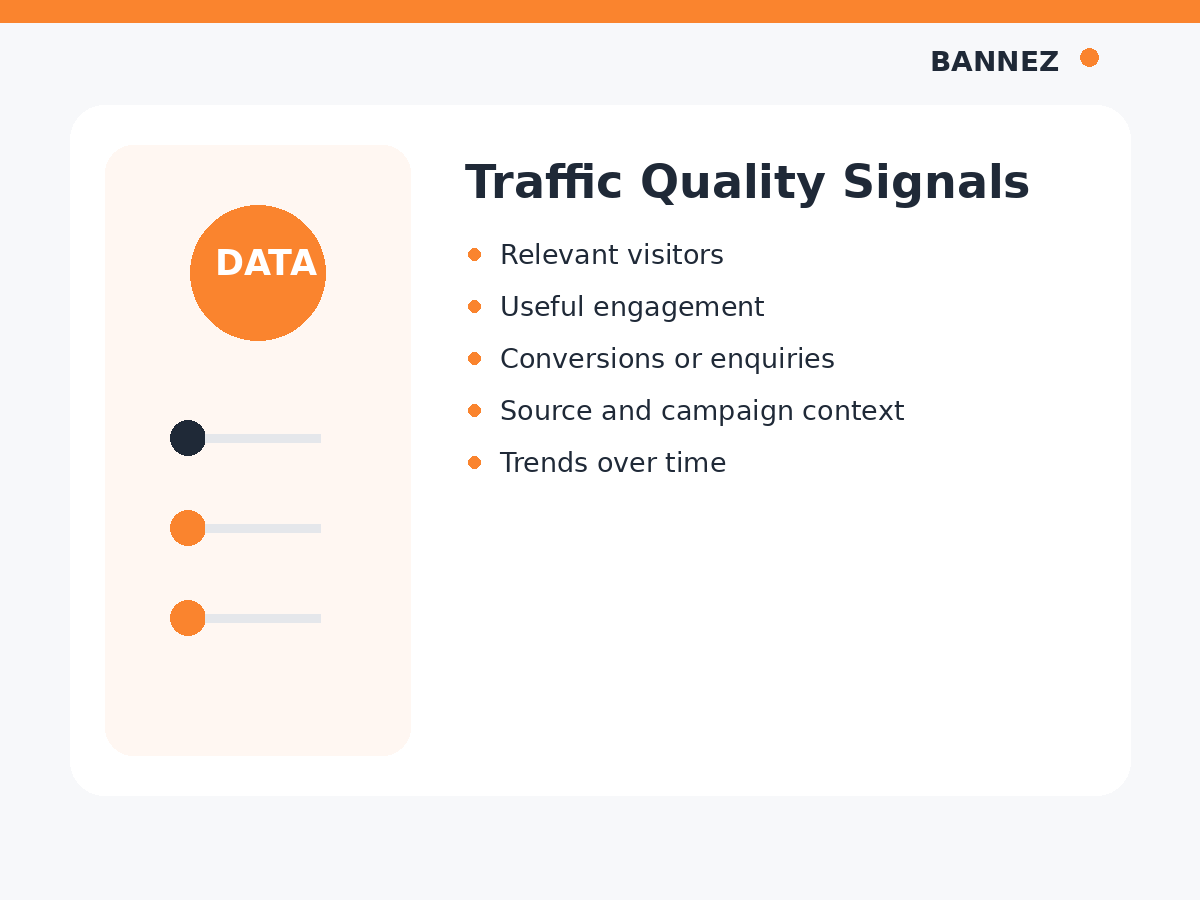
High traffic is not automatically valuable. A smaller audience that matches your offer and completes useful actions may be more important than a large number of irrelevant visits.
Common Website Traffic Sources
- Organic Search
- Direct
- Referral
- Paid Search
- Organic and Paid Social
- Display and other advertising channels
Read our different types of website traffic guide for a detailed breakdown.
Which Website Traffic Metrics Matter?
- Users and sessions
- Source / medium
- Channel group
- Engagement
- Landing pages
- Key events or conversions
- Revenue when relevant
The official GA4 Traffic acquisition report explains session-level source and channel dimensions.
How Website Traffic Supports Different Goals
| Website type | Traffic may support |
|---|---|
| Service business | Enquiries and consultations |
| Ecommerce | Product discovery and purchases |
| Publisher | Content readership and monetization |
| SaaS | Trials, demos and subscriptions |
| Portfolio | Exposure and project enquiries |
How to Increase Website Traffic Responsibly
- Create useful content for relevant searches.
- Improve internal linking and site navigation.
- Build legitimate referral opportunities.
- Use social and email channels that fit your audience.
- Use paid campaigns with clear tracking and goals.
- Measure visitor quality and business outcomes.
Paid Traffic Is Not the Same as Organic SEO
Paid traffic can deliver visits for campaign objectives, but those visits do not automatically improve organic search rankings. Organic traffic and paid traffic should be measured separately.
Where Bannez Traffic Services Can Fit
If your campaign needs additional worldwide paid website visits for an appropriate use case, you can explore our Worldwide Website Traffic service. Always make sure the traffic method fits the policies of your analytics, advertising and monetization platforms.
Website Traffic Checklist
- Analytics tracking is working
- Traffic sources are understood
- Goals and key events are defined
- Quality is measured alongside volume
- Channels are compared fairly
- Paid and organic traffic are reported separately
Frequently Asked Questions
Is website traffic the same as visitors?
People often use the terms casually, but analytics may distinguish users from sessions and other visit metrics.
Why is traffic quality important?
Relevant visitors are more likely to engage with the content or complete useful actions.
Can a website succeed with low traffic?
Yes, depending on the business. A specialized site may need fewer highly relevant visitors than a mass-market publisher.
Conclusion
Website traffic tells you whether people are reaching your site and which acquisition channels are bringing them. Its real value comes from understanding source, quality, engagement and outcomes—not simply increasing a counter.
