
How Often Should You Publish Blog Posts?
There is no universal publishing frequency that works for every blog. Posting every day is not automatically better than posting once a week, and a fixed schedule cannot compensate for weak or repetitive content.
The best publishing schedule is one your team can maintain while producing useful, accurate articles and keeping older content updated.
Is There an Ideal Blog Publishing Frequency?
No single number is best for every website. Your ideal pace depends on your topic, team size, research requirements, audience, business goals, and the amount of useful content you can realistically produce.
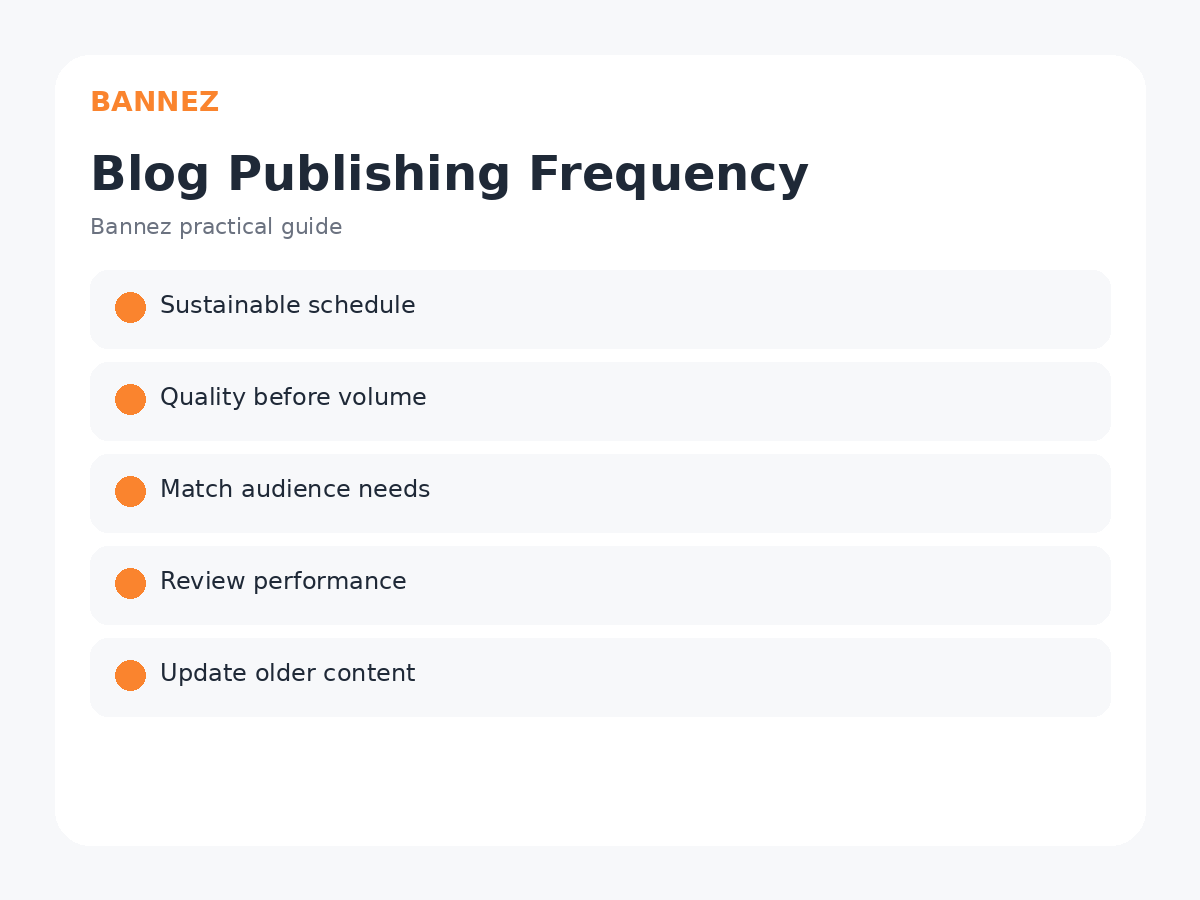
Quality Matters More Than Publishing for the Sake of Volume
Google’s people-first content guidance recommends useful, reliable content created for people. Publishing large amounts of low-value content only to appear active is not a strong long-term strategy.
What Should Determine Your Schedule?
Your available resources
A small business may publish one strong article every one or two weeks. A larger editorial team may support several articles each week.
Topic complexity
Research-heavy guides need more time than short announcements or simple answers.
Audience demand
A fast-moving news niche may need frequent updates. An evergreen educational site can often publish more slowly.
Content maintenance
Publishing new content is only part of the job. Older posts also need fact checks, link reviews, screenshots, and updates.
Example Publishing Schedules
| Situation | Practical starting schedule |
|---|---|
| Solo business owner | 2–4 useful posts per month |
| Small content team | 1–3 posts per week |
| News or fast-moving niche | More frequent publishing when genuinely needed |
| New site building a knowledge base | Consistent publishing based on available quality resources |
These are planning examples, not SEO rules.
Should a New Blog Publish More Often?
A new site can benefit from building a useful base of content, but do not rush through topics simply to increase the number of URLs. A smaller library of strong, well-connected articles is easier to maintain than a large collection of thin posts.
Consistency vs Frequency
Consistency means having a process your team can sustain. It does not mean search engines require you to publish on the same weekday every week.
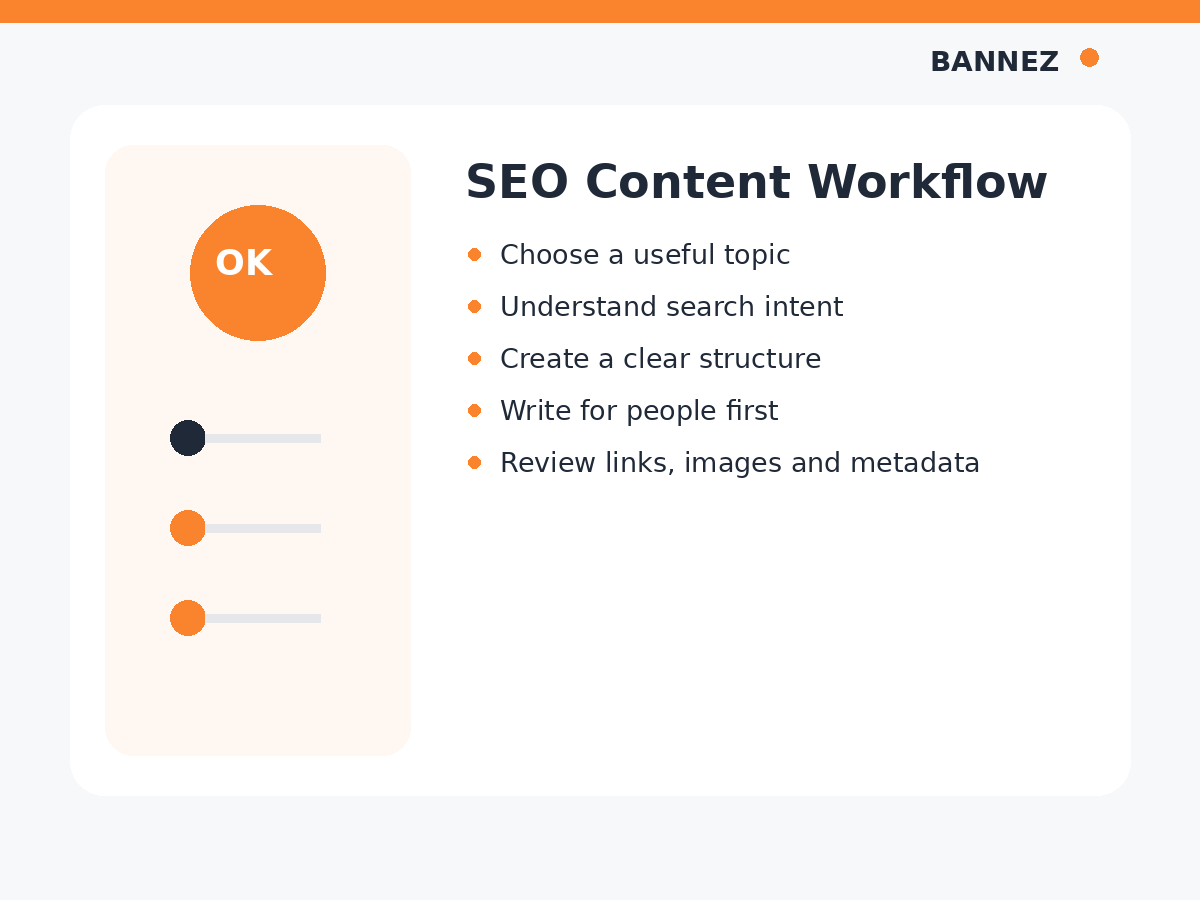
A sustainable process includes
- Topic research
- Search intent review
- Writing and editing
- Images
- Internal and external links
- SEO metadata
- Fact checking
- Post-publish measurement
How to Build a Content Calendar
- List priority topics.
- Group related articles into clusters.
- Estimate realistic production time.
- Reserve time for updating old content.
- Schedule only what the team can complete well.
- Review performance monthly or quarterly.
Do You Need to Publish When You Have Nothing Useful to Say?
No. It is better to improve an existing page, update an old guide, build a stronger internal-link structure, or research the next article than to publish filler.
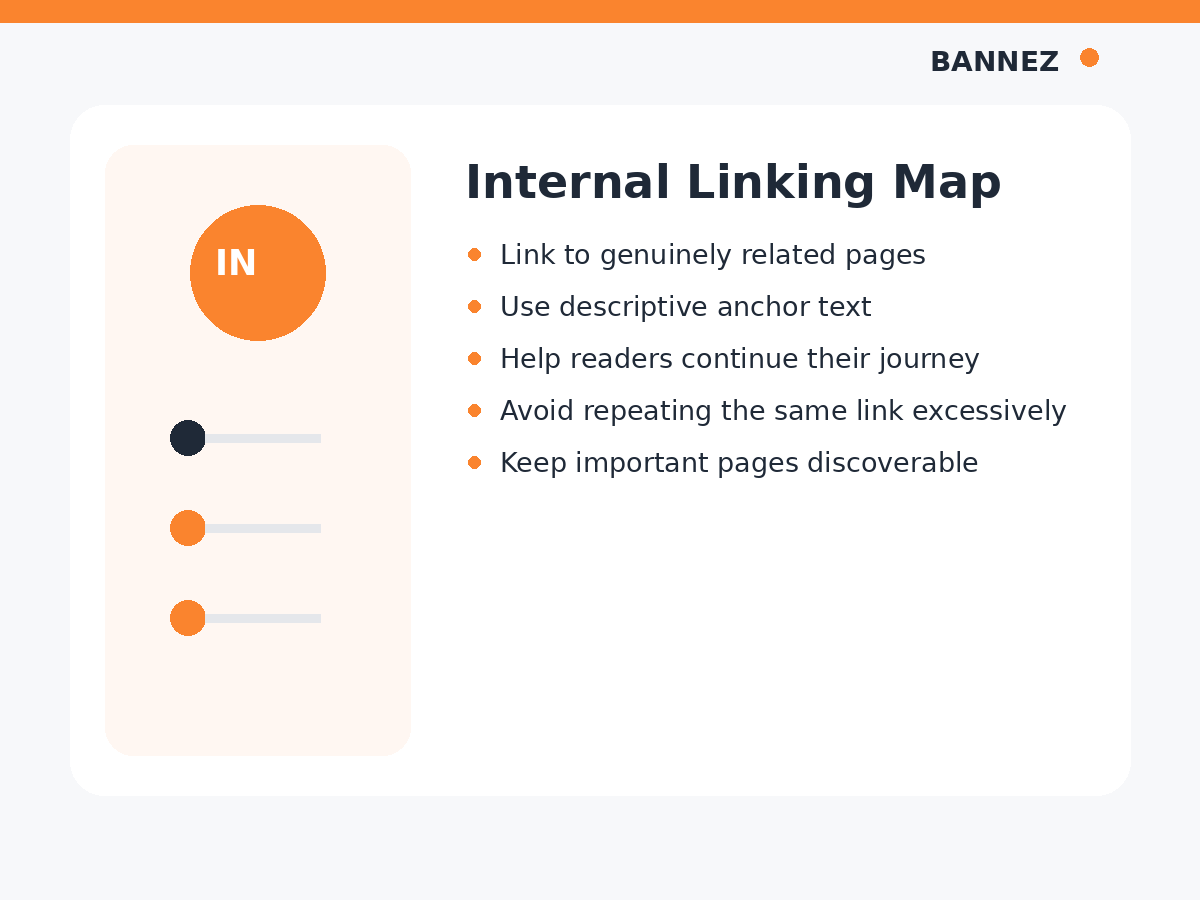
Our guide on updating old blog posts for better SEO explains how content maintenance can fit into the same editorial calendar.
How to Measure Whether Your Schedule Is Working
Use Google Search Console to review impressions, clicks, queries, and page trends. The official Performance report guidance explains how to analyze search performance.
Review more than post count
- Organic impressions and clicks
- Useful queries
- Conversions or enquiries
- Content quality and accuracy
- Time required to maintain older posts
Publishing Frequency Checklist
- Schedule is realistic for your team
- Quality is not sacrificed for volume
- Priority topics are planned first
- Older content receives update time
- Internal links connect related posts
- Performance is reviewed regularly
Frequently Asked Questions
Is one blog post per week enough?
It can be. A strong weekly article may be more useful than several rushed posts.
Does Google reward daily publishing?
There is no general rule that daily publishing automatically improves rankings. Relevance and content quality matter more than an arbitrary schedule.
Should I stop publishing while updating old content?
You can balance both. The right mix depends on how much outdated content you already have and which tasks offer the most value.
Need Help Maintaining a Content Schedule?
If you need professionally structured SEO articles with a featured image and flexible word count, explore our SEO Content Writing for Any Topic service.
Conclusion
Publish as often as you can maintain useful quality. Build a sustainable calendar, prioritize topics that matter to your audience, connect related posts, and make room for updating older content.
A reliable editorial process is more valuable than chasing a universal publishing-frequency rule that does not fit your website.
