
How to Choose Keywords for a Blog Post
Choosing keywords for a blog post is not about finding the phrase with the biggest search volume. A useful keyword should match your topic, your audience, the searcher’s likely intent, and the type of content your website can realistically provide.
This guide shows a simple keyword-selection process for beginners without turning keyword research into a complicated spreadsheet exercise.
Start With the Topic, Not the Tool
Before opening a keyword tool, describe the topic in plain language. Ask what problem the article solves and who needs the answer.
For example, if you want to teach beginners how to structure a blog post, possible starting phrases could include “blog post structure,” “SEO blog structure,” or “how to structure a blog post for SEO.”
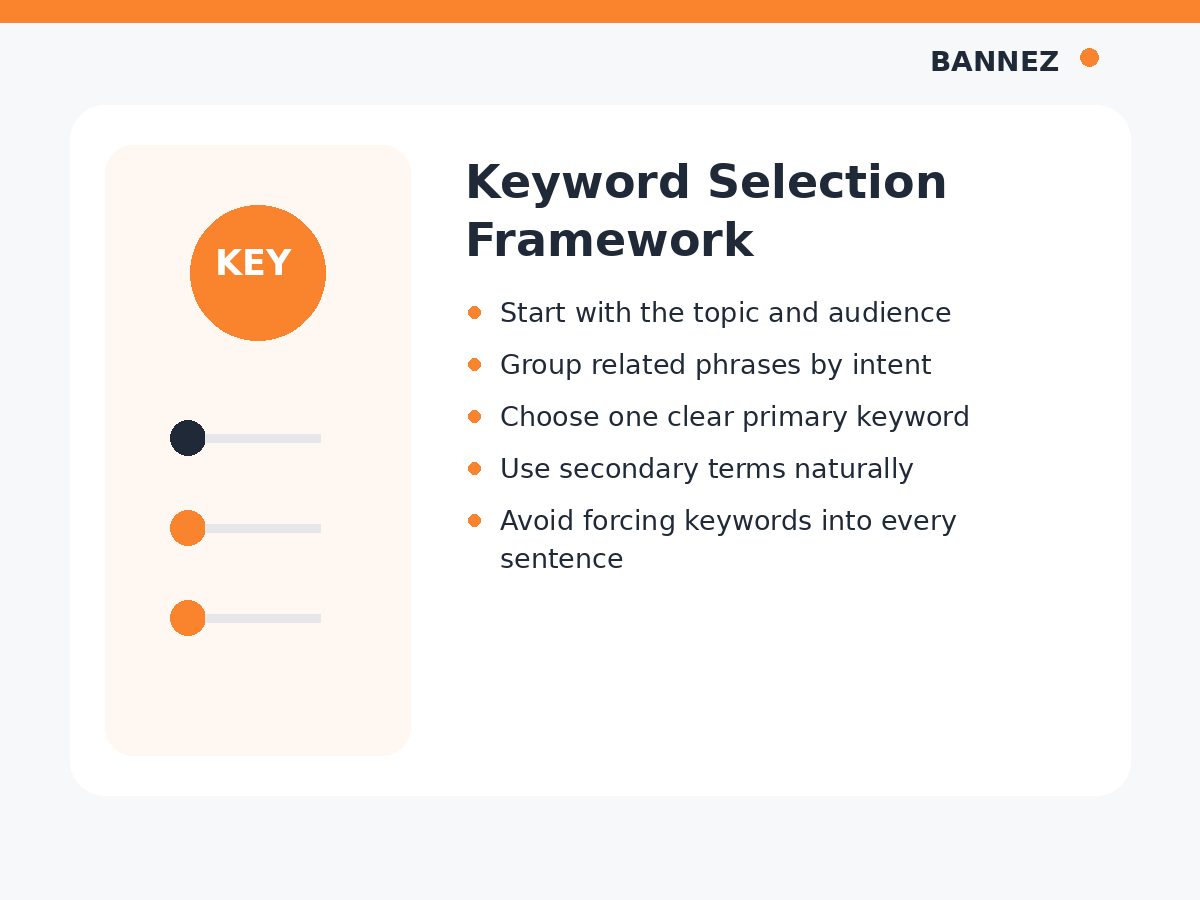
What Makes a Good Blog Keyword?
Relevance
The keyword should closely match what the article can genuinely explain.
Search intent
The content format should match what the searcher likely wants. A phrase containing “how to” usually suggests a tutorial. A phrase containing “vs” suggests a comparison.
Specificity
Broad keywords can be vague. A more specific long-tail keyword can make it easier to create a focused article.
Business or website fit
The topic should make sense for your website. Publishing unrelated high-volume topics can attract visitors who have no reason to return or use your services.
Understand Search Intent Before Selecting the Keyword

A keyword is only useful when the page matches the need behind it. Common intent patterns include:
- Informational: the searcher wants to learn
- Navigational: the searcher wants a specific site or page
- Commercial: the searcher is comparing options
- Transactional: the searcher wants to take an action
Read our detailed guide on search intent and why it matters for SEO.
Use Your Existing Search Data
If your website already receives impressions in Google Search, Search Console can provide real query data. The Search Console Performance report lets you review queries, pages, clicks, impressions, CTR and performance changes.
Look for opportunities such as
- Queries where your site already gets impressions
- Questions related to existing services or products
- Topics where one page ranks for several similar queries
- High-impression queries with weak CTR
- Questions customers repeatedly ask your team
Use Keyword Tools as Research Support
Keyword tools can help you discover related phrases, estimated demand, variations, and topic groups. Treat the numbers as estimates rather than exact predictions.
You can also use Google Trends to compare interest over time and identify whether a topic is stable, seasonal, or rising.
Choose One Primary Keyword
The primary keyword should best describe the main article. It helps keep the title, slug, introduction, and structure focused.
Example
| Role | Keyword example |
|---|---|
| Primary | how to choose keywords for a blog post |
| Secondary | blog keyword research |
| Secondary | SEO keywords for blog posts |
| Supporting topic | search intent |
| Supporting topic | long-tail keywords |
What Are Long-Tail Keywords?
Long-tail keywords are more specific search phrases. They often reveal a clearer need than very broad keywords.
For example, “SEO” is extremely broad. “How to choose SEO keywords for a beginner blog post” describes a much more specific intent.
Do Not Choose Keywords Only by Search Volume
A high-volume keyword may be too broad, highly competitive, or unrelated to your audience. A smaller keyword can be more valuable if it brings the right visitors.
Ask these questions instead
- Can I create one of the best useful answers on this topic?
- Does the query fit my website?
- Can the article naturally connect to another important page?
- Does the intent match the article format I plan to create?
- Will the topic still matter to my audience after publication?
Group Closely Related Keywords
You usually do not need a separate article for every small wording variation. If several keywords have the same intent and can be answered by one strong page, group them naturally.
This reduces thin content and helps you create a more complete article.
Place Keywords Naturally
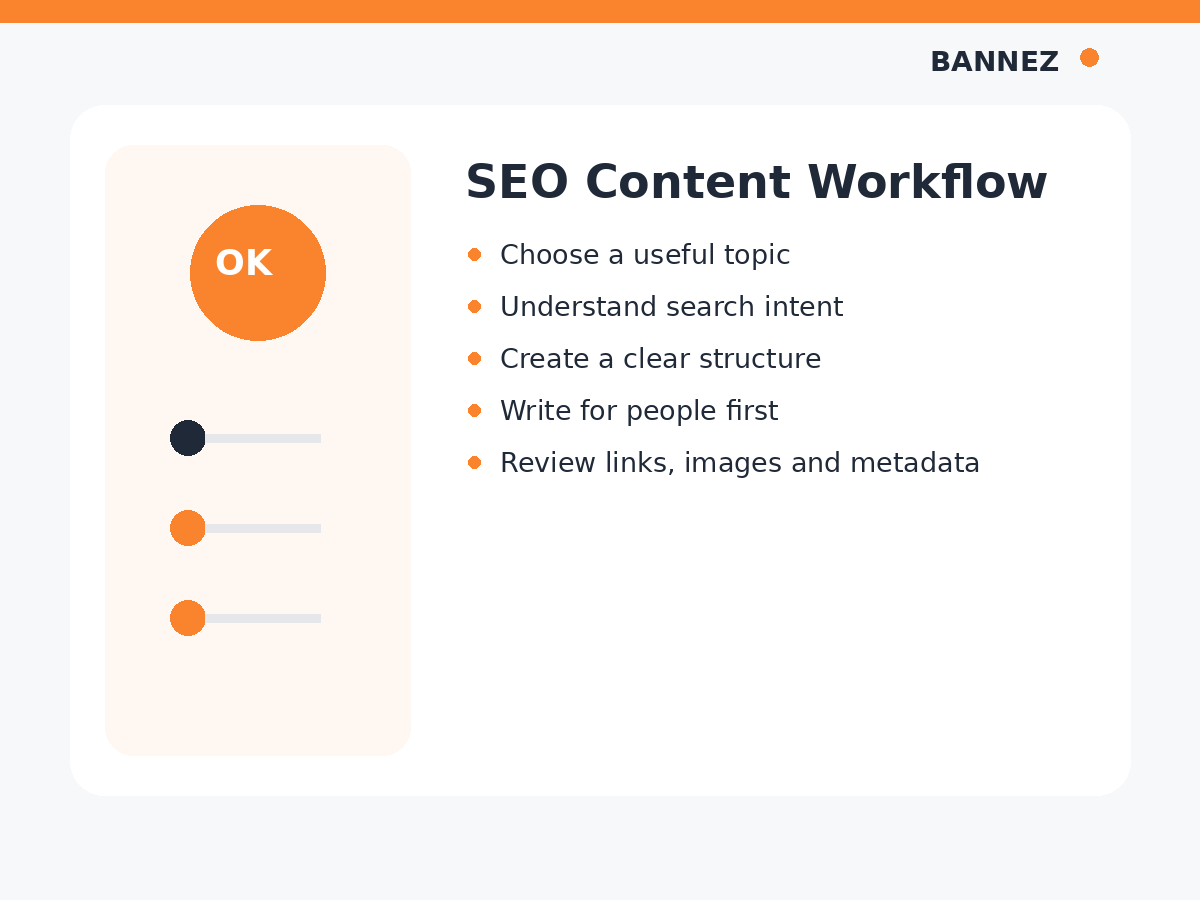
Once the keyword is selected, use it only where it reads naturally. Common locations include the page title, introduction, a relevant heading, URL, and body text.
Do not force exact-match phrases into every heading. Google’s SEO Starter Guide emphasizes useful, natural and well-organized content.
Use Keywords to Build the Outline
Secondary keywords can reveal useful subsections. For example, a keyword group about blog keyword research may naturally include:
- Primary keywords
- Secondary keywords
- Long-tail keywords
- Search intent
- Search volume
- Keyword competition
- Keyword placement
Avoid Keyword Cannibalization
If you already have a strong page targeting the same intent, creating another nearly identical article can make your content harder to manage. Consider improving the existing page instead.
Keyword Selection Checklist
- Topic is relevant to your website
- Searcher intent is understood
- Primary keyword matches the article
- Secondary keywords share the same intent
- Long-tail opportunities are considered
- Existing Search Console data is reviewed
- Volume is not the only decision factor
- Topic does not unnecessarily duplicate another page
- Keywords can be used naturally
- The article can provide real value
Frequently Asked Questions
How many keywords should one blog post target?
There is no fixed number. Use one main topic and a natural group of closely related phrases that share the same intent.
Should I always choose a high-volume keyword?
No. Relevance, intent, competition, business fit and your ability to create a useful answer can matter more than volume alone.
Can two keywords use the same page?
Yes, when they represent the same or very similar intent. One complete page is often better than multiple thin pages.
Where should I place the primary keyword?
Use it naturally in important descriptive areas such as the title, introduction, URL, and relevant body content. Do not force repetition.
Need SEO Content Based on Your Topic?
If you need SEO content for a specific topic with a featured image and flexible word count, you can explore our SEO Content Writing for Any Topic service.
Conclusion
Choose blog keywords by starting with the audience and topic, then checking search intent, relevance, specificity, existing search data and realistic content opportunities.
Use one clear primary keyword, group related phrases naturally, and build the article around a useful answer. The best keyword is not simply the biggest number in a tool; it is the phrase that connects a real search need with a page your website can serve well.
