
Tier 1, Tier 2 and Tier 3 Countries Explained for Website Traffic
Terms such as Tier 1, Tier 2, and Tier 3 countries are widely used in digital advertising, affiliate marketing, and website traffic discussions. They are usually shorthand for grouping markets by factors such as purchasing power, advertising value, competition, language, and commercial demand.
However, there is an important point to understand: Google Analytics does not officially classify countries as Tier 1, Tier 2, or Tier 3. These labels are informal marketing categories, and different companies may use different country lists.
What Does Tier 1 Usually Mean?
Tier 1 commonly refers to mature, high-value advertising markets with strong purchasing power and high competition. Lists often include countries such as the United States, United Kingdom, Canada, Australia, New Zealand, Switzerland, Germany, or similar developed markets, but there is no universal official Tier 1 list.
What Does Tier 2 Usually Mean?
Tier 2 often refers to developed or upper-value markets that may have lower advertising costs or different commercial demand than the most competitive Tier 1 markets. The exact definition varies by traffic provider, advertiser, and industry.
What Does Tier 3 Usually Mean?
Tier 3 generally describes broader emerging or lower-cost traffic markets. These countries can still be highly valuable when they match the website’s audience, language, product, or business model.
Tier Labels Are Not the Same as Economic Classifications
Formal institutions use different systems. For example, the World Bank currently groups economies by income levels such as low income, lower-middle income, upper-middle income, and high income based on GNI per capita.
For current economic classifications, see the World Bank’s Country and Lending Groups.
Do not assume an informal website-traffic tier is identical to a World Bank income group.
Why Marketers Use Country Tiers
- To estimate advertising cost differences
- To group markets with similar commercial value
- To plan traffic packages
- To compare broad audience regions
- To simplify campaign targeting
Why a Tier 1 Visitor Is Not Automatically Better
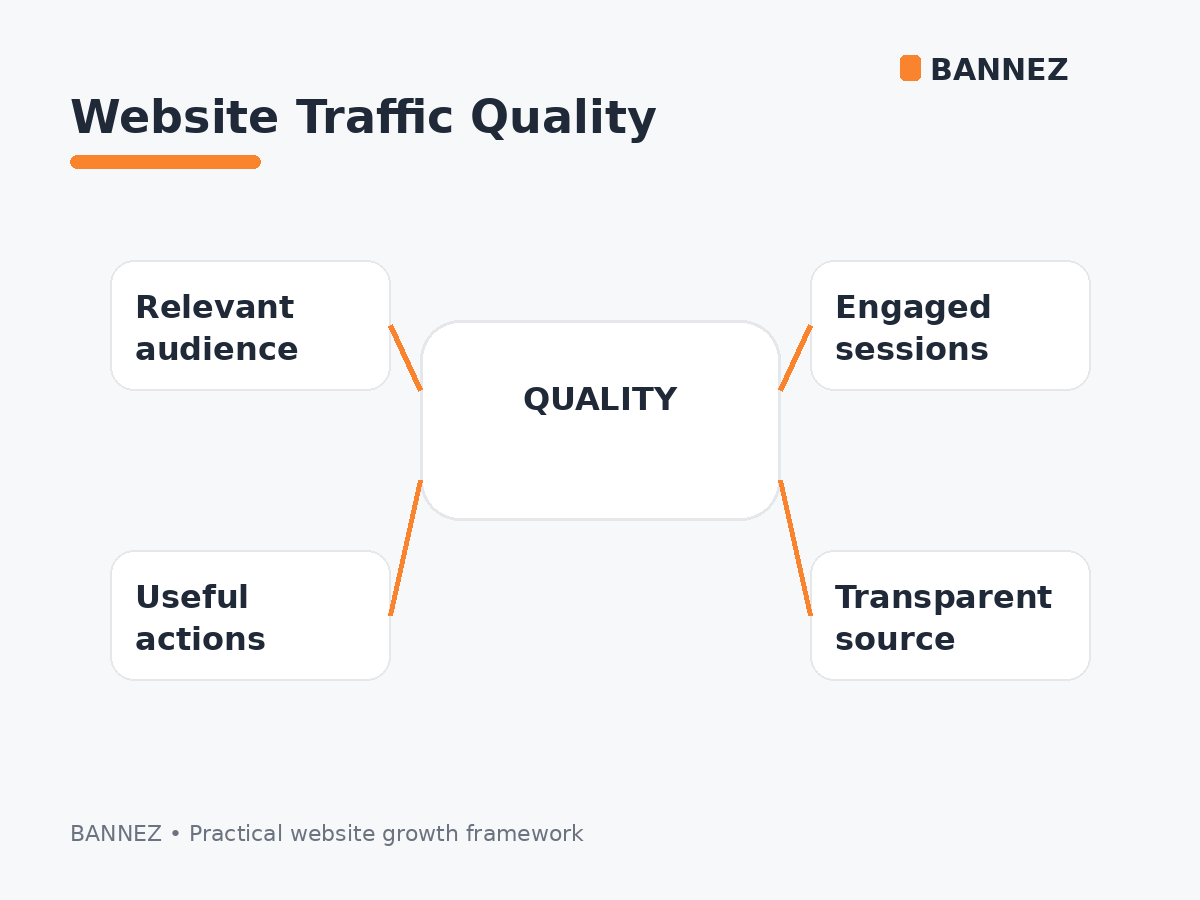
A Tier 1 visitor who has no interest in your offer may be less valuable than a highly relevant visitor from another market. Geography is only one quality signal.
How to Think About Tiers More Practically
| Question | Why it matters |
|---|---|
| Can your business serve the country? | Unsupported markets may not convert |
| Does the visitor understand the language? | Language affects engagement |
| Is pricing suitable? | Purchasing power varies |
| Is the topic relevant locally? | Demand differs by market |
| Do visitors complete useful actions? | Results matter more than tier labels |
How GA4 Reports Countries
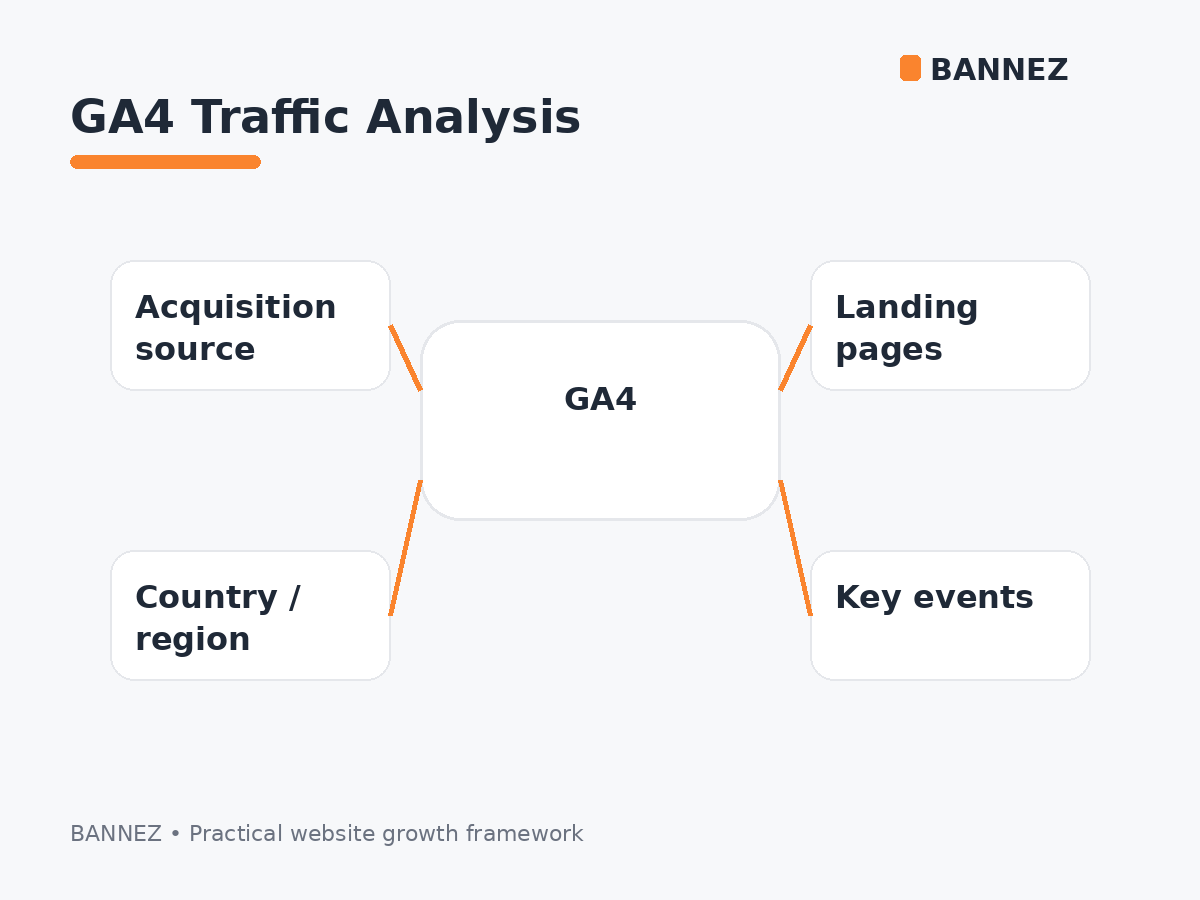
Google Analytics reports actual geography dimensions such as Country, Region, and City rather than marketing tiers. Google says geography dimensions are approximated from IP information.
See Google’s geography dimension documentation.
How to Choose Between Tier Groups
- Define your campaign goal.
- Identify countries your website can serve.
- Review existing GA4 performance by country.
- Compare engagement and key events.
- Consider language, pricing, and market demand.
- Use tier labels only as a planning shortcut.
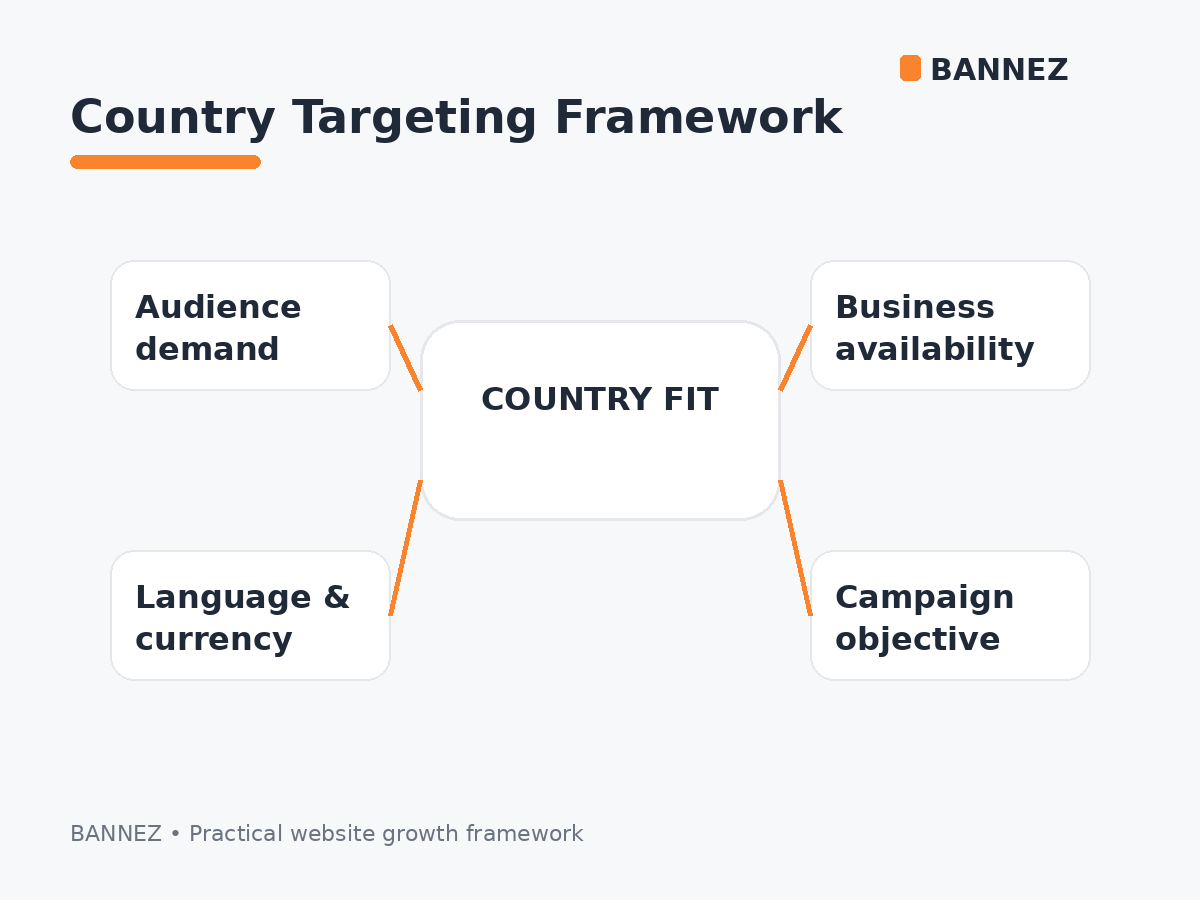
- Build the final country list from real business relevance.
Tier 1, Tier 2 and Tier 3 Example Approach
A practical traffic provider may create its own Tier 1, Tier 2, and Tier 3 lists for service delivery. Those lists should be treated as that provider’s commercial grouping rather than a global standard.
Before buying traffic, always check the exact country list included in the service instead of assuming that “Tier 1” means the same countries everywhere.
How Tier Selection Connects to Worldwide Traffic
Worldwide traffic may include a broad mix of country groups, while a targeted campaign may focus on one tier or specific countries. Read Worldwide Website Traffic vs Targeted Country Traffic for the broader comparison.
Where Bannez Traffic Services Fit
If your goal is broad paid website traffic rather than a strict country-tier campaign, you can explore our Worldwide Website Traffic service. Always review the exact service scope and use traffic in ways that comply with relevant platform policies.
Country Tier Checklist
- Tier labels are treated as informal marketing terms
- Exact country list is checked
- Website can serve selected markets
- Language and pricing fit the audience
- GA4 country data is reviewed
- Engagement and conversions are measured
- Tier label is not treated as a quality guarantee
Frequently Asked Questions
Does Google define Tier 1 countries?
No. Google Analytics does not use an official Tier 1, Tier 2, and Tier 3 country classification.
Is Tier 1 traffic always more expensive?
It is often treated as higher-value or more competitive in advertising markets, but costs vary by channel, industry, audience, and provider.
Can Tier 3 traffic convert well?
Yes. A visitor from any country can be valuable when the offer, language, audience, and intent match.
Are World Bank income groups the same as traffic tiers?
No. World Bank classifications are formal economic groupings, while traffic tiers are informal marketing labels.
Conclusion
Tier 1, Tier 2, and Tier 3 are useful shorthand only when everyone understands the exact country list behind the label. They are not official Google Analytics categories and should not be treated as universal standards.
Choose traffic countries based on real audience fit, business availability, engagement, and conversions. The country itself matters, but the outcome matters more than the tier name.
