
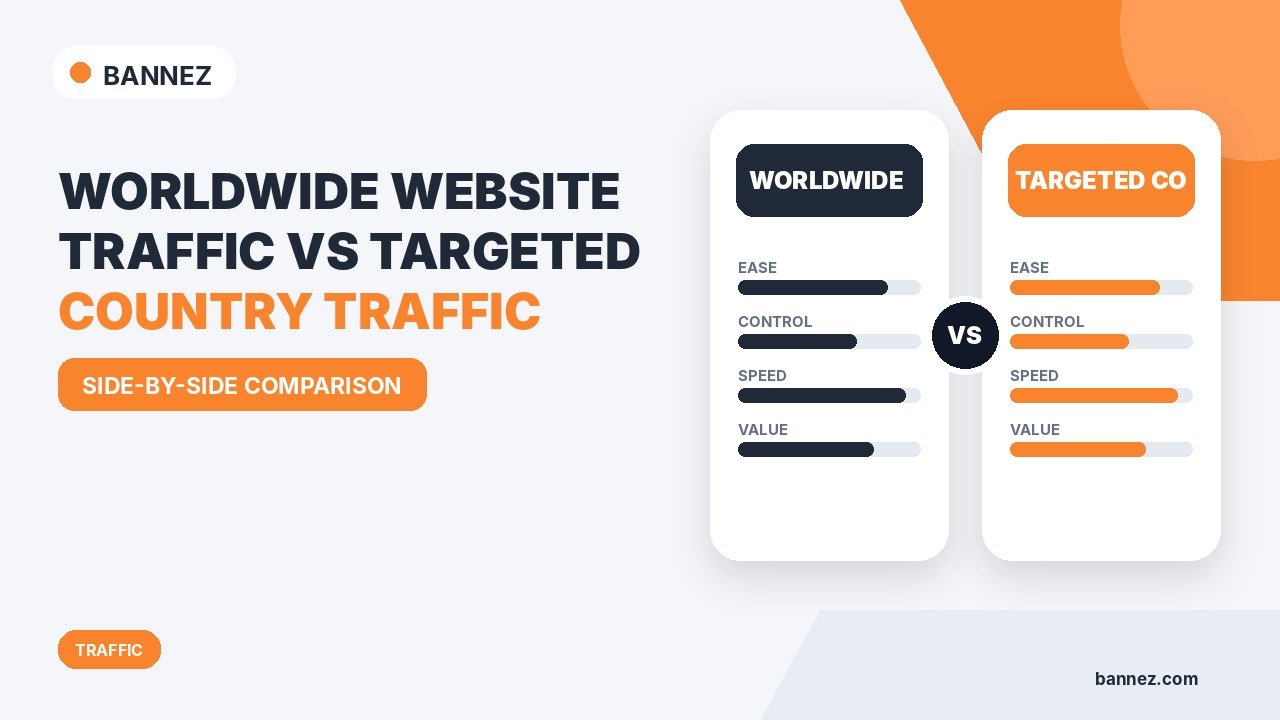
Worldwide Website Traffic vs Targeted Country Traffic
Worldwide website traffic and targeted country traffic can both increase visits, but they solve different campaign goals. Worldwide traffic focuses on broad geographic reach, while targeted country traffic limits visits to selected locations such as the United States, United Kingdom, Canada, India, Germany, or another market.
The better option depends on where your customers are, which countries your website can serve, and what you want the traffic campaign to achieve.
What Is Worldwide Website Traffic?
Worldwide website traffic means visits can come from many countries rather than one selected market. It is useful when geographic restrictions are not important or when you want broad reach for a global website.
Worldwide traffic can suit
- Global content websites
- International tools or platforms
- Early traffic testing
- General audience research
- Campaigns where country is not a strict requirement
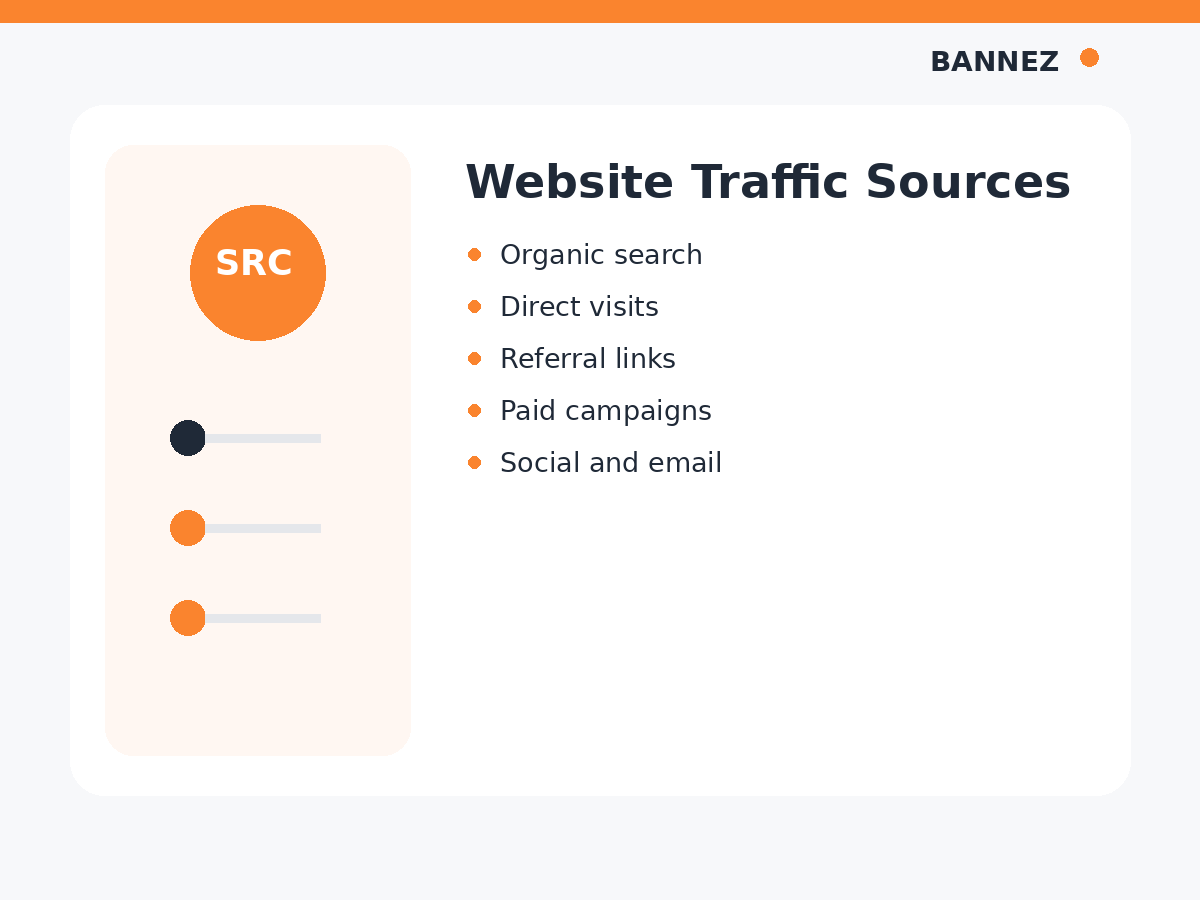
What Is Targeted Country Traffic?
Targeted country traffic is traffic selected around one country or a smaller group of countries. The goal is to make the visitor geography better match the market the website wants to reach.
Google Analytics includes geography dimensions such as Country, Region, and City. Google notes that geography data is approximated from the IP address of the traffic. See the official GA4 predefined user dimensions guide.
Worldwide vs Targeted Country Traffic: Quick Comparison
| Area | Worldwide traffic | Targeted country traffic |
|---|---|---|
| Geographic reach | Broad | Selected locations |
| Best for | Global reach and broad testing | Location-specific campaigns |
| Audience control | Lower geographic control | Higher geographic control |
| Market fit | Works when many countries are useful | Works when specific markets matter |
| Analysis | Compare many countries | Focus on selected countries |
When Worldwide Traffic Makes More Sense
Your website serves a global audience
If your content or offer is available worldwide, restricting the campaign to one country may unnecessarily reduce reach.
You are testing a new site
Broad traffic can help confirm whether analytics, pages, forms, and technical systems work under a larger mix of visits. It should not replace controlled usability testing, but it can reveal technical patterns.
You want geographic data before narrowing
A broad campaign can show which countries engage more strongly, giving you data for future targeting decisions.
When Targeted Country Traffic Makes More Sense
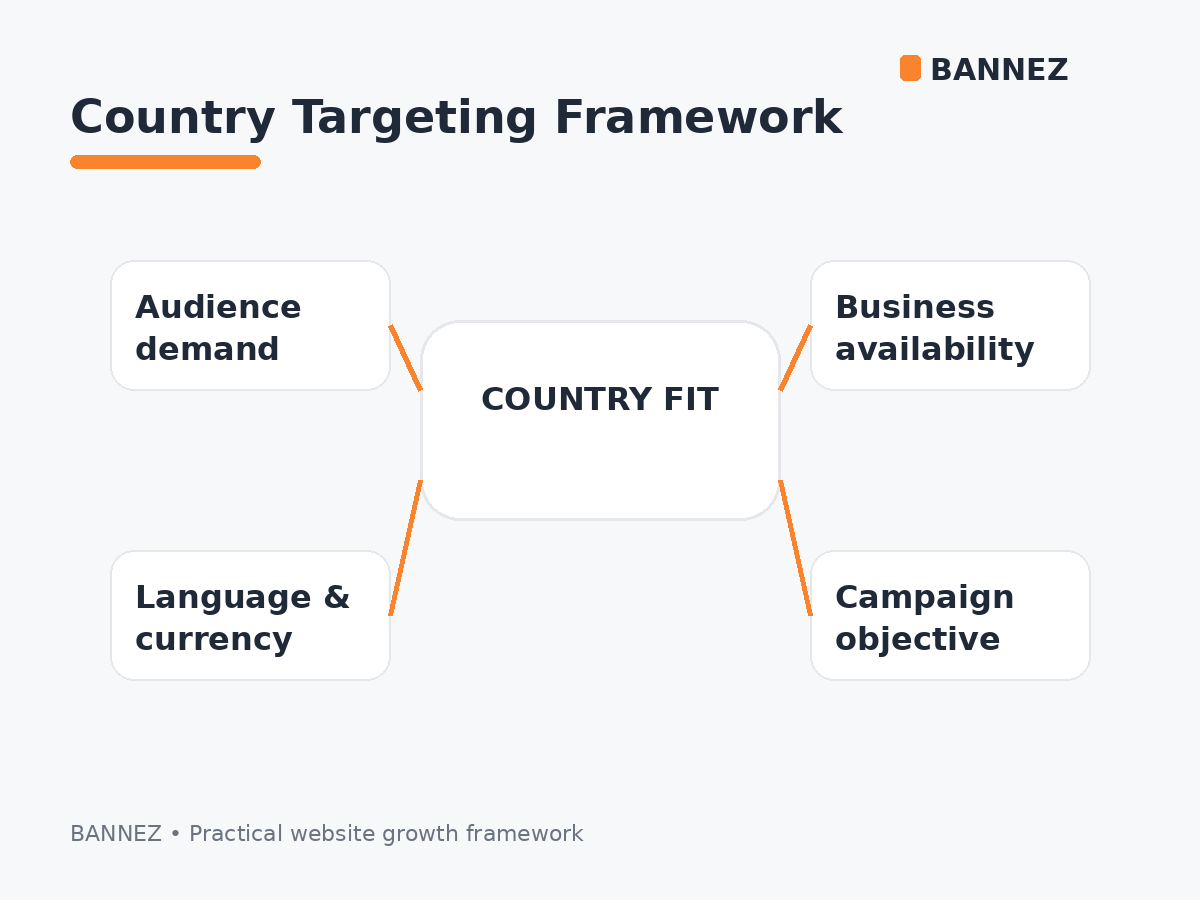
Your product is available only in selected countries
If you ship only to a few countries or provide services in specific locations, traffic from unsupported markets may have limited business value.
Language and currency are localized
A website written for one language, currency, or legal market may perform better when visitors match that setup.
You are testing a specific market
Country targeting makes it easier to compare engagement and conversion performance for a market you plan to enter.
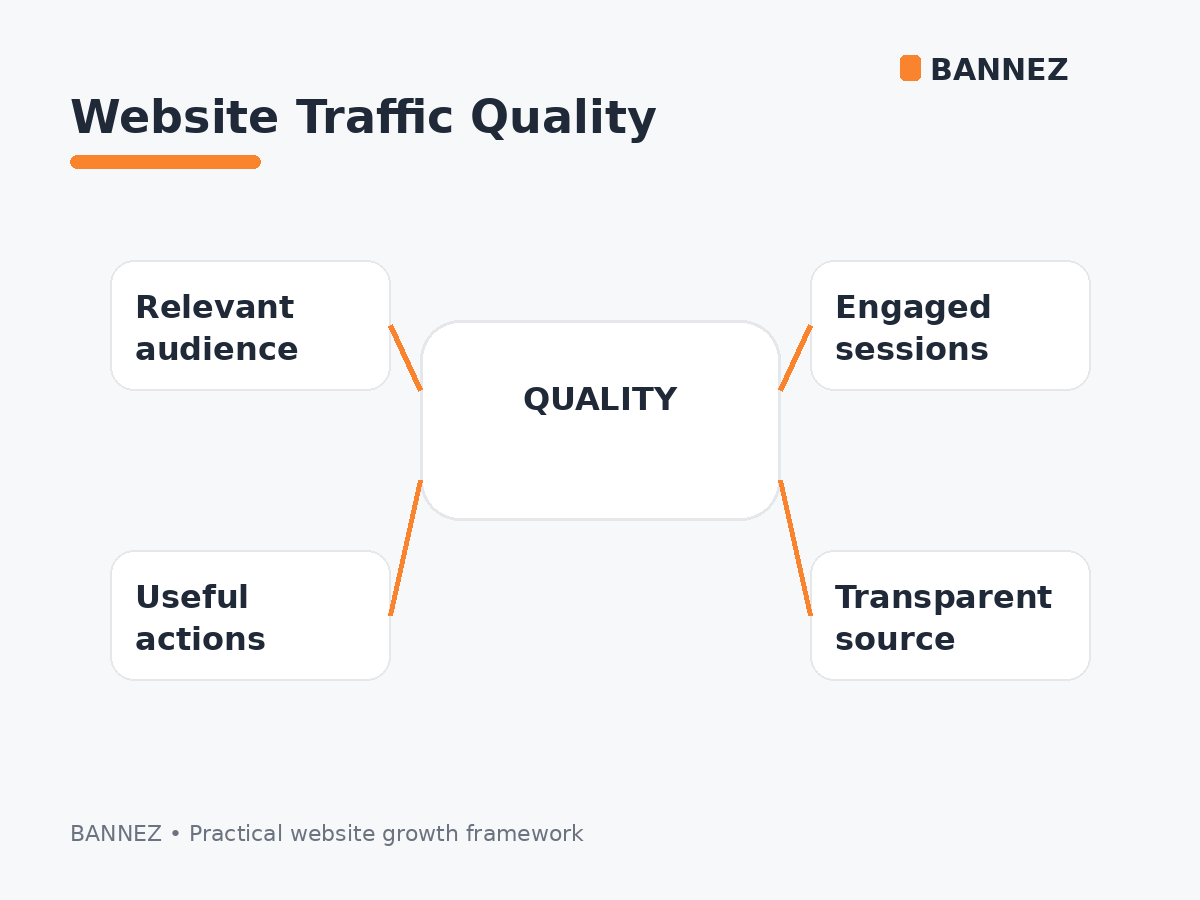
Country Targeting Does Not Guarantee Conversions
A visitor coming from the correct country is only one part of traffic quality. The landing page, offer, trust, pricing, website speed, and user intent still matter.
This is why country traffic should be analyzed together with engagement and key events rather than treated as automatically high quality.
How to Compare Countries in Google Analytics
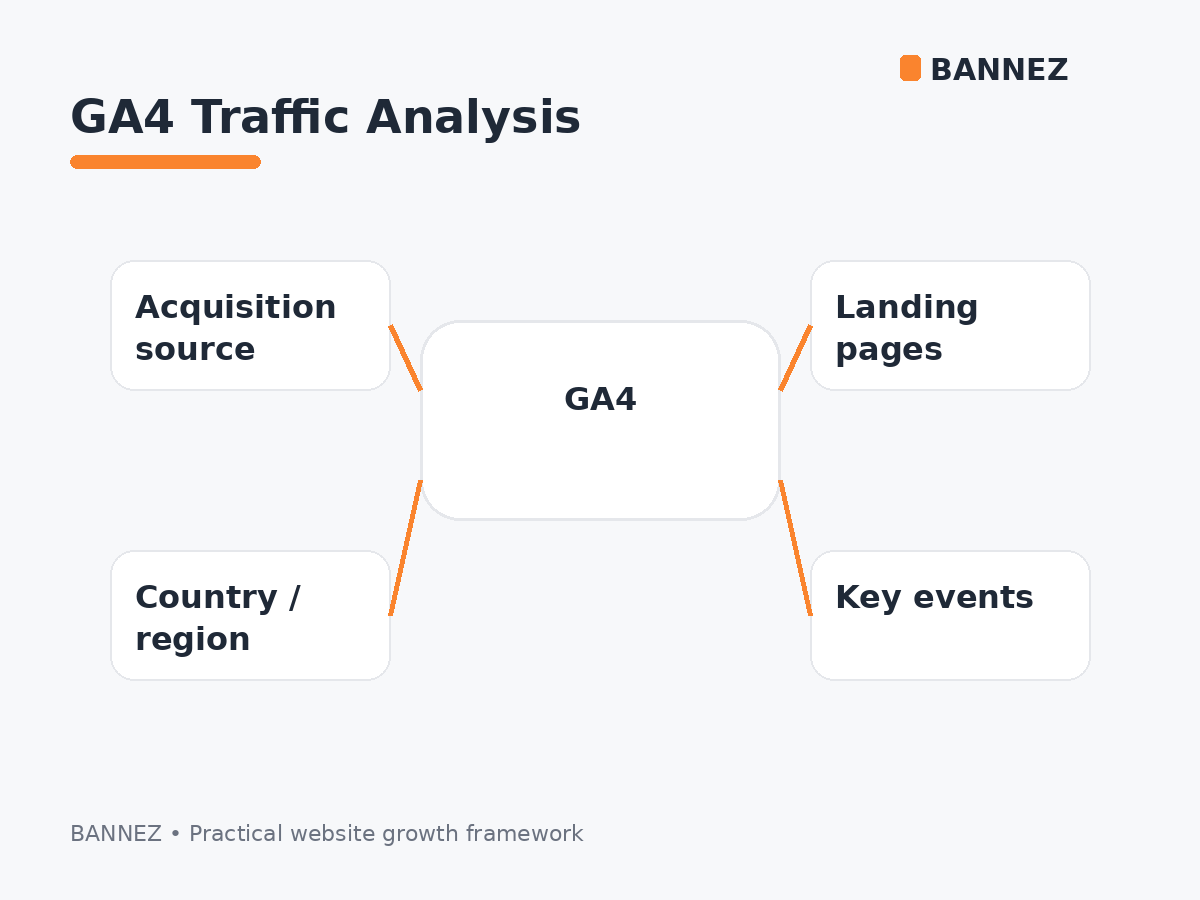
GA4 can report Country, Region, and City as geography dimensions. You can compare those dimensions with users, sessions, engagement, and key events.
Google’s current Demographic details report documentation explains how country and region dimensions are populated.
Questions to Ask Before Choosing
- Which countries can actually buy or use my offer?
- Does my website support the visitor’s language?
- Does pricing make sense in those markets?
- Do I need broad reach or precise location testing?
- Will I measure engagement and conversions by country?
- Does the traffic method comply with the platforms I use?
How to Choose a Country Group
- Define the campaign goal.
- List countries where the offer is available.
- Review existing GA4 country performance.
- Check language, currency, shipping, and support limitations.
- Start with the most relevant markets.
- Measure engagement and key events.
- Expand or narrow the country list based on results.
For a deeper process, read How to Choose Countries for Your Website Traffic Campaign.
Where Worldwide Traffic Fits
If your campaign needs broad paid visits rather than one specific market, you can explore our Worldwide Website Traffic service. Treat it as a paid traffic option and evaluate it separately from organic search traffic.
Worldwide vs Country-Targeted Checklist
- Website market is defined
- Supported countries are known
- Language and currency are suitable
- Analytics country data is available
- Traffic quality will be measured
- Conversion goals are configured
- Organic and paid traffic are reported separately
Frequently Asked Questions
Is targeted country traffic always better?
No. It is better when geography is important to the campaign. A global website may benefit from broader reach.
Can GA4 show visitor countries?
Yes. GA4 includes Country, Region, and City dimensions, with geography approximated from traffic IP information.
Should a global site target every country?
Not necessarily. Start with countries that fit your audience and goals, then expand based on useful data.
Does worldwide paid traffic improve organic SEO?
Paid traffic and organic ranking performance are separate. More paid visits do not automatically increase Google Search rankings.
Conclusion
Choose worldwide website traffic when broad geographic reach supports your goal. Choose targeted country traffic when your offer, language, pricing, or campaign depends on specific markets.
The best decision comes from audience fit and measurement. Use GA4 geography, engagement, and key-event data to understand whether the locations you selected are actually useful.
