
Website Traffic: A Complete Beginner’s Guide
Website traffic is the flow of people and sessions arriving on a website through search engines, direct visits, links on other websites, advertising, social platforms, email, and other channels. Traffic matters because a website can only generate awareness, leads, sales, subscriptions, or other actions when the right people actually reach it.
But traffic volume alone is not enough. A useful traffic strategy also looks at where visitors come from, what they do after arriving, and whether those visits support the website’s real goals.
What Does Website Traffic Mean?
Website traffic is commonly measured through analytics platforms using users, sessions, page views, acquisition channels, engagement and key actions. Google Analytics groups traffic into rule-based channels such as Organic Search, Direct, Referral, Paid Search, Organic Social and Email.
Google’s current GA4 default channel group documentation explains how Analytics classifies traffic sources.
Why Website Traffic Matters
- It shows whether people are finding your website
- It helps identify which channels bring visitors
- It provides data for improving content and campaigns
- It can support lead generation, sales or other business goals
- It helps compare marketing channels
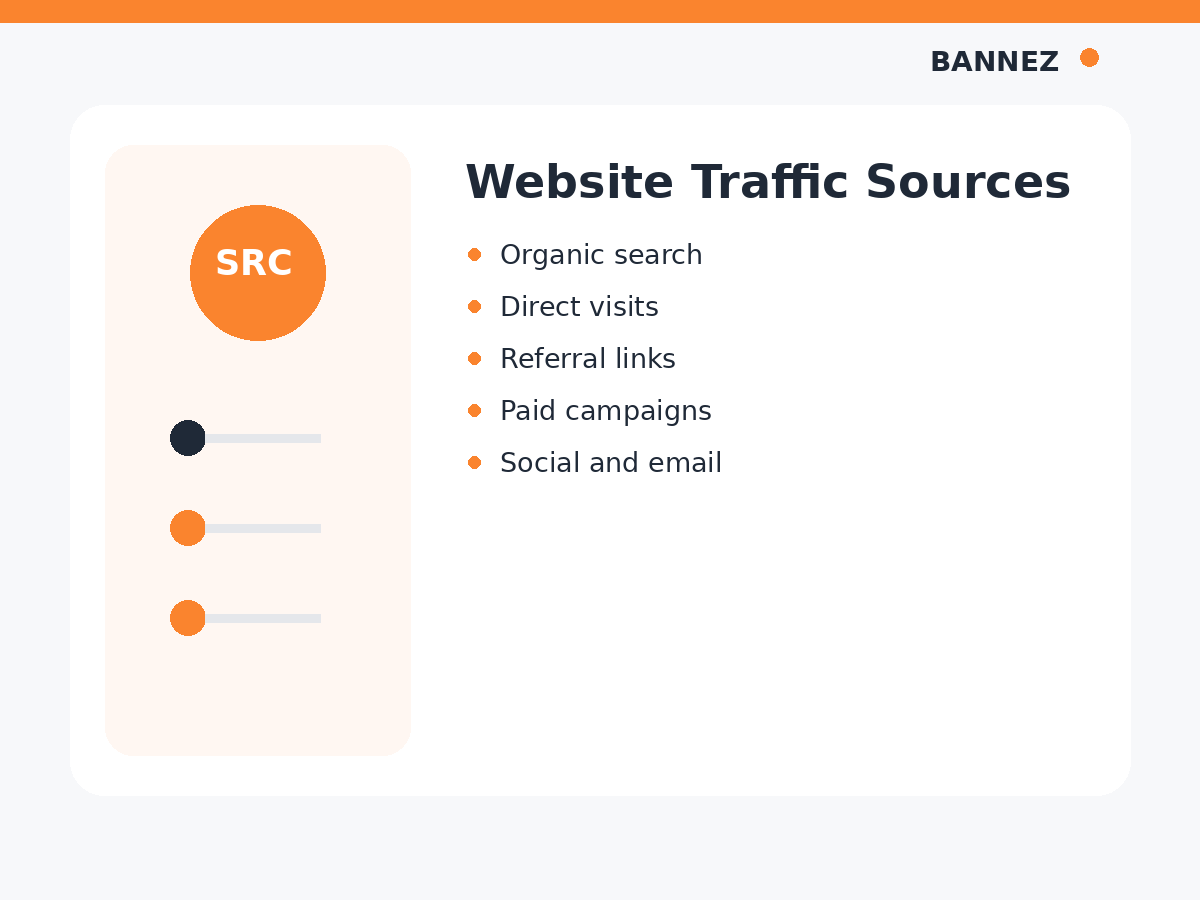
Main Website Traffic Sources
Organic Search
Visitors arrive through non-ad search results.
Direct Traffic
Analytics may classify visits as Direct when users arrive through a saved link, enter the URL, or when a more specific source cannot be identified under the available attribution data.
Referral Traffic
Visitors arrive through non-ad links on other websites or apps.
Paid Traffic
Visitors arrive from advertising channels such as paid search, display, paid social, or other campaigns.
Social and Email
Visitors can also arrive through organic social posts, paid social campaigns, newsletters and other email links.
Our guide on different types of website traffic explains these channels in more detail.
Traffic Quantity vs Traffic Quality

Ten thousand visits from people with no interest in your website may be less valuable than one thousand visits from the right audience. Traffic quality depends on your goal.
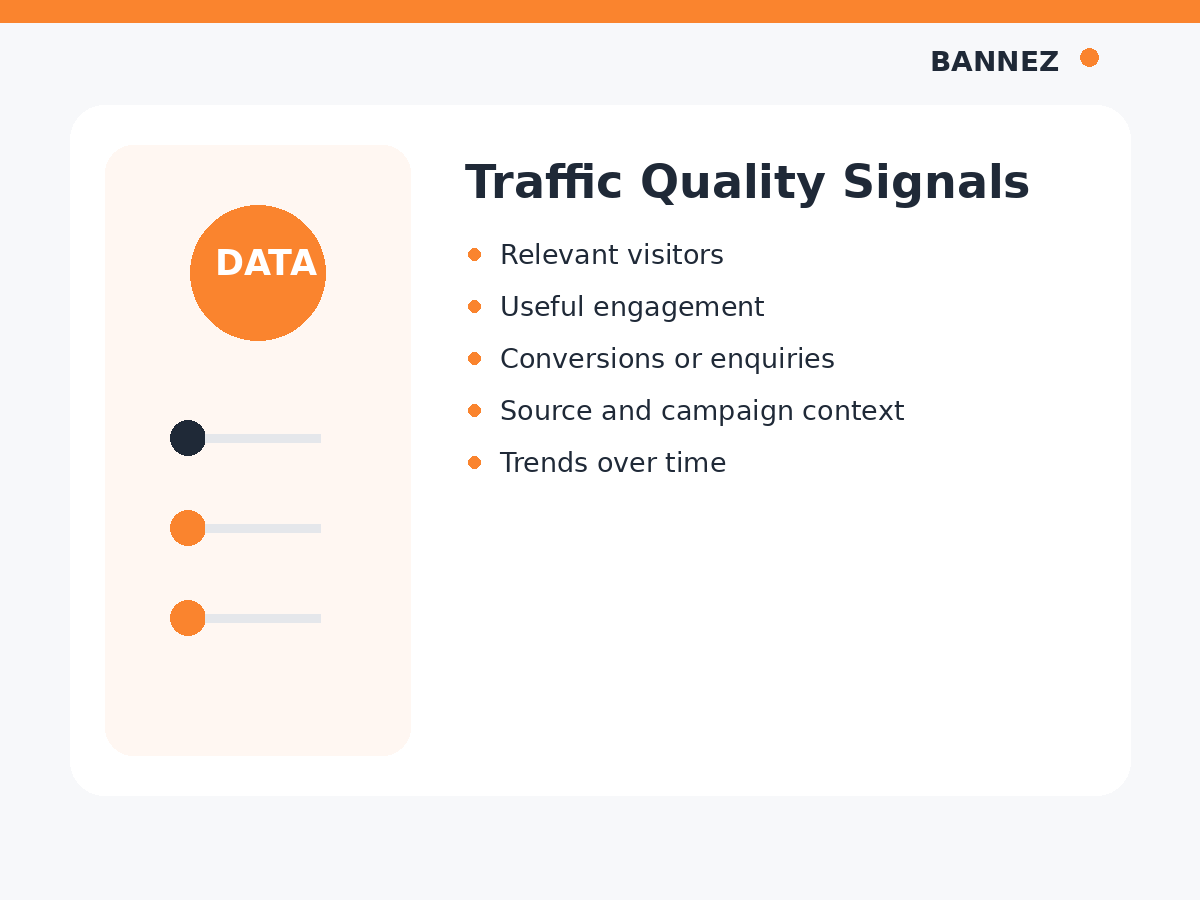
Useful quality signals can include
- Relevant countries or audiences
- Engaged sessions
- Visits to important pages
- Form submissions, purchases or other key events
- Returning visitors
- Clear and measurable source data
Important Website Traffic Metrics
| Metric | What it helps you understand |
|---|---|
| Users | How many users reached the site |
| Sessions | How many visit sessions occurred |
| Source / medium | Where traffic came from |
| Channel group | Broad acquisition category |
| Engagement | How visitors interacted |
| Key events | Important actions completed |
Google’s User acquisition vs Traffic acquisition guide explains how GA4 separates first-user acquisition from session-level traffic acquisition.
How to Build a Balanced Traffic Strategy
- Define what a valuable visitor means for your website.
- Measure current traffic sources.
- Improve organic content for relevant search demand.
- Build referral opportunities from useful partnerships and mentions.
- Use social and email when they match your audience.
- Test paid campaigns with clear goals and tracking.
- Review traffic quality, not only volume.
Organic Traffic and Paid Traffic Are Different
Paid traffic can bring visits while a campaign is active. Organic search traffic comes through non-ad search results. Buying or sending paid traffic does not automatically improve organic rankings. Evaluate each channel according to its own objective.
Where Bannez Website Traffic Services Fit
Businesses sometimes need additional paid traffic for campaigns, testing, reach, or other website objectives. If that matches your use case, you can explore our Worldwide Website Traffic service. Use paid traffic only in ways that comply with your analytics, advertising, monetization and platform policies, and do not treat it as a substitute for organic SEO.
How to Analyze Traffic Channels
GA4’s Traffic acquisition report is session-scoped and can be viewed using dimensions such as default channel group, source, medium and campaign. The official Traffic acquisition report documentation explains the available dimensions.
Common Website Traffic Mistakes
- Tracking only total visits
- Ignoring source quality
- Confusing paid traffic with organic search performance
- Using campaigns without source tagging
- Judging every channel by the same metric
- Ignoring conversions or other useful actions
- Depending entirely on one acquisition source
Website Traffic Checklist
- Traffic goals are defined
- Analytics is configured
- Main channels are understood
- Source and medium data is reviewed
- Traffic quality is measured
- Key events match business goals
- Organic, paid, referral and direct traffic are not confused
- Campaigns follow relevant platform policies
Frequently Asked Questions
Is more website traffic always better?
No. More traffic is useful only when it supports your goal. Relevance and visitor behavior matter.
Does paid website traffic improve SEO rankings?
Paid visits do not automatically improve organic rankings. Organic search performance should be evaluated separately.
What is the best traffic source?
There is no universal best source. The right mix depends on your business, audience, budget and goals.
How can I see where visitors come from?
Analytics platforms such as GA4 can report source, medium and channel-group information when tracking is configured correctly.
Conclusion
Website traffic is more than a visitor count. Understand where visits come from, whether the audience is relevant, what visitors do, and which channels support meaningful outcomes.
Use a balanced strategy across appropriate acquisition channels and measure each source according to its real purpose.
