
What Are Authority Links and Why Should You Use Them?
Authority links are external links to trustworthy sources that help support, explain, or verify information in your content. The phrase “authority link” is common SEO language rather than an official Google metric. The important point is not whether a website has a particular third-party authority score; it is whether the source is relevant, reliable, and useful to the reader.
Good external links can point readers to original research, official documentation, government information, standards, product documentation, or other first-hand sources.
What Is an Authority Link?
An authority link usually means a link from your article to a credible external website. For example, an SEO tutorial might link to Google Search Central, while an accessibility article may link to the W3C.
Why Use Trusted External Sources?
They help readers verify information
If you mention a rule, statistic, technical requirement, or official recommendation, linking to the original source gives readers a place to confirm the information.
They add useful context
Some topics are too large to explain fully in one article. A relevant external resource can provide deeper documentation without forcing you to repeat it.
They improve editorial quality
Researching primary sources can reduce inaccurate claims and outdated information.
Google’s SEO Starter Guide recommends linking to useful resources when appropriate and using clear anchor text.
What Counts as a High-Quality Source?
- Official product or platform documentation
- Government websites
- Standards organizations
- Original research
- Universities and respected institutions
- First-party data or announcements
- Established specialist publications when primary sources are unavailable
Primary Sources vs Secondary Sources
| Source type | Example | Best use |
|---|---|---|
| Primary | Official documentation, original study | Rules, facts, specifications, original data |
| Secondary | Expert explanation or analysis | Context, interpretation, examples |
How to Choose an Authority Link
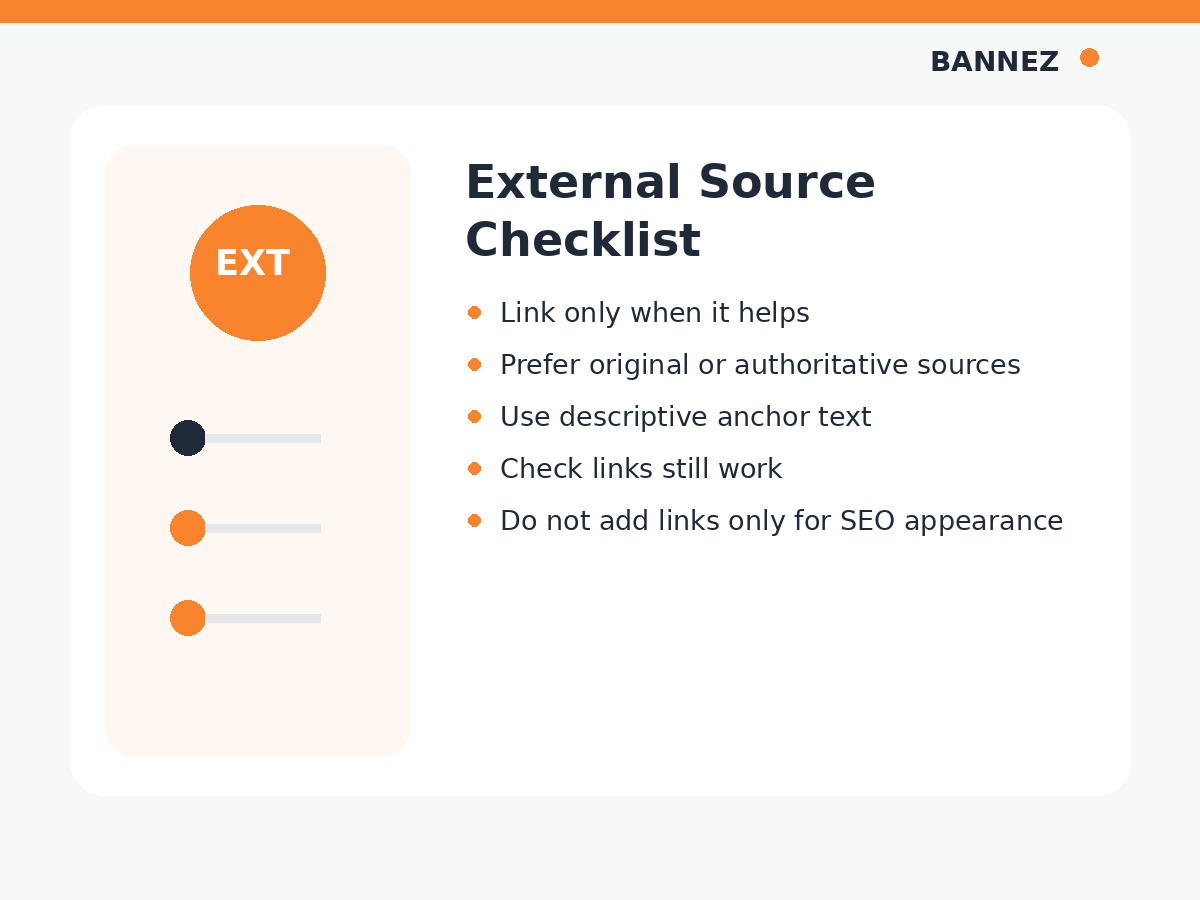
- Identify the statement that needs support.
- Look for the original or official source.
- Check that the page is current and directly relevant.
- Read the source instead of linking based only on its title.
- Use descriptive anchor text.
- Recheck important links when updating the article.
How to Write Good Anchor Text
Anchor text is the clickable text in a link. It should explain where the link goes. Descriptive anchors improve clarity for readers and help them decide whether to follow the link.
Do External Links Reduce Your SEO Value?
Normal relevant outbound links are part of the web. You do not need to avoid useful external links because of a fear that every link “leaks authority.” Focus on whether the destination helps the reader.
Should Every Blog Post Have Authority Links?
No fixed number is required. A personal experience article may need few external references, while a technical guide or research-heavy article may need several.
When Should You Use Link Attributes?
Normal editorial links to trusted sources generally do not need special treatment. Different attributes may be appropriate for sponsored, paid, user-generated, or untrusted links. Google’s guidance on qualifying outbound links explains current link attributes.
Authority Links vs Internal Links
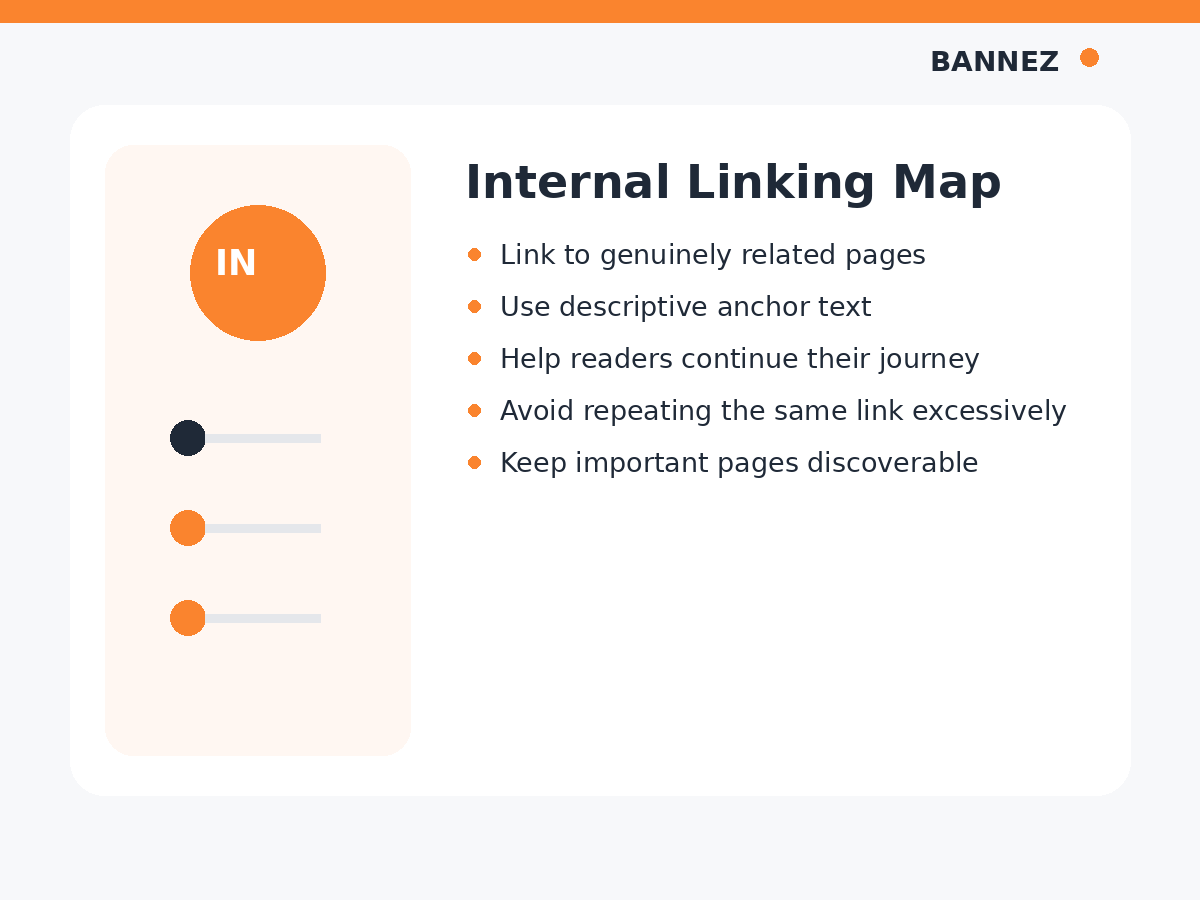
Authority links usually point to useful external sources. Internal links connect pages within your own website. Both can help the reader, but they serve different navigation and research purposes.
Read our guide on internal links vs external links for a full comparison.
Common Authority-Link Mistakes
- Linking to a source you did not read
- Using an unrelated famous site simply because it is popular
- Linking to outdated documentation
- Citing a secondary article when the original source is available
- Using vague anchor text
- Adding external links only to satisfy an arbitrary SEO checklist
- Using paid links without appropriate disclosure or attributes
Authority Link Checklist
- Source directly supports the statement
- Original source is preferred when practical
- Information is current
- Website is trustworthy for the topic
- Anchor text describes the destination
- Link is added for reader value
- Special attributes are used when required
- Important sources are rechecked during updates
Frequently Asked Questions
Is Domain Authority required for an authority link?
No. Domain Authority is a third-party metric. A useful source should be judged by relevance, reliability, originality, and expertise for the specific claim.
How many authority links should an article have?
There is no fixed number. Add as many as are genuinely useful for evidence and context.
Should authority links open in a new tab?
That is mainly a user-experience and site-policy decision, not a requirement for SEO.
Can I link to Wikipedia?
Wikipedia can be useful for orientation, but for important factual claims it is often better to follow its citations and link to the original source when available.
Need SEO Content With Trusted Sources?
If you need professionally structured articles with branded images and natural links to authoritative external sources, explore our SEO Content Writing with Images & Authority Links service.
Conclusion
Authority links are useful when they connect readers to trustworthy, relevant sources. Focus on original documentation, accurate evidence, descriptive anchor text, and real reader value rather than third-party authority scores.
Before publishing an article, review every external link and ask whether the source makes the content more trustworthy, complete, or useful.
