
What Is Google Website Traffic?
Google website traffic means visits that reach your website through Google-related sources. In practice, this can include unpaid clicks from Google Search, paid clicks from Google Ads, and in some cases visits from other Google surfaces. It is useful to separate these sources because they have different costs, goals, and reporting methods.
In Google Analytics 4, there is not one default channel called “Google Website Traffic.” Instead, GA4 classifies visits by source, medium, and channel group. For example, a visit can appear as google / organic under Organic Search or as paid traffic when campaign data shows an advertising click.
What Counts as Google Website Traffic?
Organic Google Search traffic
This is traffic from unpaid Google Search results. Google describes organic search as non-advertising search traffic, and Search Central explains that SEO helps search engines understand your content and helps people decide whether to visit your site.
See Google’s official SEO Starter Guide.
Paid Google traffic
Paid traffic can come from Google Ads campaigns such as Search, Display, Video, Shopping, or Performance Max, depending on campaign setup. Google Ads lets advertisers choose objectives such as Website traffic, Leads, or Sales.
See Google’s campaign objectives documentation.
How GA4 Identifies Google Traffic
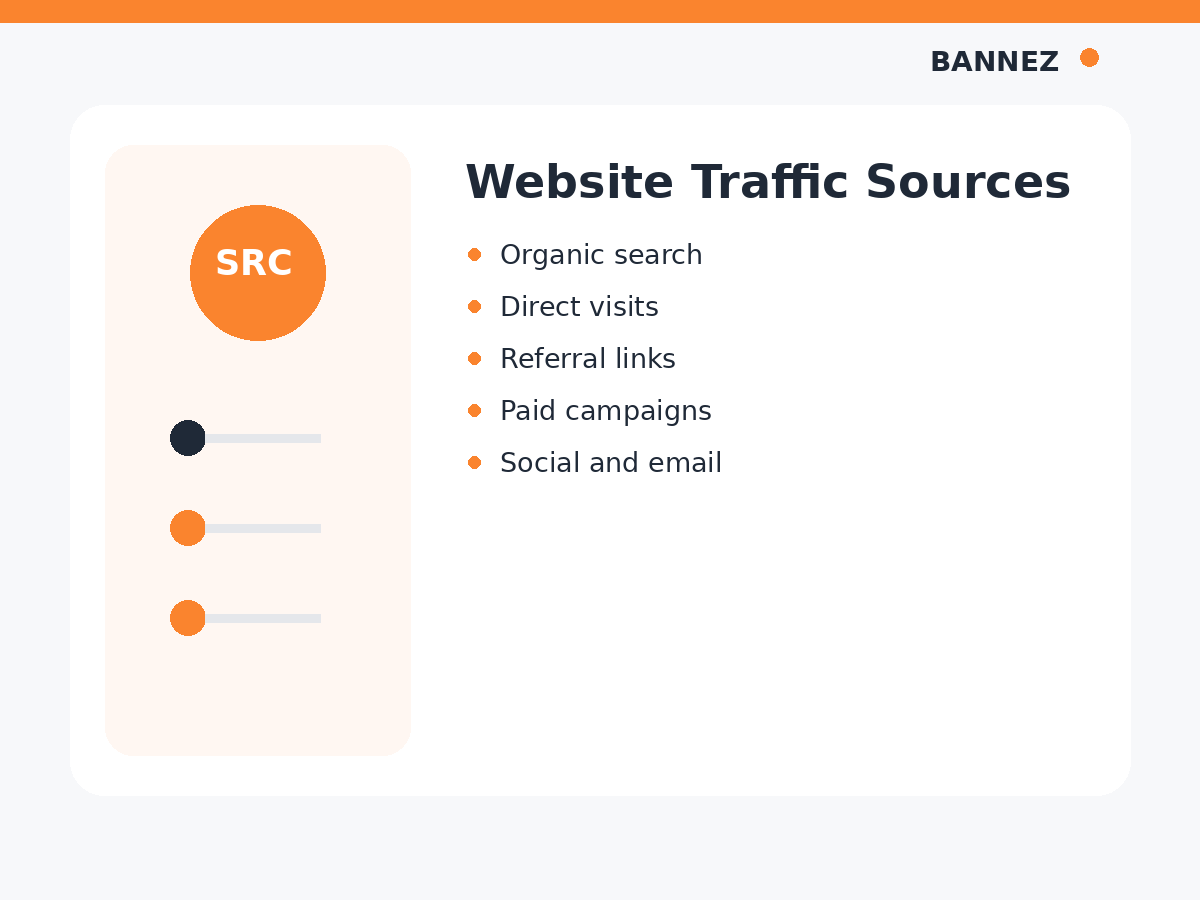
GA4 uses traffic-source dimensions such as source, medium, campaign, and default channel group. Google explains that the source identifies the platform or website that referred traffic, while the medium describes the type of traffic, such as organic, cpc, referral, email, or none.
Review Google’s current traffic-source dimensions guide.
Google Traffic vs Direct and Referral Traffic
| Traffic type | Typical path | Example |
|---|---|---|
| Organic Google | Unpaid Google Search result | google / organic |
| Paid Google | Google ad click | google / cpc |
| Direct | Typed URL, bookmark, or missing source information | direct / none |
| Referral | Link from another website | example.com / referral |
For a broader comparison, read our guide on Organic Traffic vs Direct Traffic vs Referral Traffic.
Why Google Website Traffic Matters
It can connect you with active searchers
People using Google Search are often trying to find information, compare options, reach a brand, or take an action. A page that matches that need can attract relevant visitors.
It can be measured separately
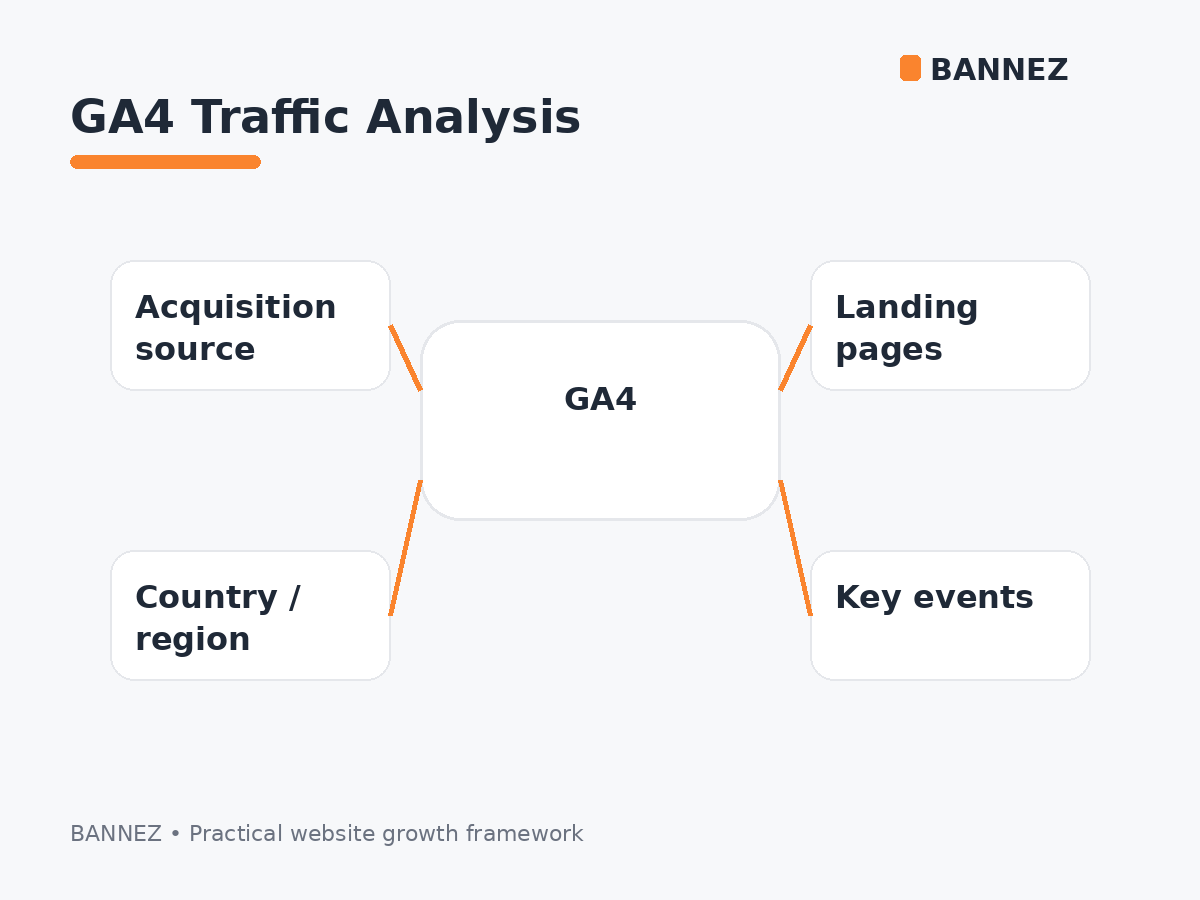
GA4 lets you analyze session source, medium, channel group, landing pages, engagement, and key events. This helps separate Google organic performance from Google paid campaigns.
It helps evaluate content and campaigns
Search Console can help you understand organic search queries and clicks, while GA4 can show what visitors do after arriving. Paid campaigns can be evaluated using Google Ads and Analytics together.
Google Traffic Is Not Automatically High-Quality Traffic
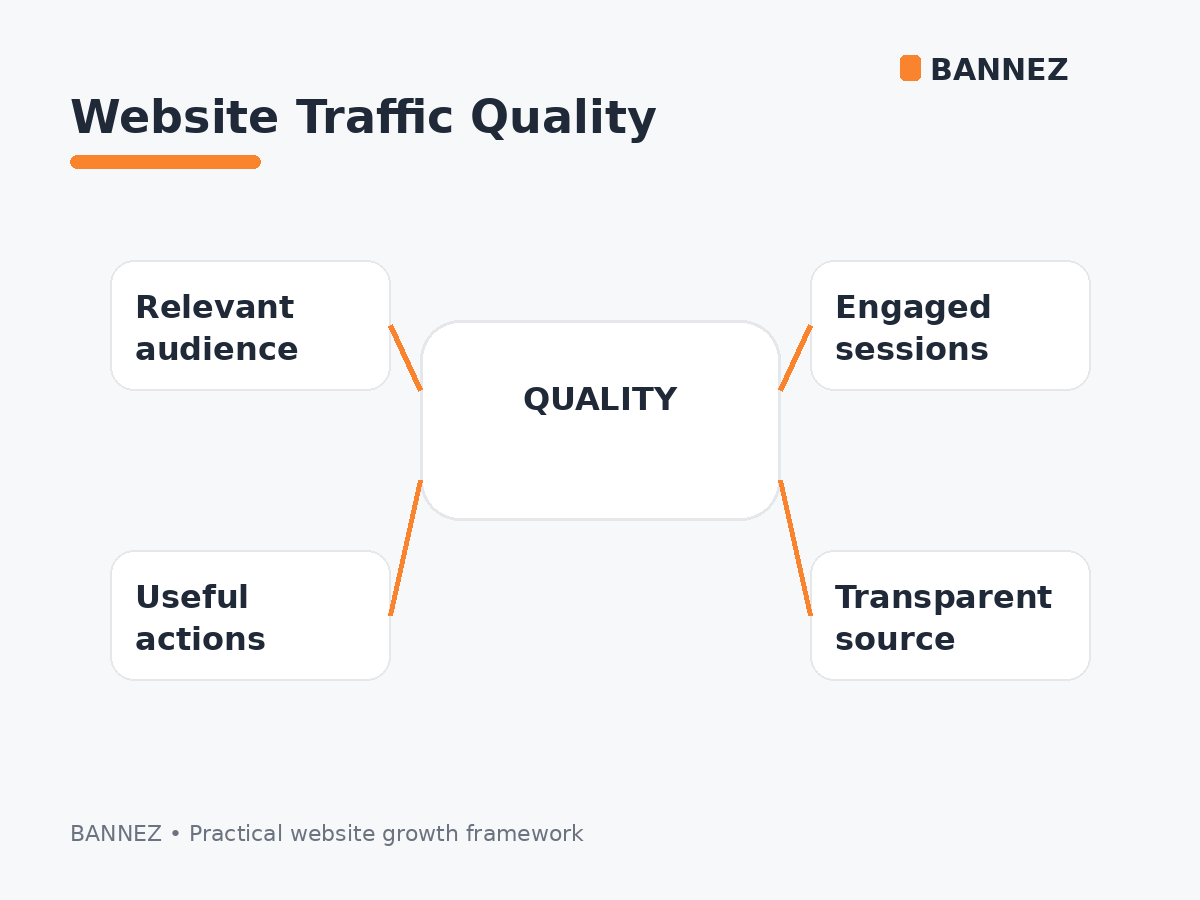
A visit from Google is useful only when it supports the goal of the website. Traffic quality depends on audience relevance, landing-page fit, engagement, and useful actions.
A high number of visits with no meaningful engagement may be less valuable than a smaller number of relevant sessions that generate enquiries, purchases, subscriptions, or other key events.
How to Check Google Website Traffic in GA4
- Open your GA4 property.
- Go to Reports and open the Traffic acquisition report.
- Review Session default channel group.
- Change or add dimensions such as Session source or Session source / medium.
- Look for Google-related rows such as google / organic or paid campaign sources.
- Compare sessions, engagement, key events, and revenue when relevant.
Google’s current Traffic acquisition report documentation explains how session-scoped acquisition dimensions work.
How to Increase Organic Google Traffic
- Create useful content around real search needs
- Make important pages crawlable and indexable
- Use descriptive titles and headings
- Build useful internal links
- Keep content accurate and updated
- Review Search Console data instead of guessing
If organic posts are struggling, read Why Your Blog Posts Are Not Getting Organic Traffic.
How Paid Google Traffic Is Different
Paid Google traffic is campaign-driven. You choose a budget, targeting, campaign type, and objective. When the campaign stops spending, the paid visits usually stop as well. Organic search visibility works differently and should not be reported as paid traffic.
Can You Buy Google Website Traffic?
You can pay for legitimate advertising through Google Ads, but third-party website traffic services are a separate category and should not be described as organic Google Search traffic unless the visits genuinely originate from organic search. Always keep source reporting accurate.
If your goal is additional paid website visits for an appropriate campaign use case, you can explore our Worldwide Website Traffic service. It should be treated as paid traffic and not as a replacement for organic SEO.
Google Website Traffic Checklist
- Organic and paid Google traffic are separated
- Source and medium are reviewed
- Landing pages match the visitor’s intent
- GA4 key events are configured
- Search Console is used for organic search analysis
- Paid campaigns have clear objectives
- Traffic quality is measured, not only volume
Frequently Asked Questions
Is all Google traffic organic?
No. Google traffic can include organic search visits and paid advertising visits, among other Google-related sources.
Is Google website traffic the same as SEO traffic?
No. SEO traffic usually refers to organic search traffic. Google website traffic is a broader informal phrase.
Can GA4 show Google traffic?
Yes. Use traffic-source dimensions such as Session source, medium, and default channel group.
Does paid traffic improve Google rankings?
Paying for visits or ads does not automatically improve organic rankings. Organic search and paid acquisition should be evaluated separately.
Conclusion
Google website traffic is best understood by its real source: organic Google Search, paid Google Ads, or another identifiable Google referral. Do not combine everything into one number.
Use GA4 and Search Console to separate sources, measure landing-page performance, and compare engagement and key actions. The goal is not simply more Google traffic—it is more relevant traffic that supports the purpose of your website.
