
What Is SEO Content Writing and How Does It Work?
SEO content writing is the process of creating useful online content that answers real search questions while also making the page easy for search engines to understand. It is not about repeating keywords as many times as possible. Strong SEO writing starts with the reader, uses a clear structure, and then adds search optimization naturally.
When SEO content is done well, a blog post can help people learn something, compare options, solve a problem, or take the next step. At the same time, clear topics, descriptive headings, useful links, relevant images, and accurate metadata help search engines understand what the page is about.
What Does SEO Content Writing Mean?
SEO content writing combines normal content writing with search-focused planning. The goal is to create content that is useful enough for people to read and clear enough for search engines to interpret.
Google’s current SEO Starter Guide explains that SEO is about helping search engines understand content and helping users decide whether they should visit a page from search results.
How SEO Content Writing Works
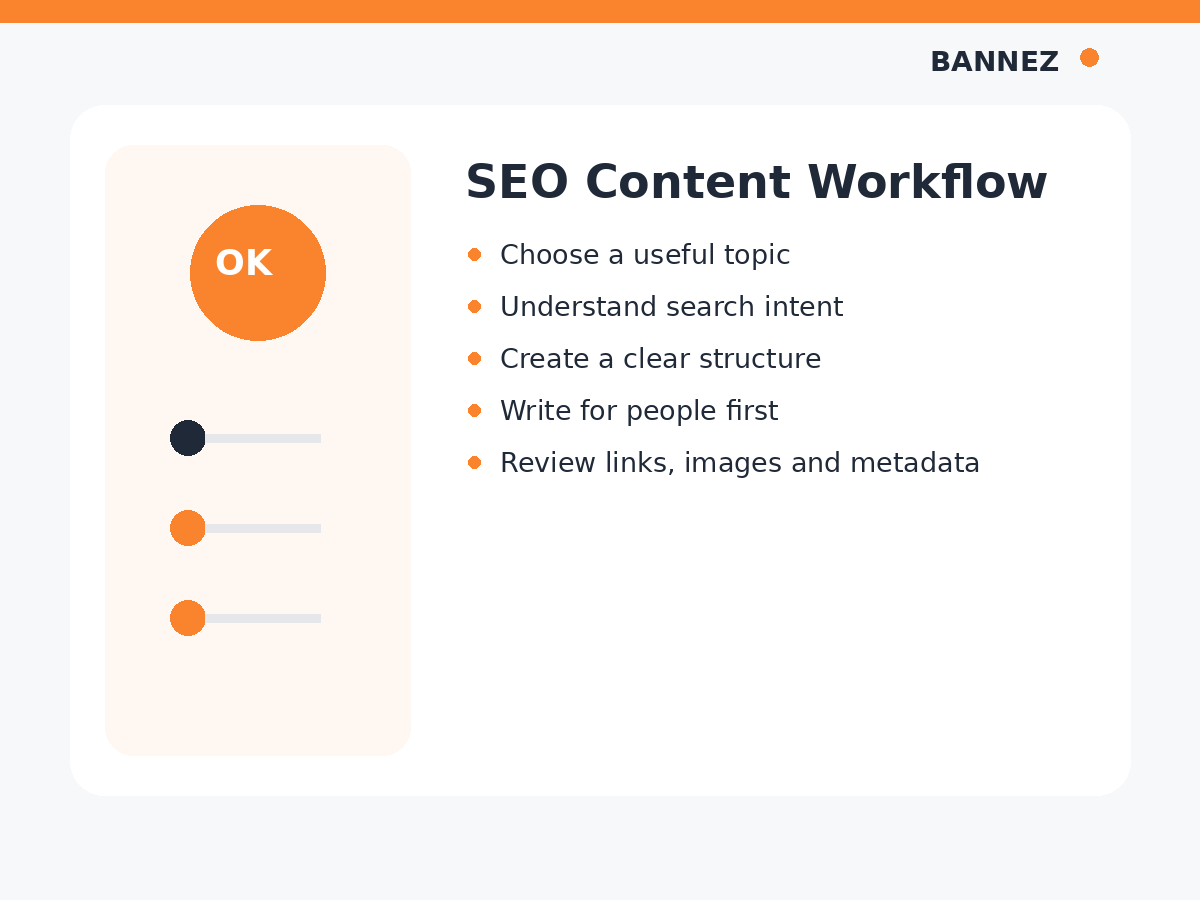
A strong SEO article usually follows a simple process. You first decide what the page should help the reader do. Then you research the main topic, choose keywords that match that topic, understand the likely search intent, create a logical outline, write the content, and review the page before publishing.
Step 1: Choose a useful topic
Start with a topic that is relevant to your website and useful to the audience you want to reach. A good topic connects search demand with your real expertise, products, services, or content goals.
Step 2: Understand search intent
Search intent means the likely purpose behind a search. Someone searching “what is SEO content writing” probably wants an explanation. Someone searching “SEO content writing service” is more likely comparing or looking for a provider.
Matching the content to the likely intent helps you choose the right article format, level of detail, examples, and call to action.
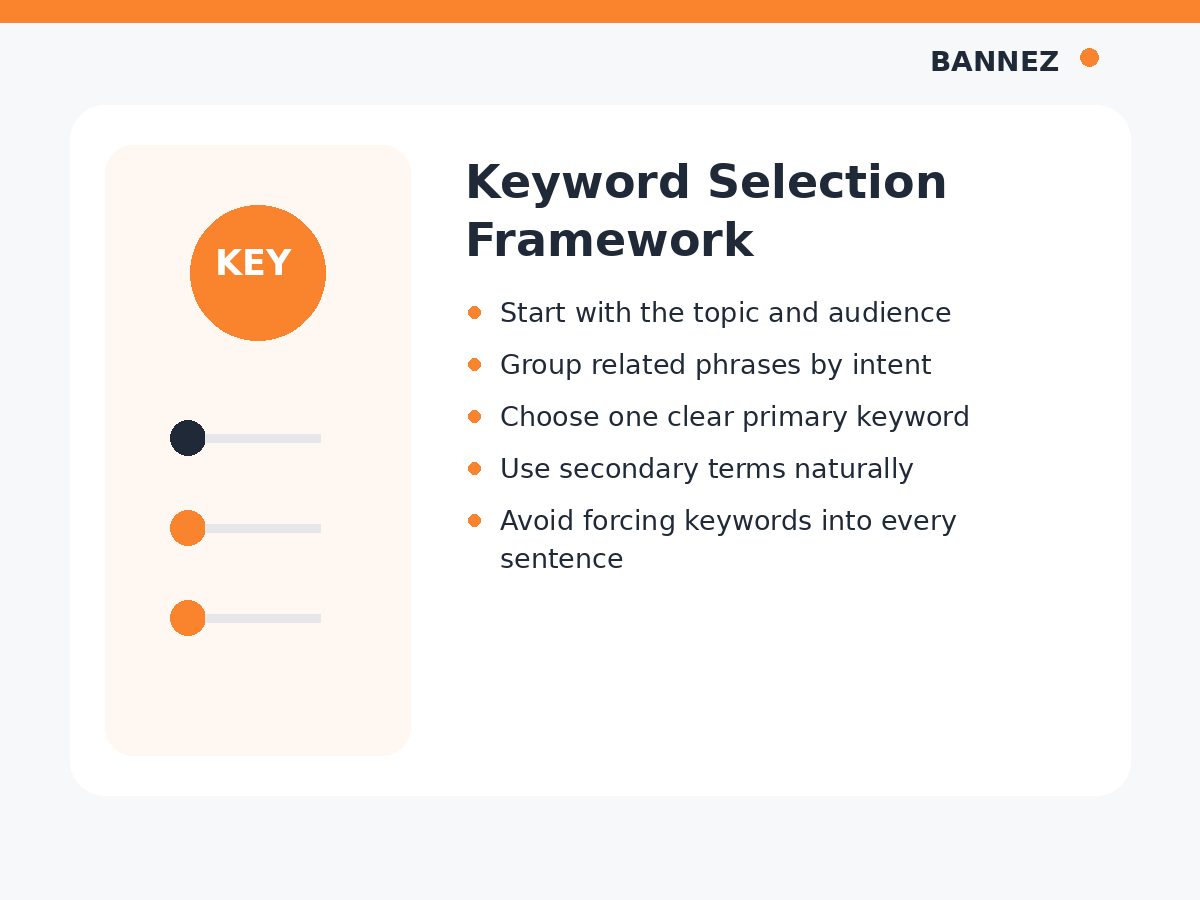
Step 3: Choose a primary keyword
The primary keyword should describe the main topic of the page. Related keywords can support the topic, but they should be used naturally.
Step 4: Build a clear outline
Before writing, organize the main questions and subtopics. A simple outline prevents repetition and makes the final article easier to scan.
For example, an article about SEO content writing could include:
- Definition of SEO content writing
- How the process works
- Keyword research
- Search intent
- Headings and structure
- Internal and external links
- Images and alt text
- Meta title and description
- Final quality review
Step 5: Write for people first
Google’s people-first content guidance recommends creating helpful and reliable information for users rather than content made mainly to manipulate rankings.
That means the article should answer the question clearly, provide original value, avoid unnecessary filler, and remain accurate.
Why Keywords Still Matter
Keywords help you understand how people describe a topic. They can guide the main page topic, headings, examples, title, URL, and supporting sections.
However, keywords should not control every sentence. Modern SEO writing should sound natural. The page should cover the topic fully rather than forcing the same phrase into every paragraph.
Primary vs secondary keywords
| Keyword type | Purpose | Example |
|---|---|---|
| Primary keyword | Main page topic | SEO content writing |
| Secondary keyword | Closely related phrase | SEO article writing |
| Long-tail keyword | More specific search need | how SEO content writing works |
| Supporting term | Adds context | search intent, headings, internal links |
How Headings Help SEO Content
Headings organize the article into clear sections. They make long content easier to scan and help readers understand what each section covers.
Simple heading structure
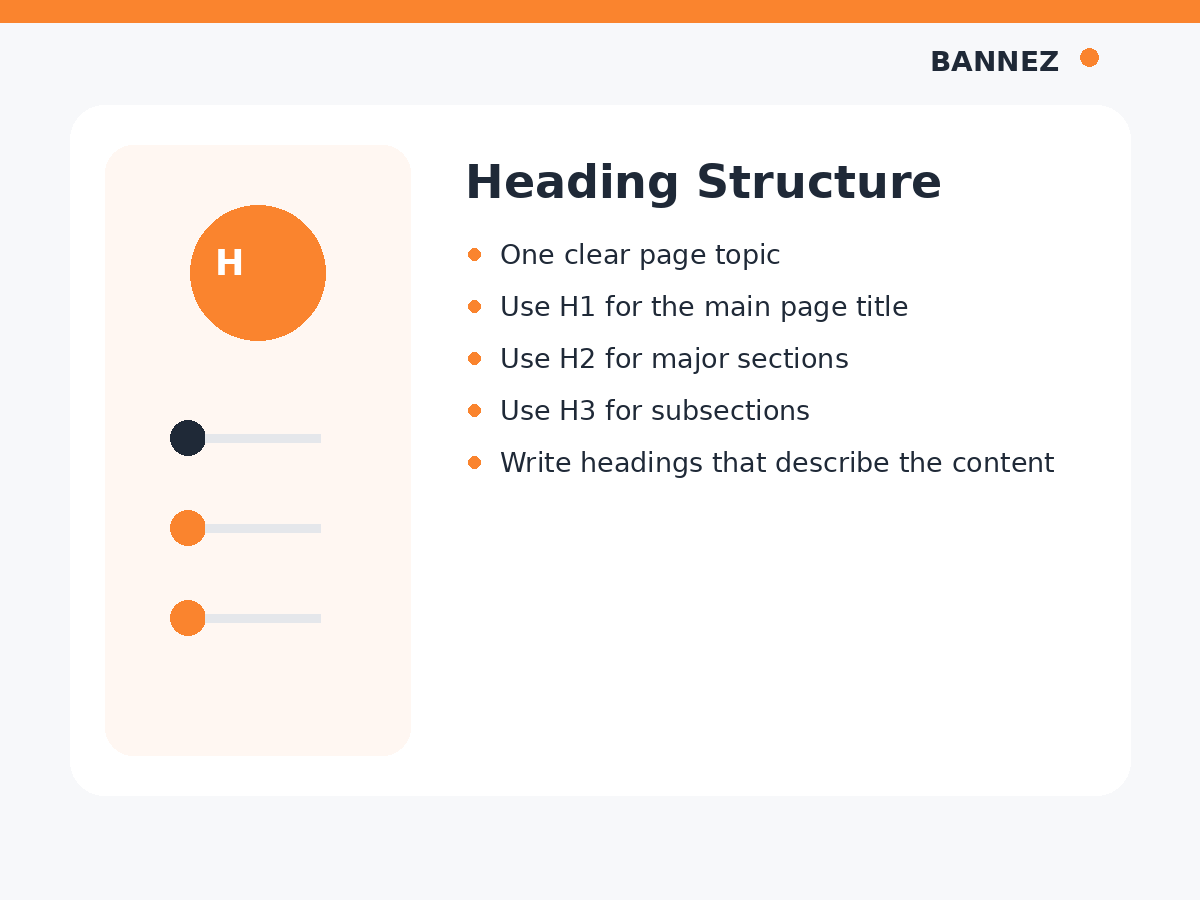
- H1: Main page or article title
- H2: Major sections
- H3: Subsections inside an H2 section
Google notes in its SEO Starter Guide that headings are useful for organizing content for readers. There is no magical number of headings required for ranking, so use as many as the content genuinely needs.
You can also read our planned guide on how to use H1, H2 and H3 correctly in blog posts for a more detailed structure.
What Role Do Internal Links Play?
Internal links connect one page on your website to another relevant page. They help readers discover related information and help search engines find and understand connected pages.
Use descriptive anchor text so the reader has a clear idea of what they will find after clicking. Avoid adding links only to reach an arbitrary number.
What Are External Authority Links?
External links point to other websites. They are useful when an outside source provides original data, official documentation, definitions, research, or context that improves your article.
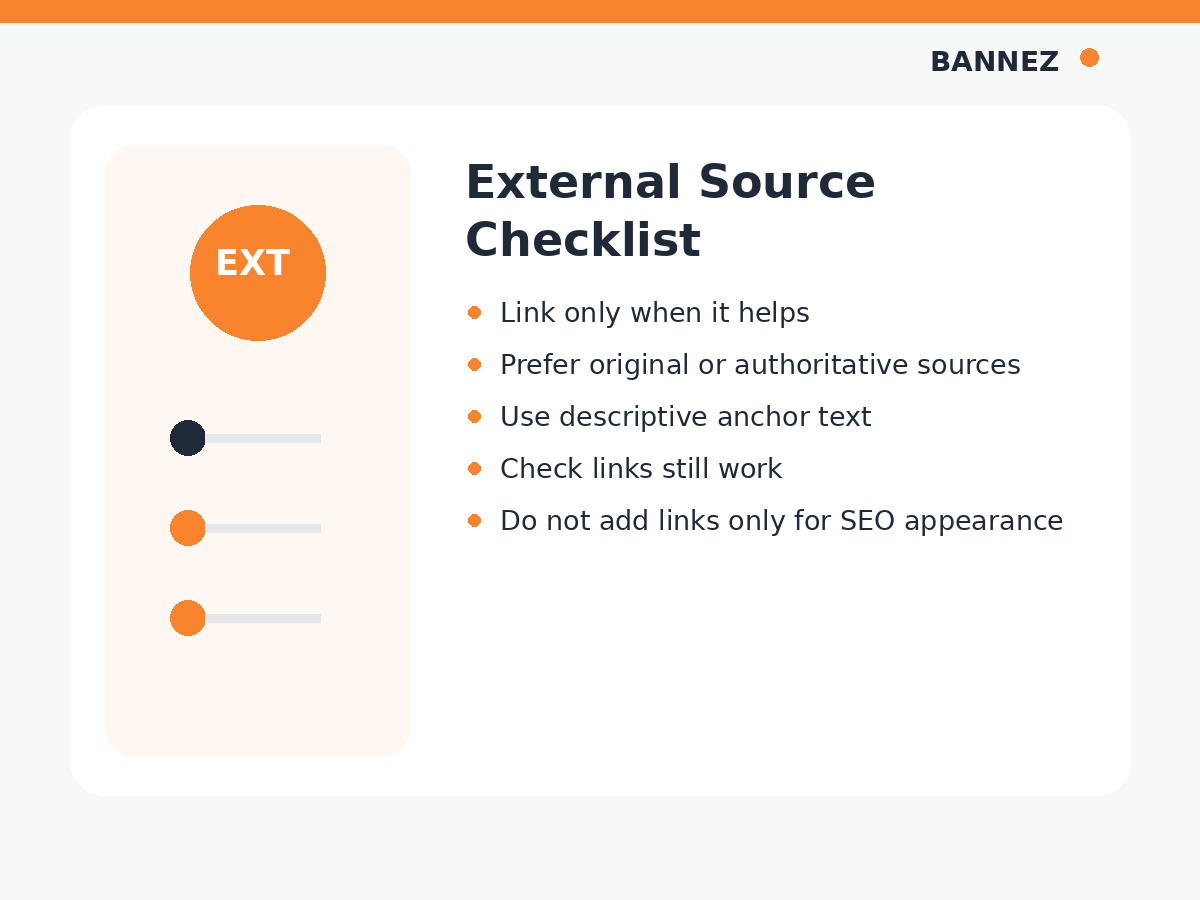
Google recommends linking when it provides useful context and advises site owners to trust the resources they link to. Useful sources can include official documentation, government websites, original research, respected institutions, or first-party product documentation.
Why Images Matter in SEO Content
Images can make complex ideas easier to understand, break up long sections, show examples, and improve the reading experience. They should be relevant to the content rather than added only for decoration.
Useful image SEO includes descriptive file names, accurate alt text when appropriate, sensible image size, and placing the image near related text. Google’s current image SEO best practices explain how Google discovers and understands images.
SEO Title, URL and Meta Description
After writing the article, review how the page may appear in search results.
SEO title
The SEO title should clearly describe the page and include the main topic naturally.
SEO-friendly URL
Keep the slug short, descriptive, and readable. Avoid unnecessary numbers or words that add no meaning.
Meta description
The meta description should summarize the value of the page in natural language and give searchers a clear reason to visit.
What Makes SEO Content High Quality?
High-quality SEO content is not defined by one keyword density score or one word count. Strong content normally has several useful qualities:
- It answers the main question clearly
- It matches the likely search intent
- It provides accurate and original information
- It is easy to read and scan
- It uses headings logically
- It adds relevant internal links
- It cites trustworthy external sources when useful
- It uses relevant images
- It avoids unnecessary repetition
- It stays updated when information changes
SEO Content Writing vs Regular Content Writing
| Area | Regular content writing | SEO content writing |
|---|---|---|
| Main goal | Communicate a message | Communicate a message and support search discovery |
| Keyword research | May not be used | Usually part of planning |
| Search intent | Optional consideration | Important part of topic planning |
| Metadata | May be ignored | Usually reviewed |
| Internal links | May be added casually | Planned around relevant reader journeys |
| Performance review | May focus on engagement | Can also use impressions, clicks and search queries |
How Do You Measure SEO Content Performance?
Google Search Console can show which queries bring impressions and clicks, which pages receive search traffic, and how performance changes over time. Google’s current Search Console Performance report guide explains these metrics.
Useful measures include:
- Search impressions
- Organic clicks
- Click-through rate
- Queries showing the page
- Conversions or enquiries from the page
- Engagement and user behavior in your analytics platform
When Should You Hire an SEO Content Writing Service?
You may want professional help when you have many topics to cover, limited writing time, inconsistent article quality, or need a repeatable process for keywords, structure, images, metadata, and authoritative sources.
If you need professionally structured content that includes relevant visuals and trusted external references, you can explore our SEO Content Writing with Images & Authority Links service.
SEO Content Writing Checklist
- Choose a topic relevant to the website
- Understand the likely search intent
- Select one clear primary keyword
- Use related keywords naturally
- Create an H2 and H3 outline
- Write useful, original content
- Add internal links where relevant
- Add trustworthy external sources when useful
- Use relevant images with accurate alt text
- Write an SEO title and meta description
- Use a clean URL slug
- Proofread before publishing
- Review performance after the page has had time to be indexed and discovered
Frequently Asked Questions
Is SEO content writing only for blog posts?
No. SEO writing can be used for service pages, product pages, category pages, guides, landing pages, FAQs, tutorials, and other indexable content.
Does SEO writing mean adding lots of keywords?
No. Keywords help define the topic, but excessive repetition can reduce readability. Use the main keyword and related terms naturally.
How long should SEO content be?
There is no universal word count that guarantees better rankings. The content should be long enough to answer the topic properly without unnecessary filler.
Can good SEO content rank immediately?
There is no guarantee. Search visibility can depend on indexing, competition, website quality, links, relevance, and many other factors. Google also notes that SEO changes may take time to show measurable results.
Conclusion
SEO content writing works by combining useful writing with search-focused planning. Start with a real audience need, understand search intent, choose a clear primary keyword, organize the article with logical headings, write for people first, and then improve links, images, metadata, and internal connections.
The most useful next step is to build a repeatable writing checklist. This makes each article easier to plan, review, and update. SEO is not about finding one trick that guarantees rankings; it is about consistently publishing clear, trustworthy, well-structured content that genuinely helps the people you want to reach.
