
High-Quality Website Traffic: What Does It Actually Mean?
High-quality website traffic does not simply mean a large number of visitors. Traffic is high quality when the visitors are relevant to your website, engage with the page, and have a realistic chance of completing the actions your business cares about.
A website with 1,000 relevant visits can produce better results than a website with 100,000 random visits. The right way to judge quality is to connect traffic source, audience fit, behavior, and outcomes.
What Is High-Quality Website Traffic?
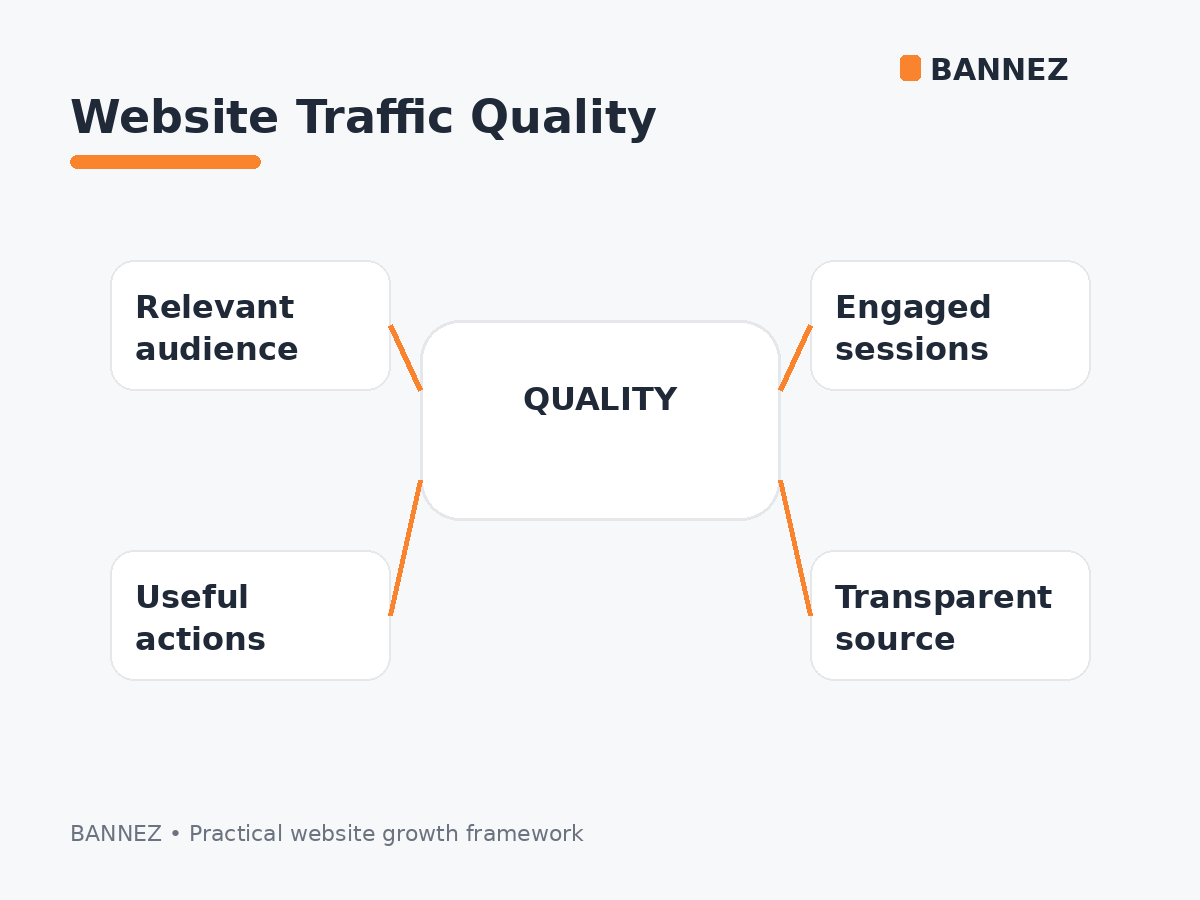
High-quality traffic usually has four characteristics: the audience is relevant, the source is understandable, visitors engage with the content, and the traffic supports useful actions.
1. The Audience Matches the Website
A visitor should have a reasonable reason to be on the site. For example, a WordPress service page needs people interested in WordPress help, not random visitors who have no need for the service.
2. The Visitor Location Makes Sense
Geography can matter when your business has specific markets. A local service business may need country or region relevance, while a global content website may accept a broader audience.
Read Why Visitor Location Matters for Your Website.
3. Visitors Engage With the Site
GA4 provides engagement metrics that help add context to traffic volume. Google defines an engaged session as one that lasts longer than 10 seconds, has a key event, or has at least two page or screen views.
See Google’s engagement rate documentation.
4. Traffic Produces Useful Actions
The most important action depends on the website. It may be a purchase, lead form, phone call, account signup, article read, download, or another key event.
Google Ads also recommends choosing campaign goals that match the outcome you want, such as Website traffic, Leads, or Sales. See Google’s campaign objectives guide.
High Traffic vs High-Quality Traffic
| Signal | High volume only | High-quality focus |
|---|---|---|
| Visitors | Large number | Relevant audience |
| Geography | Any location | Useful markets |
| Engagement | Not considered | Measured |
| Outcome | Visits only | Key actions |
| Source | Unclear | Transparent and measurable |
Traffic Source Matters
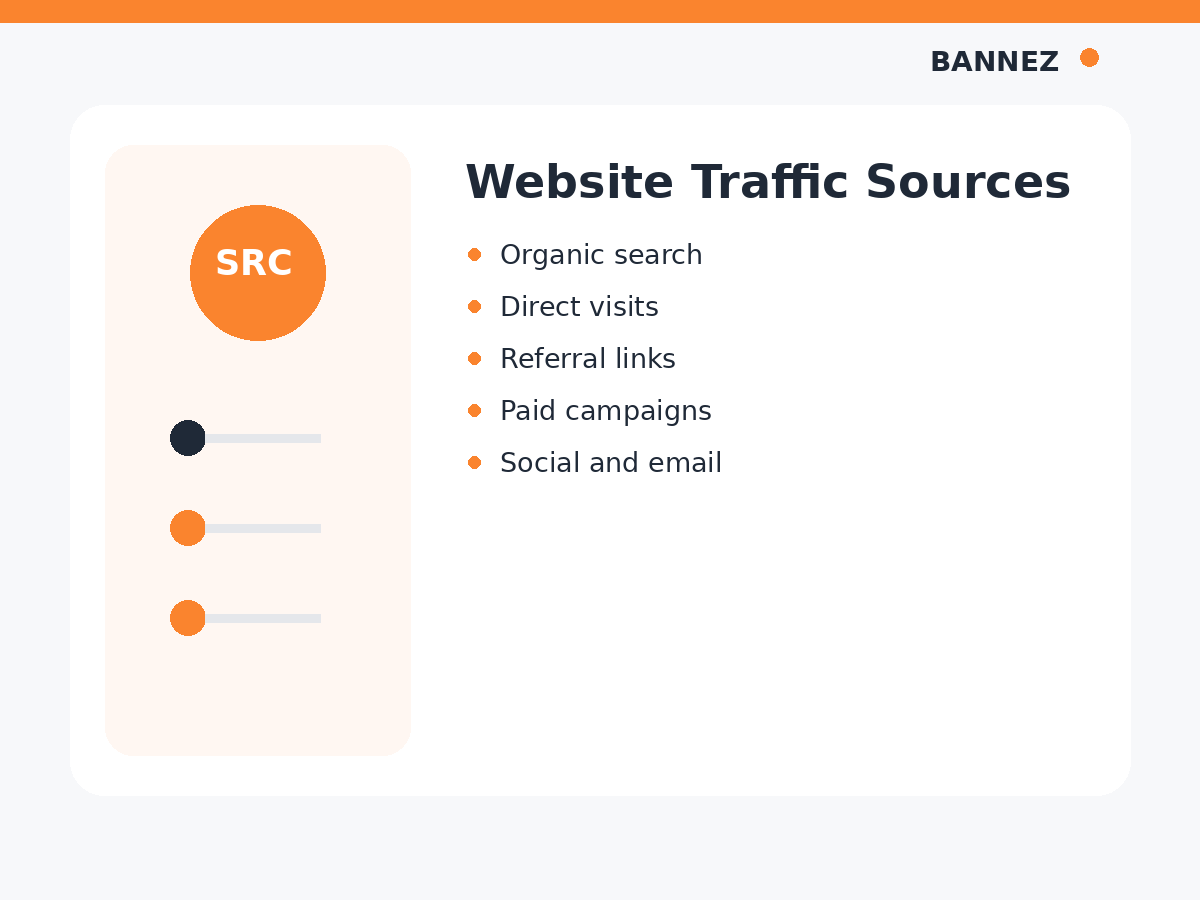
Organic search, direct, referral, email, social, and paid traffic are different acquisition paths. A source is not automatically high or low quality; it depends on what the visitor does after arriving.
Review our Different Types of Website Traffic Explained guide.
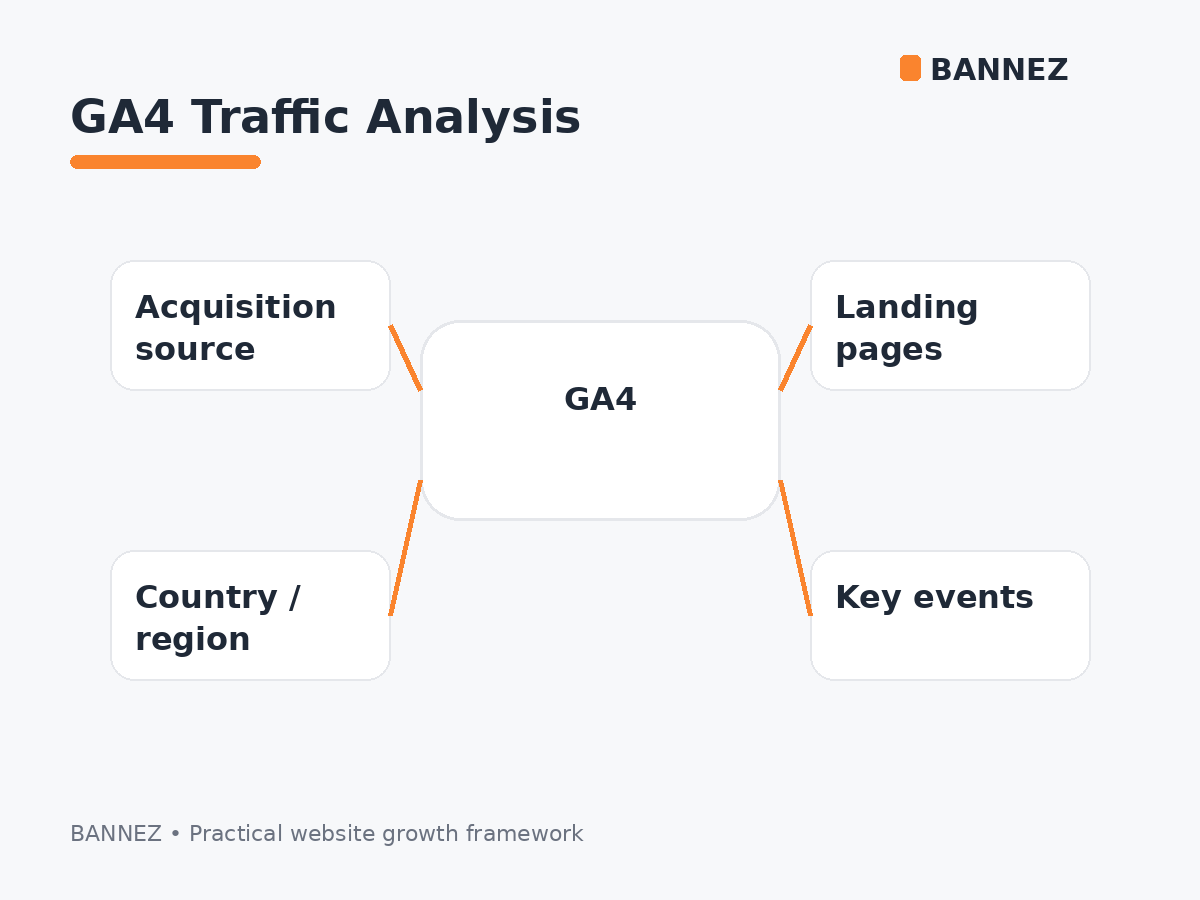
How to Measure Traffic Quality in GA4
- Review traffic source and medium.
- Check the landing page.
- Compare engagement rate.
- Review key events.
- Compare country or region when relevant.
- Check lead or revenue quality outside Analytics when needed.
Google’s Traffic acquisition report provides session-scoped acquisition dimensions for comparing traffic sources.
High-Quality Traffic Is Goal-Dependent
For ecommerce
Useful traffic may add products to cart, begin checkout, or purchase.
For a service business
Useful traffic may read service information and submit a qualified enquiry.
For a publisher
Useful traffic may engage with articles, return, subscribe, or support a compliant monetization model.
For a new website test
Useful traffic may help confirm analytics, page delivery, forms, and technical stability even when conversions are not the main goal yet.
What High-Quality Traffic Does Not Mean
- It does not mean every visitor converts
- It does not mean Tier 1 automatically equals quality
- It does not mean paid traffic is bad
- It does not mean organic traffic is always best
- It does not mean a provider can guarantee business results from visits alone
Can Paid Traffic Be High Quality?
Yes, when targeting, audience fit, landing page, and campaign objective are appropriate. Paid traffic should be measured as paid acquisition and not presented as organic search traffic.
If broad paid visits fit your campaign objective, you can explore our Worldwide Website Traffic service. Measure it according to your own analytics and business goals.
High-Quality Traffic Checklist
- Audience matches the website
- Visitor geography is relevant when needed
- Traffic source is measurable
- Landing page matches visitor intent
- Engagement is reviewed
- Key events are configured
- Lead or revenue quality is checked
- Paid and organic sources are kept separate
Frequently Asked Questions
What is a good traffic quality score?
There is no universal official traffic-quality score. Use metrics that match your website goals.
Is organic traffic higher quality than paid traffic?
Not automatically. Either source can be valuable when it reaches the right audience and produces useful outcomes.
Does Tier 1 mean high-quality traffic?
No. Country tier is only one geographic grouping and does not guarantee relevance or conversions.
Conclusion
High-quality website traffic is relevant, measurable traffic that engages with your website and supports useful outcomes. Visitor count alone cannot tell you that.
Define what quality means for your site, measure source, geography, engagement, and key events, and improve campaigns based on real results rather than one traffic number.
