
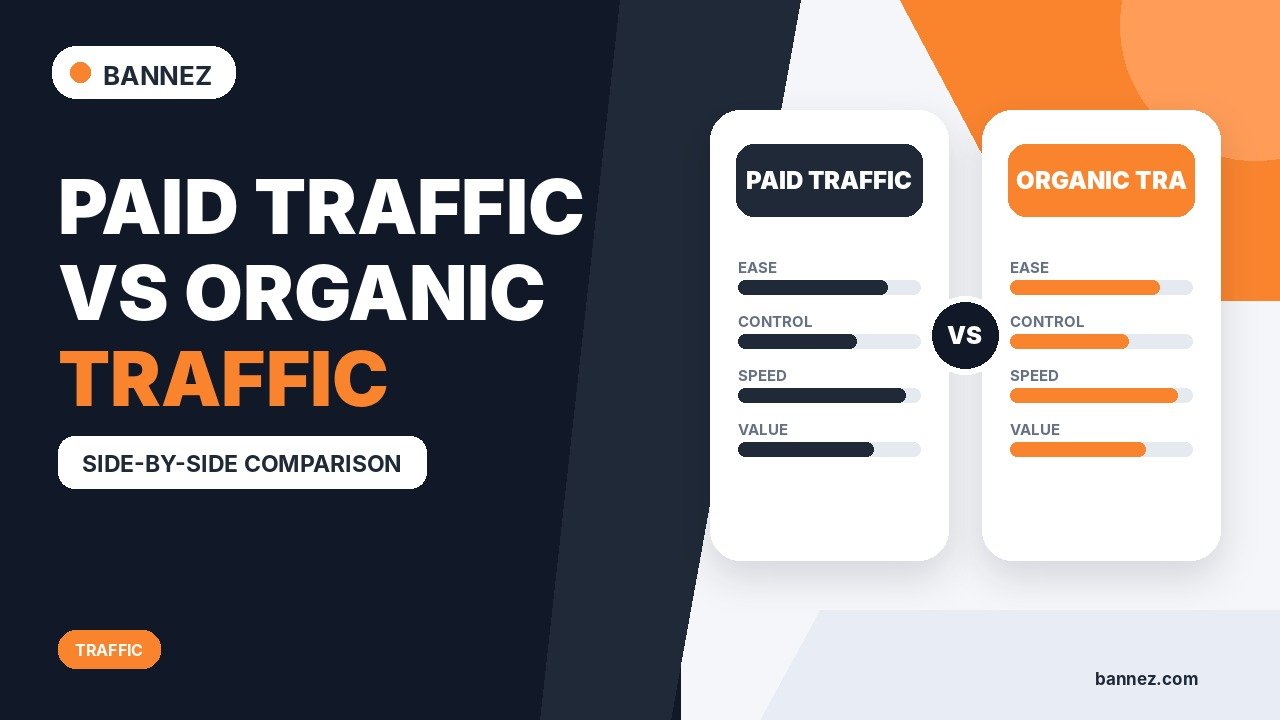
Paid Traffic vs Organic Traffic: Pros and Cons
Paid traffic and organic traffic can both bring visitors to your website, but they work in very different ways. Paid traffic usually gives you faster control over reach, targeting, and budget. Organic traffic usually takes more time to build but can continue bringing visitors without paying for every individual click.
Neither option is automatically better. The right choice depends on your goals, budget, timeline, audience, and ability to measure results.
What Is Paid Traffic?
Paid traffic is website traffic generated through paid promotion or advertising. Common examples include paid search ads, social ads, display campaigns, sponsored placements, and other paid acquisition channels.
Google Ads allows businesses to choose campaign objectives such as Website traffic, Leads, or Sales and then build campaigns around those goals. See Google’s campaign objectives documentation.
What Is Organic Traffic?
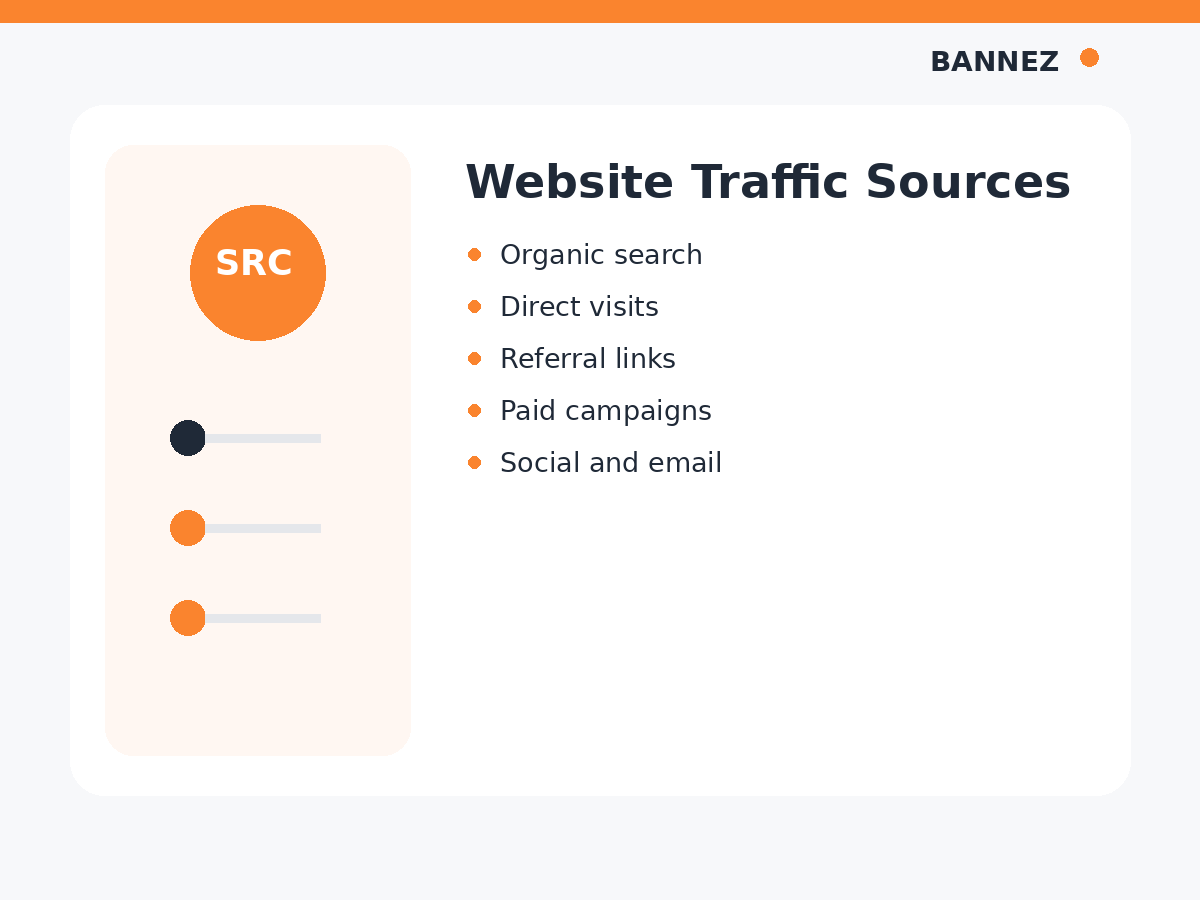
Organic traffic usually refers to unpaid visits from search engines such as Google Search. In GA4, Organic Search is a default channel used for traffic from non-advertising search results.
Organic search growth generally depends on useful content, technical accessibility, relevance, search demand, and competition rather than direct payment for every visit.
Google’s SEO Starter Guide explains core practices for making pages easier for search engines and users to understand.
Paid Traffic vs Organic Traffic: Quick Comparison
| Area | Paid traffic | Organic traffic |
|---|---|---|
| Speed | Can start quickly | Usually takes longer |
| Direct cost | Requires campaign budget | No payment per organic click |
| Targeting control | Usually high | Indirect through content and SEO |
| Traffic duration | Often declines when spend stops | Can continue if rankings remain |
| Testing | Useful for fast campaign tests | Slower feedback cycle |
| Competition | Can increase cost | Can make rankings harder |
Advantages of Paid Traffic
1. Faster visibility
Paid campaigns can begin generating impressions and visits much faster than waiting for new organic pages to rank.
2. Better targeting control
Many advertising platforms let you control location, audience, keywords, device, schedule, and other targeting settings.
3. Easier campaign testing
You can test landing pages, offers, countries, and campaign messages more quickly when you can deliberately send traffic to selected pages.
4. Predictable scaling options
If a campaign performs well, increasing budget can sometimes increase reach. However, costs and results may change as scale increases.
Disadvantages of Paid Traffic
1. Ongoing cost
Paid campaigns need budget. When spending stops, paid traffic often decreases quickly.
2. Poor targeting can waste money
If the audience, country, keyword, or landing page is wrong, paid visits may not produce useful outcomes.
3. More traffic does not guarantee conversions
Paid traffic creates opportunities, but the website still needs a strong offer, clear landing page, trust, and working conversion path.
Read Why Your Website Gets Traffic but No Conversions.
Advantages of Organic Traffic
1. Long-term discovery potential
A useful page can continue receiving unpaid search visits over time if it remains relevant and visible in search results.
2. No payment for each organic click
SEO still requires time, content, tools, and sometimes professional work, but there is no advertising charge for each normal organic click.
3. Strong content can support multiple goals
A well-written article can attract search traffic, educate visitors, earn links, support internal linking, and help users evaluate services or products.
Disadvantages of Organic Traffic
1. Results take time
Search visibility can take time to develop, especially in competitive topics.
2. Rankings are not guaranteed
Search engines decide which pages appear and in what order. Publishing content does not guarantee a specific ranking.
3. Search demand can change
Topics, competitors, user behavior, and search systems evolve. Organic performance should be reviewed and maintained.
Is Paid Traffic Lower Quality Than Organic Traffic?
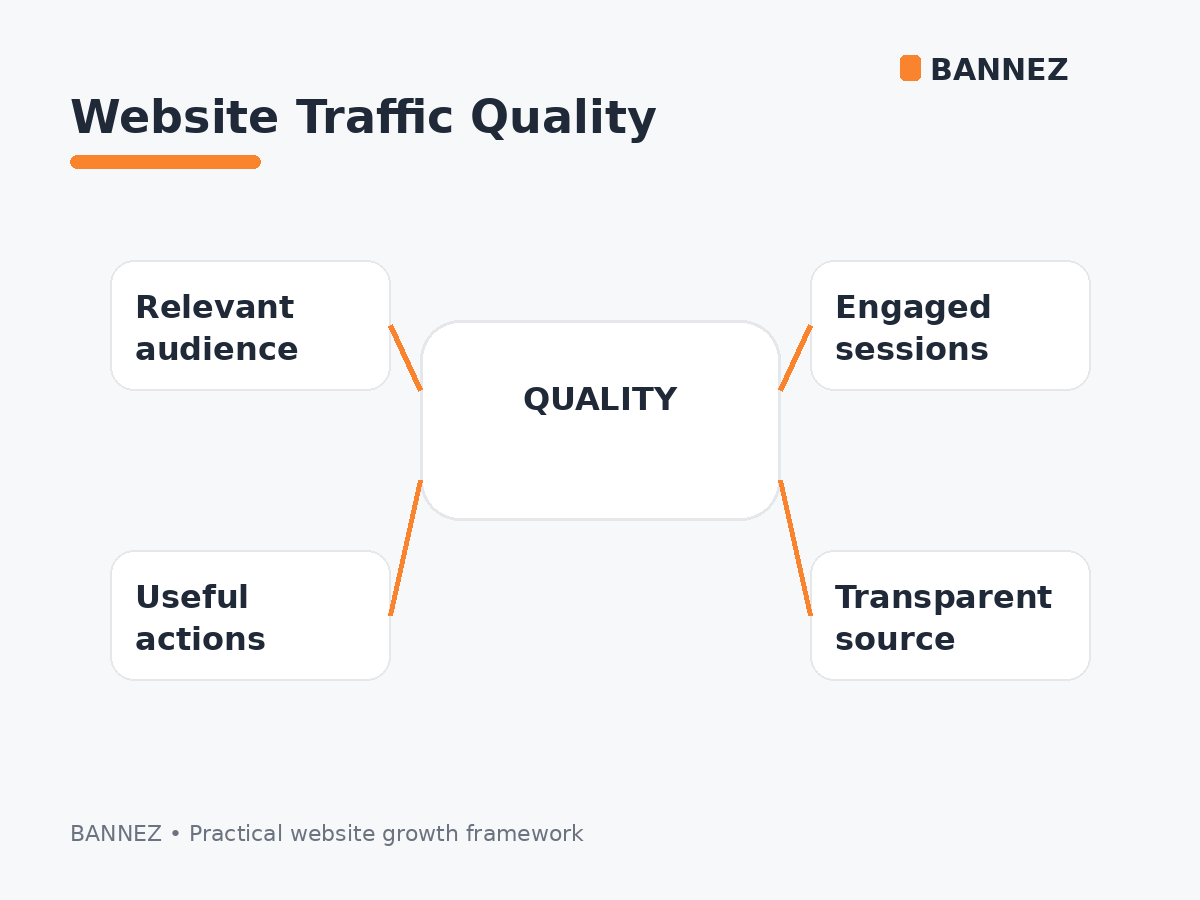
Not automatically. Either source can send highly relevant or poorly matched visitors. Traffic quality depends on audience relevance, intent, geography, landing-page fit, engagement, and useful actions.
Our guide High-Quality Website Traffic: What Does It Actually Mean? explains how to evaluate quality beyond source labels.
Does Paid Traffic Improve Organic SEO?
Paid traffic and organic search rankings should be treated separately. Paying for ads or visits does not buy a higher position in Google’s organic search results.
Google clearly separates paid advertisements from normal search results, and organic ranking depends on search systems rather than advertising spend.
How to Measure Paid and Organic Traffic in GA4
GA4 classifies acquisition using dimensions such as source, medium, campaign, and default channel group. Organic Search and paid channels can therefore be compared separately.
Google’s current Traffic acquisition report helps analyze session-scoped acquisition.
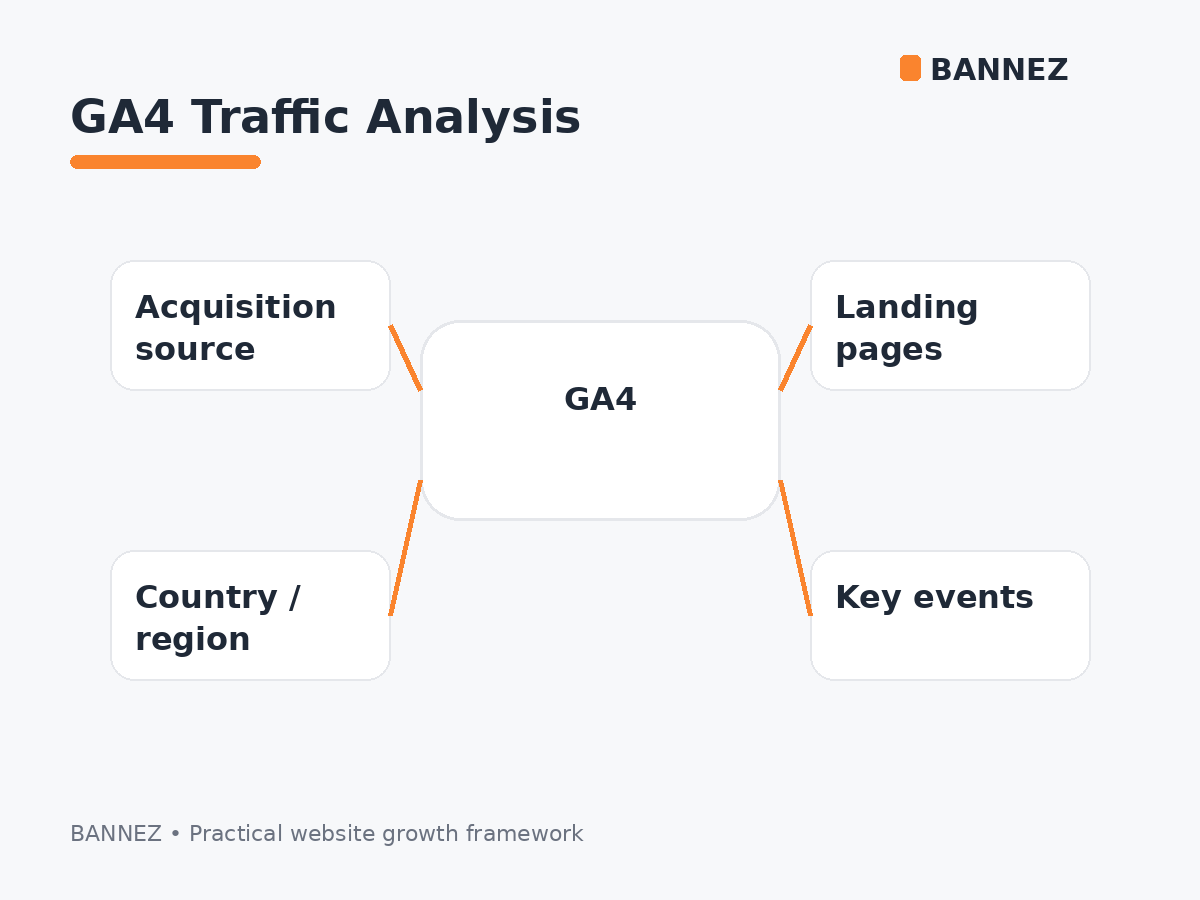
Compare metrics such as
- Sessions
- Users
- Engagement rate
- Landing-page performance
- Key events
- Revenue when relevant
- Cost for paid campaigns
When Paid Traffic Makes Sense
- You need fast campaign data
- You are launching a new offer
- You want controlled country targeting
- You are testing landing pages
- You have a clear budget and measurable objective
If broad paid website visits fit your campaign objective, you can explore our Worldwide Website Traffic service. Treat it as paid acquisition and check that the use case fits the policies of any advertising or monetization platforms connected to your website.
When Organic Traffic Makes Sense
- You want long-term search visibility
- Your audience actively searches for the topic
- You can publish useful content consistently
- You want educational content to support the customer journey
- You can invest time in SEO and maintenance
If you need professionally structured search-focused articles, you can explore our SEO Content Writing service.
Should You Use Both?
Many websites benefit from a mixed strategy. Paid traffic can provide fast testing and controlled campaigns while organic content builds longer-term search visibility.
A balanced approach might look like this
- Publish useful evergreen content for organic search.
- Use paid campaigns for selected launches or tests.
- Measure both sources separately in GA4.
- Compare engagement and key events.
- Improve landing pages based on results.
- Shift resources toward the channels that support your goals.
Paid vs Organic Traffic Checklist
- Campaign objective is clear
- Paid and organic traffic are reported separately
- Landing pages match visitor intent
- Traffic quality is measured
- Paid campaign costs are tracked
- Organic content is kept useful and updated
- Key events are configured
- No assumption is made that paid visits improve rankings
Frequently Asked Questions
Which is better: paid traffic or organic traffic?
Neither is universally better. Paid traffic is useful for speed and control, while organic traffic can support longer-term search discovery.
Is organic traffic free?
There is no charge per normal organic click, but SEO still requires time, content, technical work, tools, and maintenance.
Does organic traffic stop when I stop spending?
Not in the same way as ads, but rankings and demand can change. Organic content still needs maintenance.
Can I use paid and organic traffic together?
Yes. A combined strategy can provide fast campaign testing and longer-term search growth when each channel is measured separately.
Conclusion
Paid traffic offers speed, targeting, and campaign control. Organic traffic offers long-term search discovery without paying for every organic click. Both approaches have costs, limitations, and different strengths.
Choose based on your business objective rather than assuming one source is always better. Measure each channel separately, compare engagement and key events, and invest more in the traffic sources that consistently bring relevant visitors and useful outcomes.
