
Website Traffic vs Conversions: What Matters More?
Website traffic and conversions are not competing goals. Traffic creates opportunities; conversions show whether some of those opportunities produced the actions your website is designed to generate.
A website with no visitors cannot convert anyone, but a website with huge traffic and no useful actions may still fail its business goal. The right strategy is to attract relevant traffic and then make the conversion path clear, trustworthy, and measurable.
What Is Website Traffic?
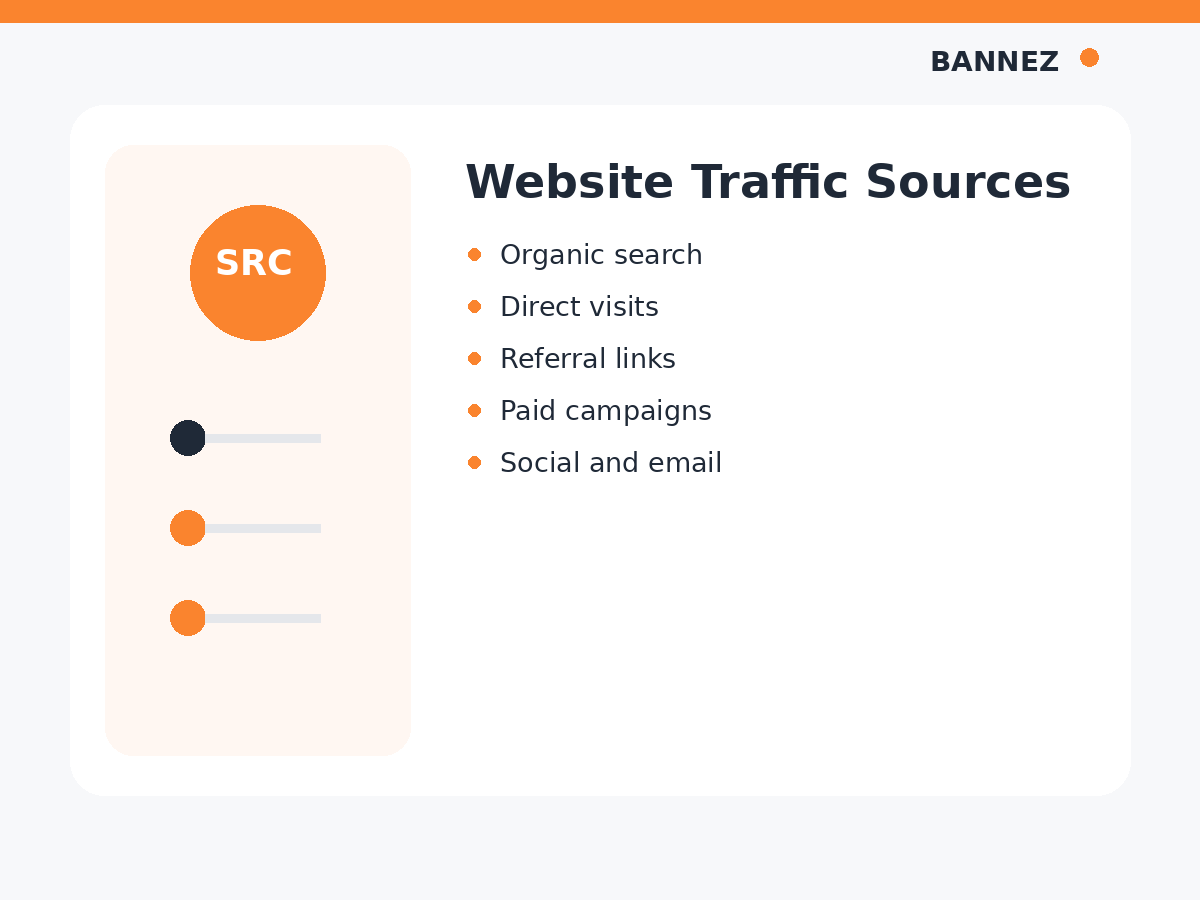
Website traffic represents visits reaching your site from sources such as Organic Search, Direct, Referral, Paid Search, Social, Email, and other channels.
Google Analytics groups traffic into rule-based channels and lets you compare sessions by source, medium, and campaign. See Google’s Traffic acquisition report documentation.
What Is a Conversion?
A conversion is a meaningful action that supports your website goal. Depending on the site, that could be a purchase, lead form, account signup, phone call, booking, download, subscription, or another important action.
Google Ads recommends choosing conversion goals that match the campaign objective. See Google’s conversion goal guidance.
Traffic Is the Input; Conversions Are the Outcome
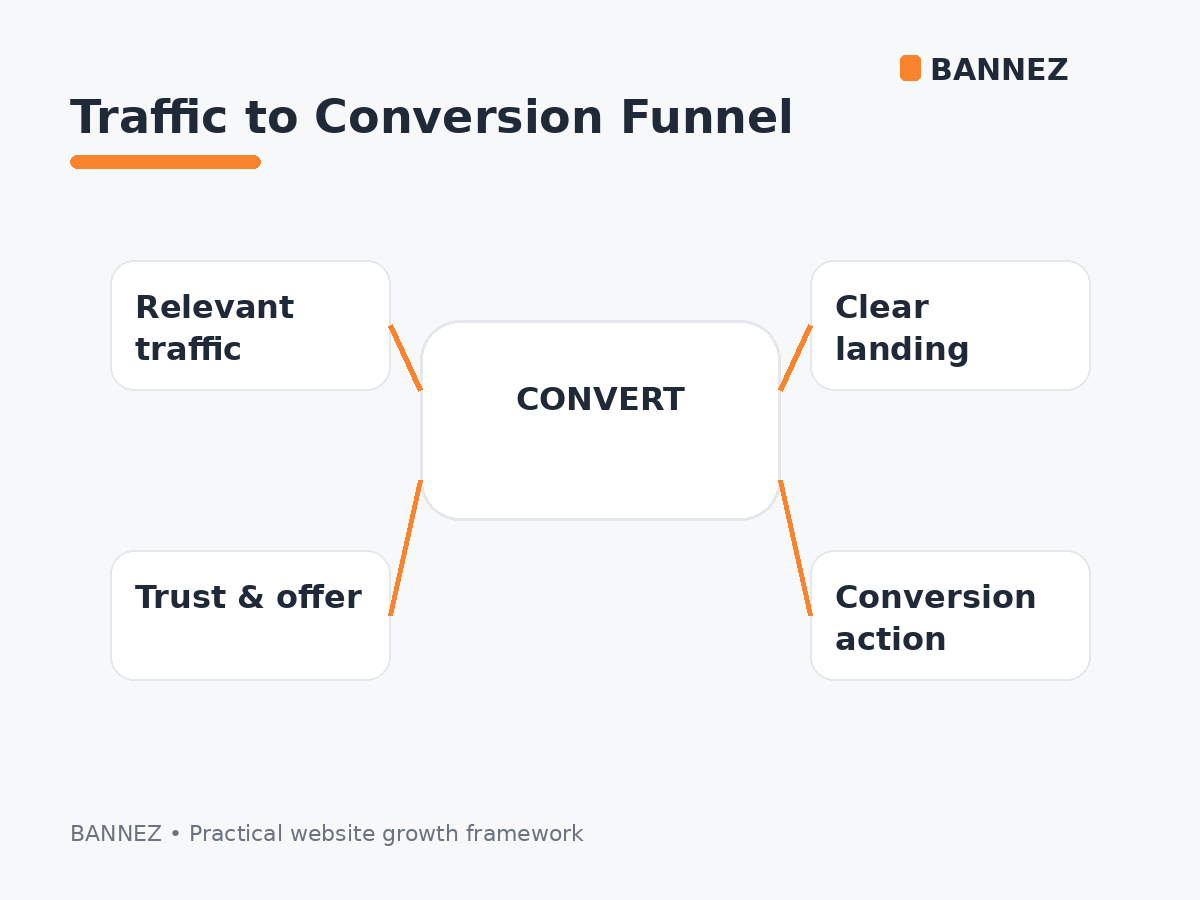
A simple way to think about the relationship is:
- People discover the website.
- Relevant visitors reach a landing page.
- The page explains the value clearly.
- The visitor develops enough trust to continue.
- The visitor completes a useful action.
If any stage is weak, traffic or conversion performance can suffer.
Which Matters More?
For most business websites, conversions are closer to the final goal, but conversions cannot happen without enough relevant traffic. This means the better question is not “traffic or conversions?” It is “are we attracting the right visitors and converting enough of them?”
When Traffic Is the Priority
A new website has almost no audience
Early on, the site may need discovery and enough visits to produce useful analytics data.
You are testing a new content strategy
Traffic helps show whether topics and acquisition channels are reaching people.
The website goal is reach or readership
Some publishers, educational sites, and awareness campaigns care heavily about audience growth, although engagement still matters.
When Conversions Are the Priority
You already have steady traffic
If traffic is healthy but leads or sales remain weak, the larger opportunity may be the landing page, offer, trust, checkout, or form experience.
Paid acquisition costs are increasing
Improving conversion efficiency can make existing traffic more useful before increasing spend.
Your business needs measurable actions
Lead-generation and ecommerce sites usually need to connect traffic to enquiries, purchases, or other meaningful outcomes.
Traffic Quality Connects the Two
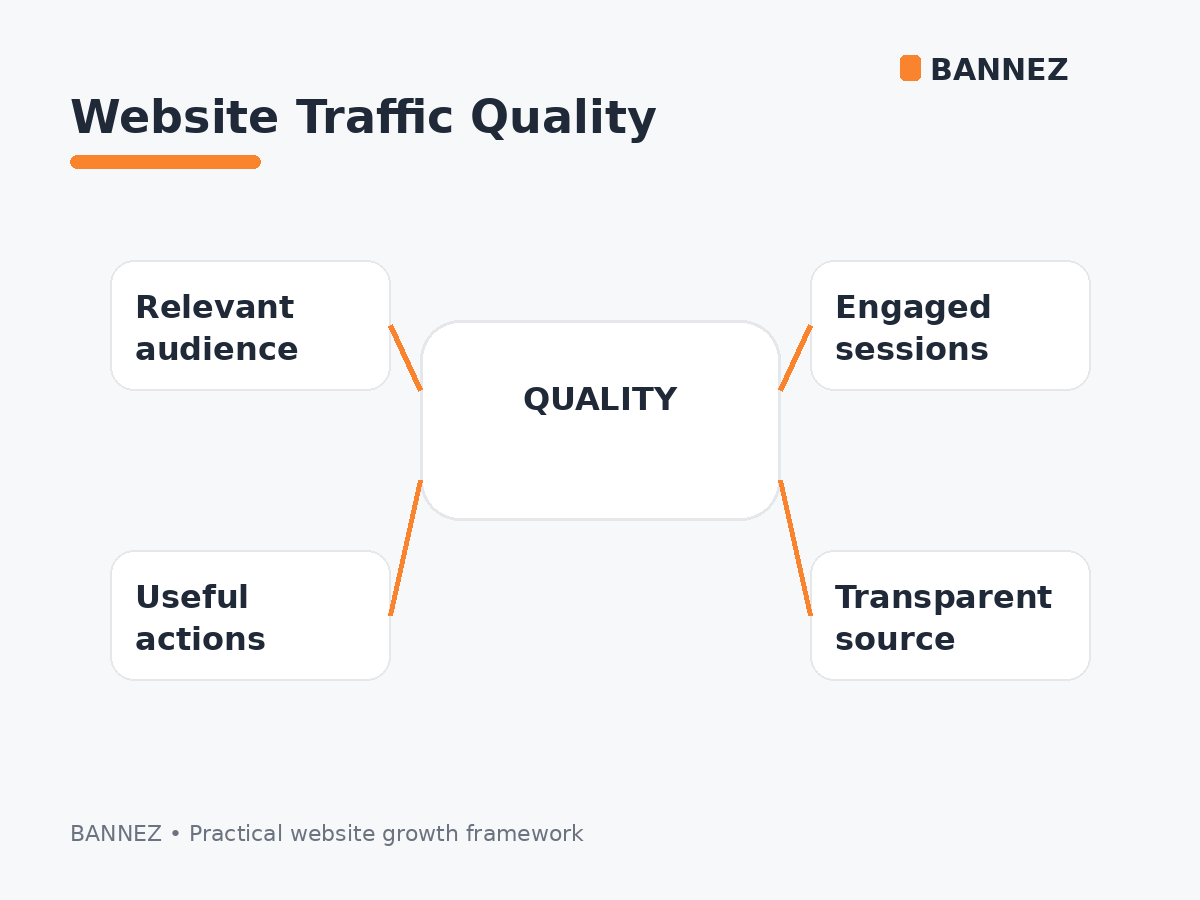
Not every visitor has the same likelihood of converting. Audience relevance, country, source, intent, landing page, and device experience can all influence results.
Read High-Quality Website Traffic: What Does It Actually Mean? for the full framework.
What Is Conversion Rate?
A simple conversion-rate calculation is:
Conversion rate = conversions ÷ relevant visits × 100
The exact denominator can vary depending on your reporting setup and question. For example, some teams calculate using sessions while others use users or ad interactions. Stay consistent when comparing performance.
There Is No Universal “Good” Conversion Rate
A useful rate depends on the industry, product price, audience, traffic source, conversion definition, device, market, and customer journey. Avoid copying a benchmark without checking whether it matches your business.
Traffic vs Conversions: Quick Comparison
| Area | Traffic | Conversions |
|---|---|---|
| Main question | Are people reaching the site? | Are visitors completing useful actions? |
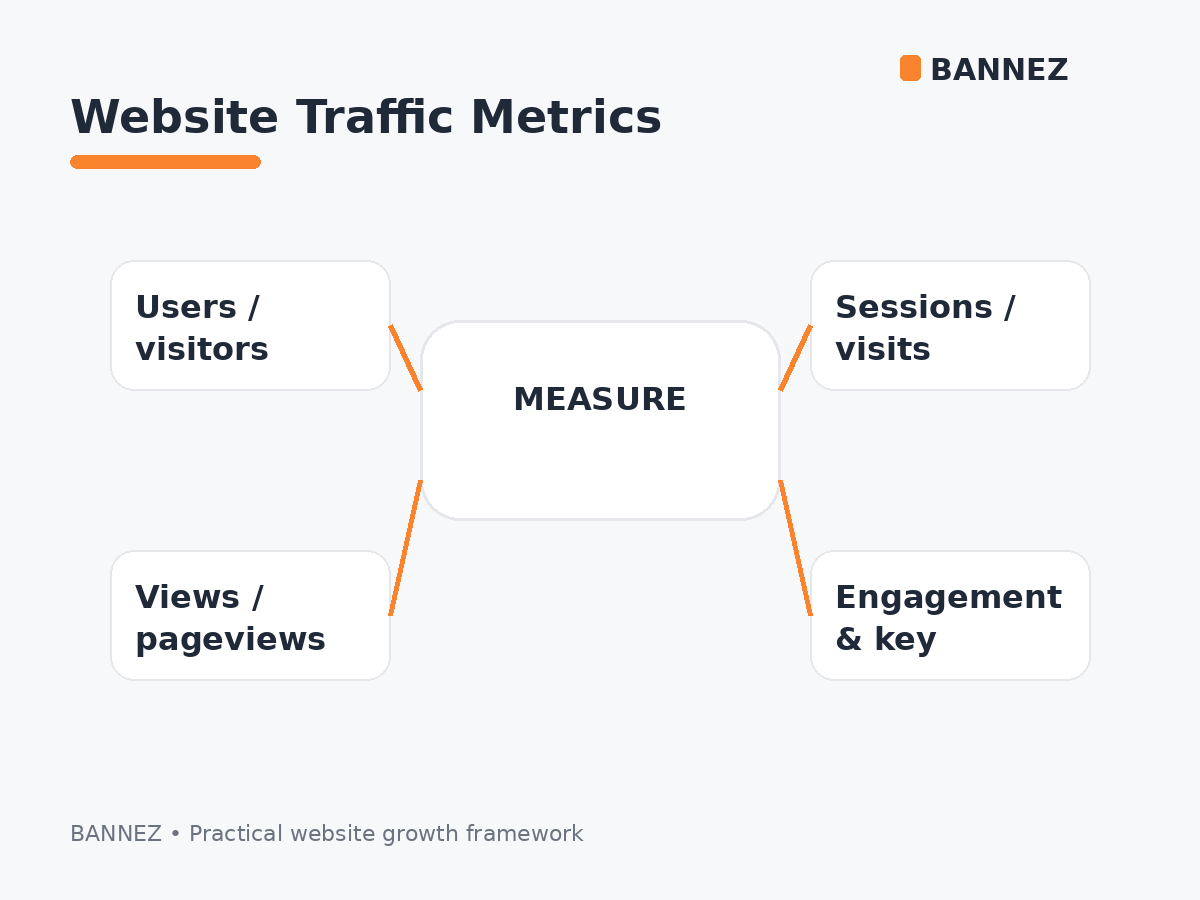
| Common metrics | Users, sessions, views | Key events, leads, sales |
| Main risk | High volume but poor relevance | Too little traffic to produce enough outcomes |
| Optimization focus | Acquisition and audience | Landing page and funnel |
How to Analyze Both in GA4
Start with traffic acquisition, then compare engagement and key events by source, landing page, country, or campaign.
Questions to ask
- Which source brings the most sessions?
- Which source brings the most engaged sessions?
- Which landing pages generate key events?
- Which countries produce useful actions?
- Where does the conversion path break?
For a detailed workflow, read How to Analyze Website Traffic in Google Analytics.
Why More Traffic Can Fail to Increase Conversions
Increasing traffic can fail when the audience is wrong, the offer is unclear, trust is weak, the page does not match intent, or the conversion process is broken.
Our diagnostic guide Why Your Website Gets Traffic but No Conversions explains those problems step by step.
A Better Optimization Order
- Define the conversion goal.
- Confirm tracking works.
- Identify your target audience.
- Measure traffic by source.
- Check traffic quality.
- Improve landing pages and calls to action.
- Test forms or checkout.
- Measure conversion results.
- Scale the channels that produce useful outcomes.
Where Paid Traffic Fits
Paid traffic can increase visit opportunities quickly, but it should be used with a clear objective and a working conversion path.
If broad paid visits fit an appropriate campaign goal, you can explore our Worldwide Website Traffic service. Paid visits should be measured separately from organic SEO and are not a guarantee of conversions.
Traffic and Conversion Checklist
- Website goal is defined
- Key events are configured
- Traffic sources are measured
- Audience relevance is checked
- Landing pages match intent
- Conversion path is tested
- Traffic and conversions are compared together
- No universal benchmark is used blindly
Frequently Asked Questions
Is traffic more important than conversions?
Traffic creates opportunities, but conversions are closer to the final business outcome. Most sites need both relevant traffic and an effective conversion path.
Can a website have a high conversion rate with low traffic?
Yes, especially in a narrow niche, but a small sample can make rates unstable. Look at absolute conversion volume as well.
Should I increase traffic before improving conversions?
If the funnel is clearly broken, fix major conversion problems first. Then scale relevant traffic.
Does every website need sales conversions?
No. The meaningful action depends on the website. A conversion can be a lead, signup, download, booking, or another important event.
Conclusion
Website traffic and conversions measure different stages of the same journey. Traffic answers whether people are arriving; conversions answer whether those visits are producing useful outcomes.
Optimize both together. Attract a relevant audience, make the landing experience clear, track meaningful actions, and scale the sources that create the strongest combination of quality traffic and conversions.
