
How Many Internal Links Should a Blog Post Have?
There is no fixed ideal number of internal links for every blog post. A short article may need only a few useful links, while a detailed guide can naturally include many more. The right number depends on article depth, available related pages, reader needs, and whether each link has a clear purpose.
Instead of aiming for a number such as five or ten links, build internal links around relevance and navigation.
What Is an Internal Link?
An internal link connects one page on your website to another page on the same site. It can point to a related article, service, product, category, guide, or other useful destination.
Is There an Ideal Number of Internal Links?
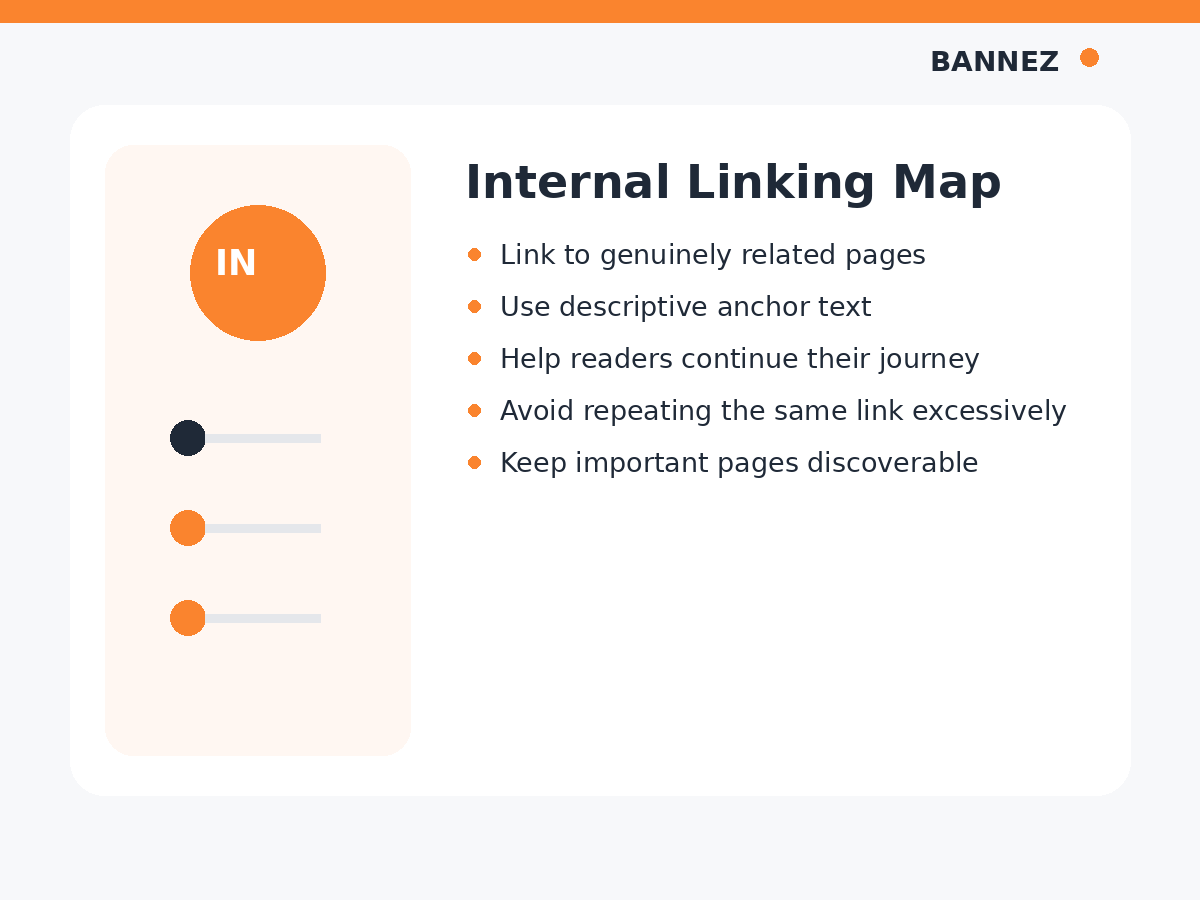
No universal number is required. Google’s SEO Starter Guide encourages useful links and descriptive anchor text, but it does not prescribe a fixed internal-link count for blog posts.
A better question is: how many related pages genuinely help this reader?
What Should Determine the Number of Internal Links?
Article length and depth
A 600-word answer may have fewer natural opportunities than a 2,500-word guide with several subtopics.
Number of relevant pages on your site
Do not force a link to a page that is only loosely connected. Use the best destinations available.
Reader journey
Think about what the reader may want to learn or do next. A tutorial may link to a deeper guide, checklist, or service at the appropriate point.
Content structure
A broad pillar article can naturally link to several supporting articles. A narrow article may need only a few links.
A Practical Internal-Linking Example
An article about SEO blog writing could naturally link to guides about choosing keywords, search intent, H1, H2 and H3 structure, and image optimization.
Those links are useful because each page answers a related next question.
Internal Links Should Not Feel Forced

Do not add links only because an SEO tool suggests a target count. Too many unnecessary links can distract readers and make important destinations less obvious.
Signs you may be overlinking
- Several links appear in almost every sentence
- Multiple anchors point to nearly identical destinations
- Links interrupt basic reading flow
- Pages are linked even when they do not help the current topic
- The same destination is repeated many times without a reason
Where Should Internal Links Be Placed?
Place a link where it makes sense in the discussion. Contextual links inside relevant paragraphs are useful because the reader understands why the destination matters.
Good locations can include
- After introducing a related concept
- Inside a step that needs a deeper explanation
- Near a comparison or supporting example
- At a natural service or product mention
- In a related-resources section when appropriate
How Should Anchor Text Be Written?
Use descriptive text that gives the reader an idea of the destination. Avoid relying on vague anchors such as “click here.”
For example, internal links vs external links is clearer than “read more.”
Should You Link to the Same Page More Than Once?
You can when it genuinely helps the reader, but repeating the same destination many times is usually unnecessary. If one contextual link is easy to find and clearly labeled, that may be enough.
What About Navigation and Footer Links?
Site navigation, breadcrumbs, sidebars, and footer links are also internal links, but they serve broader navigation purposes. When planning a blog article, focus especially on contextual links inside the content because they connect specific ideas.
Internal Links and Orphan Pages
An orphan page is a page with no meaningful internal path from other parts of the site. Important content should usually be connected from relevant pages, categories, navigation, or other site structures so people and crawlers can discover it.
Should New Posts Link to Old Posts?
Yes, when older posts are useful. Also review older articles after publishing a strong new page and add links back to the new resource where relevant. Internal linking works in both directions.
Internal Links vs External Links
Internal links keep the reader within your site. External links point to outside resources. Both are useful for different reasons. Read our complete internal vs external links comparison.
A Simple Internal-Link Review Process
- Finish the article outline.
- Identify major concepts mentioned in the post.
- Search your site for the best related pages.
- Add links only where they help the reader.
- Use clear anchor text.
- Remove repeated or weak links.
- Check every destination before publishing.
- Revisit older posts and link to new useful content.
Internal-Linking Checklist
- Every link is relevant to nearby content
- Anchor text describes the destination
- No arbitrary link count is being followed
- Important related pages are discoverable
- Links are spread naturally through useful sections
- Duplicate links are removed when unnecessary
- Old and new content connect where relevant
- Service links are added only in natural context
Frequently Asked Questions
Is five internal links per blog post enough?
It may be enough for one article and too many or too few for another. Relevance matters more than a fixed number.
Can too many internal links hurt readability?
Yes. Excessive links can make paragraphs distracting. Prioritize the destinations that genuinely help the reader.
Should every blog post link to a service page?
No. Add a service link only when the service naturally relates to the reader’s current need.
Do internal links need exact keywords?
No. Use clear, natural anchor text that accurately describes the destination.
Need Professionally Structured SEO Content?
If you need SEO articles with natural internal-linking opportunities, branded images and authoritative references, explore our SEO Content Writing with Images & Authority Links service.
Conclusion
There is no fixed number of internal links that every blog post should have. Add links when they improve navigation, explain a related topic, connect an important page, or help the reader take the next logical step.
Review internal links as part of your editorial process rather than treating them as a number to hit. Relevance, clarity and useful reader journeys are stronger goals than an arbitrary count.
